Guide
Guide
How a stuffed animal is made, from your mascot drawing to your gift shop shelf
A stuffed animal starts as a drawing and ends as a carton of plush that all match. In between come a pattern, a sample or two, a lab report, the run and a check before packing. Here is each step, what the factory needs from you at each one, and the step that has to be done before anything ships.
The factory floor
How a stuffed animal is made in a factory
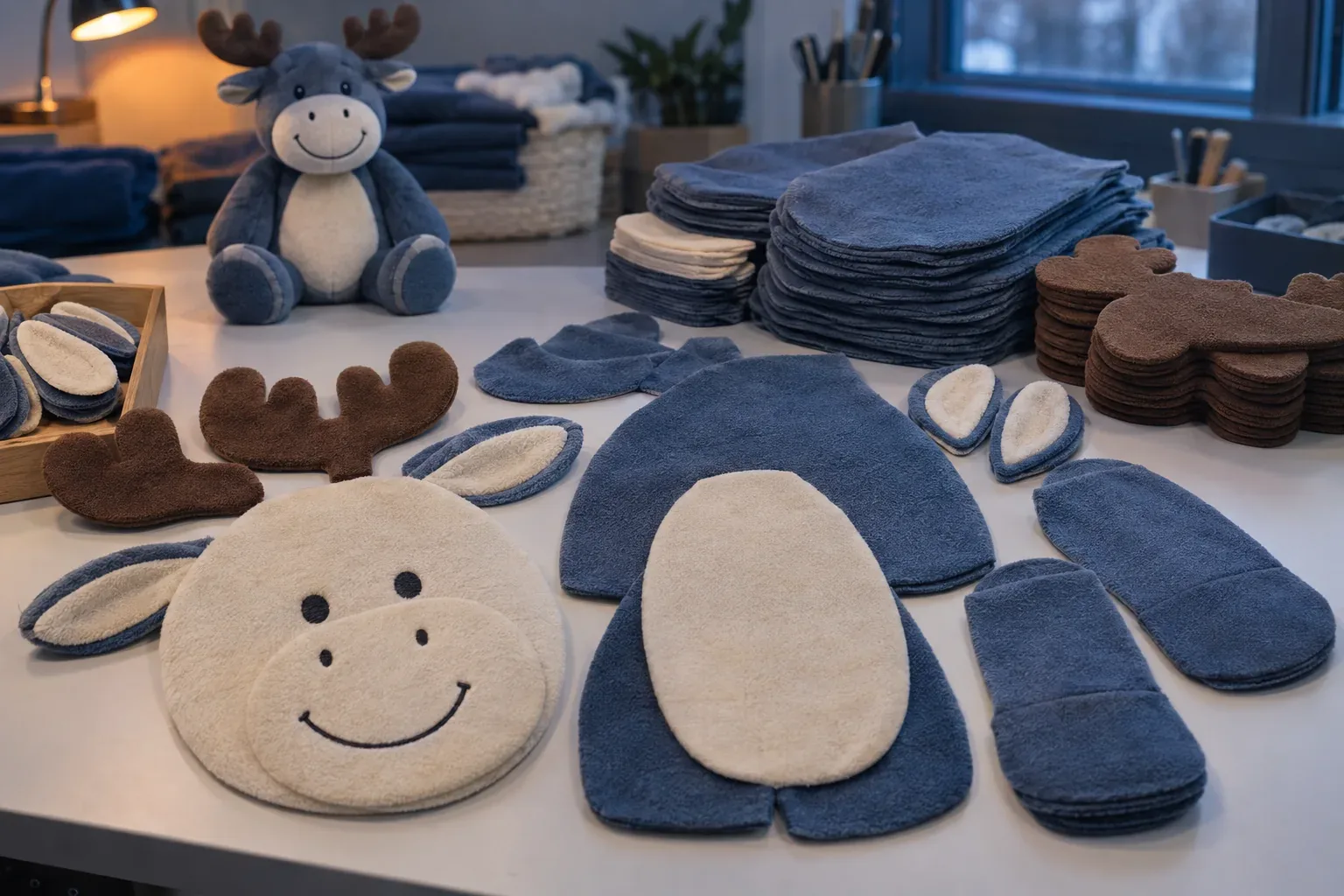
A teddy bear and a venue's mascot go through the same steps. The pattern's flat pieces are laid out on plush fabric and cut in stacks, many layers at once, with a die, a cutting knife or a laser.
Faces and logos go on while the pieces are still flat. The eyes, nose and mouth are embroidered onto the face panel, and a logo is embroidered or printed on the piece it belongs to. Both are far harder to do once the shape is sewn up.
The pieces are then sewn together inside out and turned the right way round, which hides the seams. The fill goes in through a gap left in one seam, the gap is closed by hand, and the seams are brushed so the pile hides them. Labels, a check and a bag or box come at the end.
A factory can do all of that from its own designs. When it is custom plush in your design, your part is everything before the cutting table, plus one check before the cartons close.
Step by step
Every step, and what the factory needs from you
The middle column is your part. When a plush order stalls, it is usually waiting on one of these answers.
| Step | What you send or decide | What happens next |
|---|---|---|
| The brief | Your artwork and any views you have, colours as Pantone references, the size and whether it sits or stands, who buys it in your shop, how many of each design, the day it has to be on your shelves, and your written authorisation for every mark on it | Questions from the pattern maker, then the quote |
| The pattern | Answers about the sides and details your drawing does not show | The first sample is sewn |
| The first sample | All your changes, in one round | A second sample, if the changes call for one |
| Sign-off | Your approval of one sample | It becomes the approved sample, the reference both sides keep |
| The production sample | Nothing from you. A sample made the way the run will be made goes to a CPSC-accepted lab | The lab's report, which has to exist before the run ships |
| The run | Artwork for your brand label, hang tag and retail pack, and your barcode or SKU files | The run is made and checked against the approved sample |
| The check before packing | Your packing instructions, and your own inspector if you want one | Photos and the count for each carton, before the cartons are sealed |
| Cartons and landing | The delivery address, whether there is a loading dock, and any import plan of your own | Cartons marked by design, sent by sea from China, entered at customs and delivered to your door |
Every field the factory asks for is on the full spec sheet, and the same page sets out what sets the price of a plush.
Design
From your drawing to a pattern
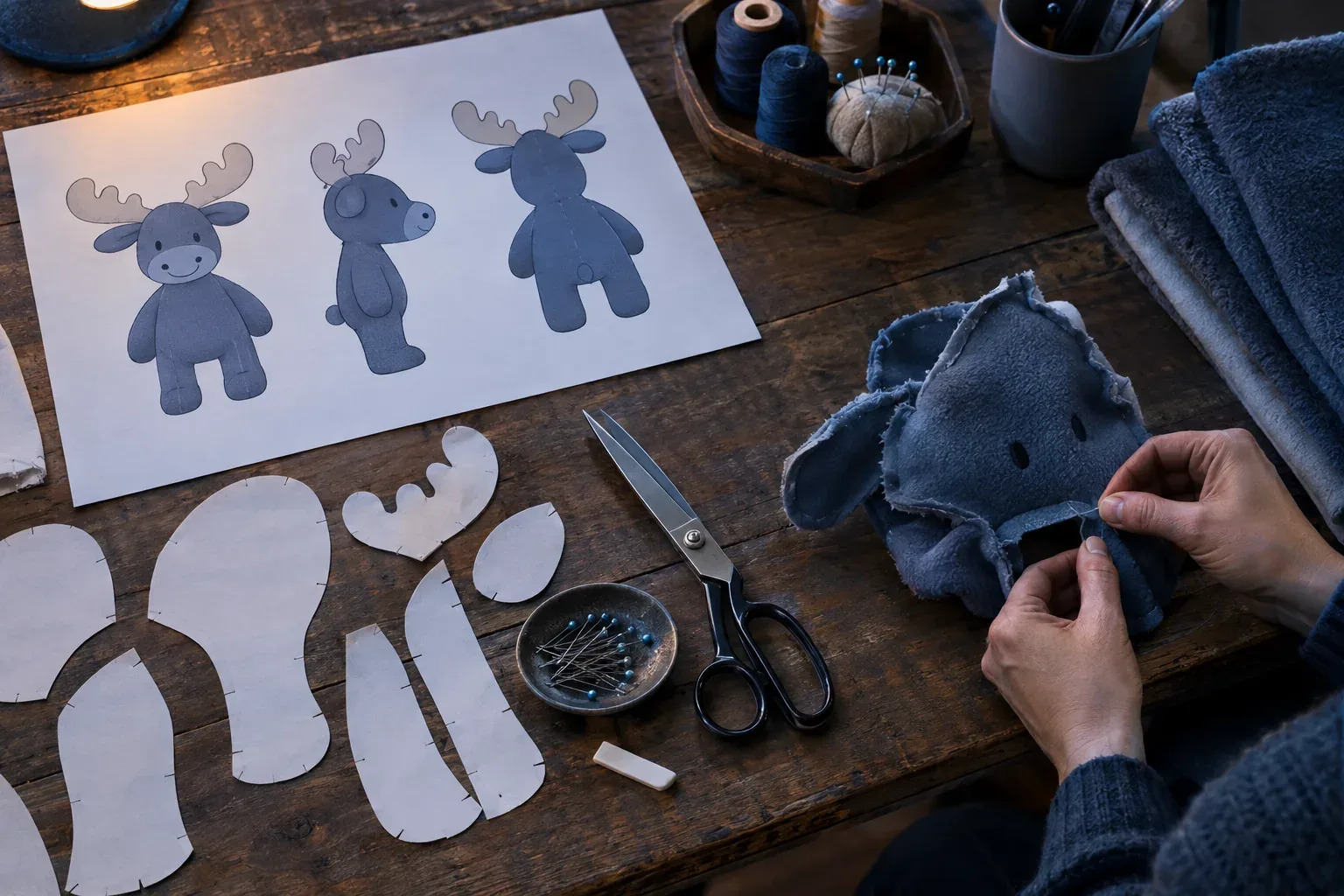
A drawing shows a plush from one side. A pattern has to settle every side, so this is where most of the questions come from.
What a pattern is
A set of flat pieces that sew up into your shape. The pattern maker decides how many pieces it takes, where each seam runs and where the fill goes in.
Send every view you have
Front, side and back, and underneath if it sits. Each view you send is one less guess for the pattern maker, and a wrong guess is what usually costs a sample round.
The parts a drawing leaves out
The back of the head, where the ears and the tail join, how thick the legs are, and whether it sits steady on a shelf. Expect questions on these. A rough sketch often answers them better than a paragraph.
Stitched, printed or a piece of its own
Each detail is embroidered, printed, or cut and sewn on as a separate piece of fabric. Very small details become embroidery. The eyes and nose are embroidered by default, and the plush page's questions say why.
Pantone references for every colour
Send a Pantone reference for each colour. Plush fabric comes dyed in its own range, so the factory matches each reference as closely as that fabric allows. Ask to see the fabric colours before the first sample is sewn.
Samples
The first sample, and how to ask for changes
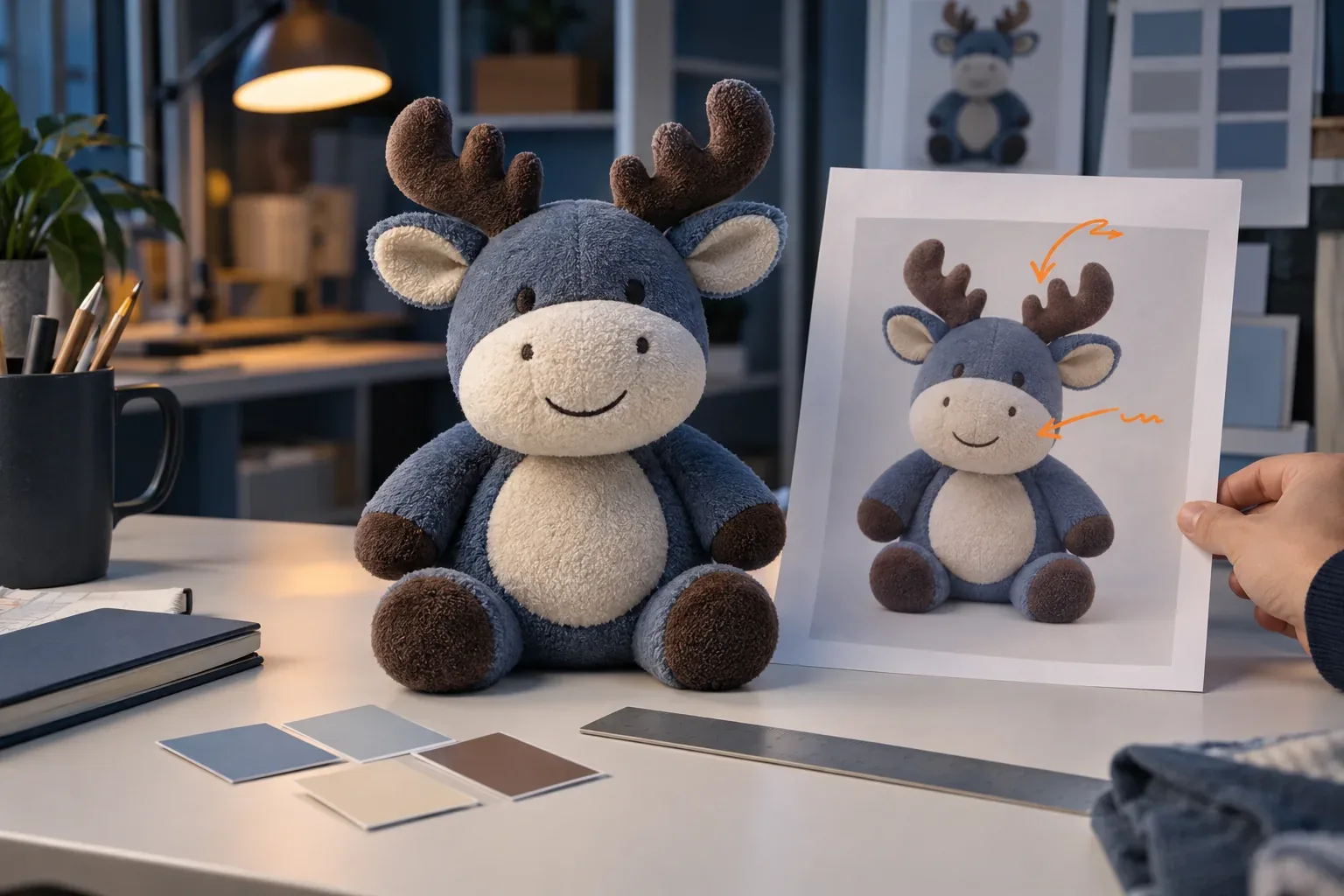
Go over the first sample in this order. The face matters most, so start there.
The face
A shopper sees it from across the shop. Check how far apart the eyes sit, the shape of the mouth and the expression against your drawing.
Proportions from every side
Turn it round. Compare the head, body and limbs with your views, and look at the back and the base as closely as the front.
Check the colours in daylight
Hold it beside your Pantone references at a window. Shop lighting and phone screens both shift colour.
The logo and any lettering
Check the spelling and the colours, and that the stitching is crisp enough to read.
How it sits and how it feels
Stand it on a shelf and pick it up. Its weight and how firmly it is filled are part of the design too.
Every change in one round
Mark the changes on photos of the sample, with short notes and measurements where they help, and send them together. Changes sent one at a time can each cost a round.
Photos or the sample in hand
Photos settle shape and colour. The feel and the face are easier to judge with the sample in your hands.
A second sample
If the changes go beyond small ones, a second sample comes before anything else moves.
Your sign-off
The sample you sign off becomes the approved sample. The production sample, the run and the final check are all compared with it.
The lab
The production sample goes to the lab
US law counts a plush sold in a gift shop as a children's toy, whoever ends up buying it, so every plush we quote is quoted as one.
Before the run ships, a production sample goes to a CPSC-accepted lab. It comes from the factory that will make the run, sewn from the same fabric, fill, eyes and thread, so the lab sees the plush your shoppers will buy.
The lab's report has to exist before the run ships. If the report shows a problem, the cause is fixed and the plush goes back to the lab. The same happens if the fabric, the fill, the eyes or one of the suppliers changes after the report.
The Children's Product Certificate from whoever imports it rests on that report.
The plush page covers what the lab checks, and the labels every plush carries. The testing guide sets out the rules a plush has to meet, in full.
Production
The run, and the check before the cartons close
With the report in, the run starts. These are the points where you come in.
Fabric matched before cutting
The bulk fabric is held against the approved sample before any of it is cut, because one dye lot can differ from the next.
Labels settled before sewing
Labels are sewn into the seams as the plush is put together. So your brand label, the tracking details and the wording of the law label all have to be settled before the run starts.
Retail packs and barcodes
Send the artwork for bags, boxes and hang tags, and the barcode or SKU files from your own system. The packs are checked against your shop's instructions.
The final check
Plush from every carton is held up against the approved sample, and the eyes, the nose and anything sewn on get a firm pull by hand. A piece that fails is fixed or replaced before it is packed.
Your own inspector
You can send an inspector of your own to the check. One question worth asking before the run: does finished plush go through a needle detector, which finds a broken needle left in the fill?
Photos before the cartons are sealed
Photos and the count for each carton come back to you before the cartons are taped shut.
To your shelf
From the cartons to your shelf, worked back from the date
The plush is packed in cartons by design, each carton marked, and goes by sea from China. It can travel on its own or, as an option, in the same container as your lights, beanies, blankets or cups. We have had plush animals made for a Christmas light attraction's gift shop, shipped with its lights.
We import the cartons and deliver them to your door, with or without a loading dock, unless another plan is agreed with you. Which papers come with an order, and in what form, is worked out with you for each order. The shipping page explains how freight and the customs entry work.
The date is worked back from the day the plush has to be on your shelves. The steps on your side are the artwork and views, your answer on each sample, your sign-off, and the label and barcode files. Every extra round of changes pushes the steps after it back by a round. The lab comes before shipping, so the date already allows for it, and the quote gives the date by which the design has to be signed off.
For a reorder, the factory starts from the approved sample and the pattern, and the quote says whether a new production sample goes to the lab.
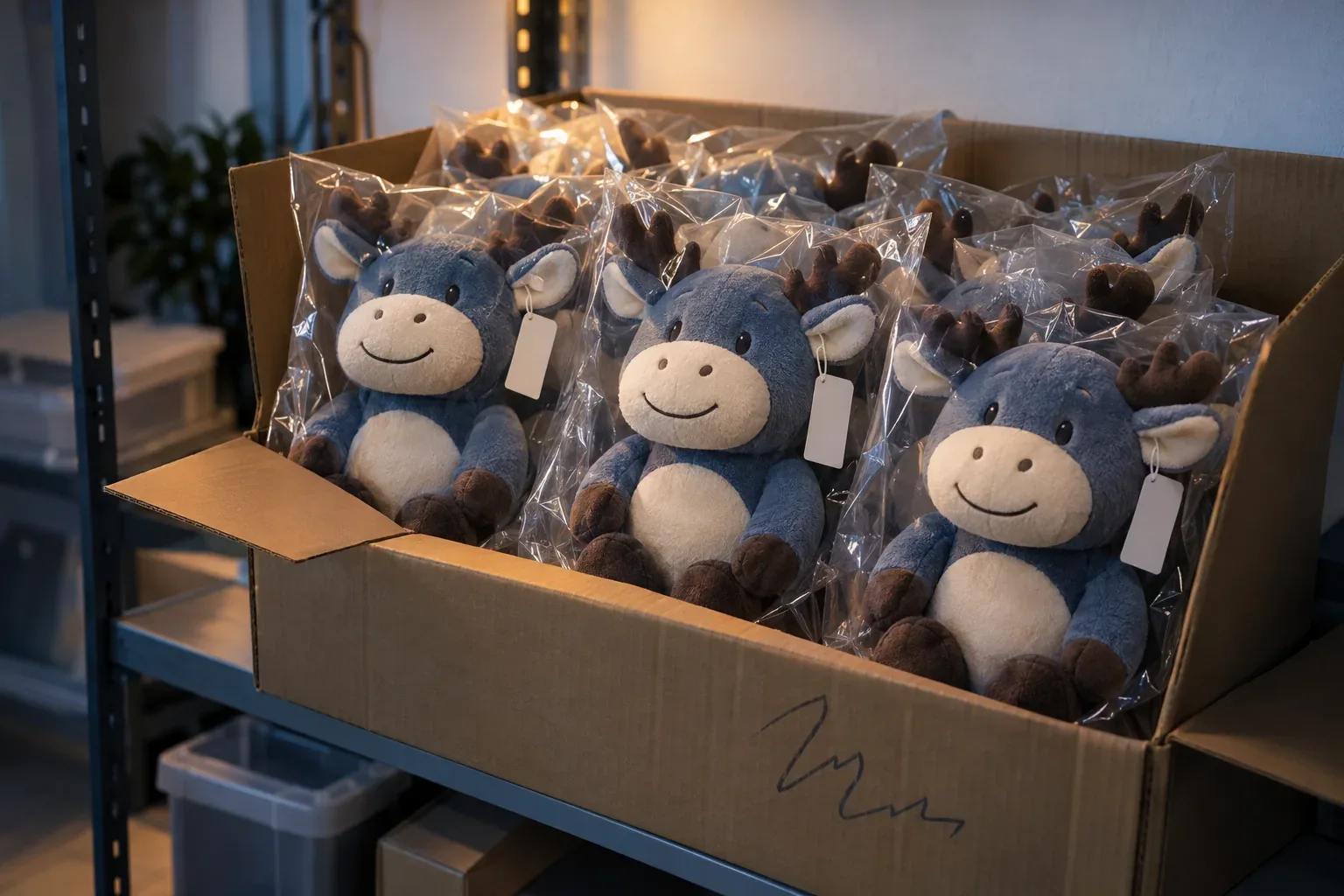
Where this applies
Custom plush toys, quoted landed
Each product page has what to specify, what sets the price and the quote form for that product.
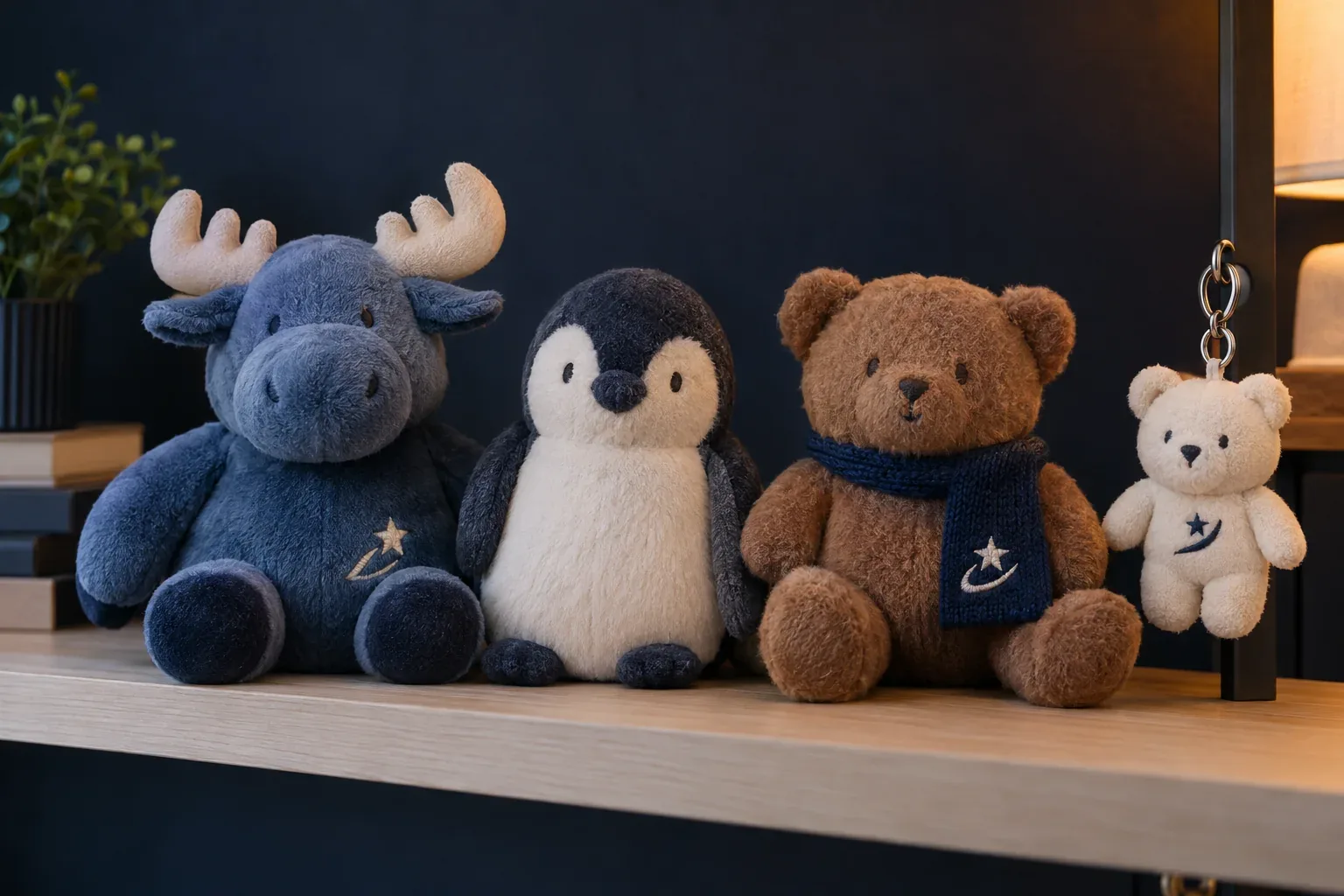
Custom plush toys
Your mascot or your animal as a plush, made to your design for an attraction's gift shop, or a plush animal wearing your logo on its shirt or scarf. Each piece carries sewn labels, including "Made in China", a sample from the run goes to a lab before the order ships, and the order is planned back from the day the plush has to be on your shelves.
See the custom plushWhere to go next
- How we workThe steps from your first message to delivery, and which company invoices you.
- Freight and the customs entryHow a carton of plush gets from China to your back door.
- Landed cost calculatorAdd up the goods, the freight and the fees for one shipment.
- Beanies for the same orderKnit beanies and scarves that can travel in the same container.
More guides
More guides: Custom merchandise for attractions and venues
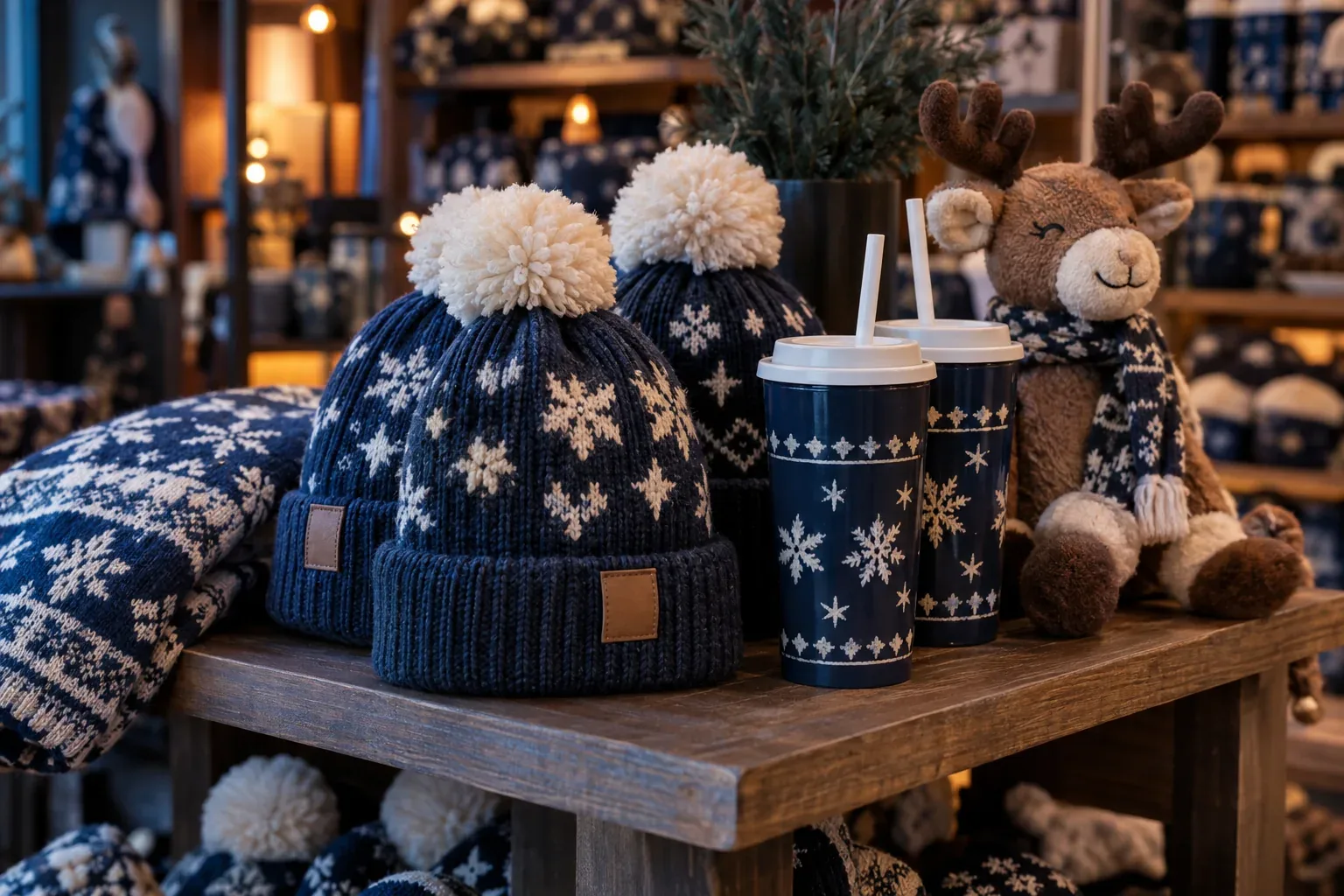 Guide
Gift shop merchandise in your own design, and how to order it a season ahead
Which gift shop items are worth making in your own design, what each one needs before it ships, and how to order the range a season ahead of opening.
Read the guide Guide
Plush toy testing, paperwork and labels for your gift shop's own design
Who does each job when your own plush is made in China: the lab report, the importer's paperwork, what the broker files at entry, and the sewn labels.
Read the guide
Questions
Questions buyers ask
What is the process of making a stuffed animal?
The pattern's flat pieces are cut from plush fabric, and the face and any logo are embroidered or printed while the pieces are flat. The pieces are sewn inside out and turned, the fill goes in through a gap that is then closed by hand, and the plush is labelled, checked and packed. For your own design, a brief, a pattern and an approved sample come first, and a production sample goes to a lab before the run ships.
How hard is it to make your own plush instead?
Sewing one plush by hand is a craft project, and plenty of people take it on. Stock for a shop is a different job: every piece has to come off the same pattern, match a sample you approved, have its production sample seen by a lab and carry sewn labels. That is why a venue's plush is made in a factory.
How many samples does a custom plush take?
As many as it takes to sign one off. Often the first sample is the one, and a second follows when the face or the proportions are off. Sending every change in one round keeps the count down.
Can we approve the sample from photos?
For shape and colour, yes, if the photos are taken in daylight from every side. The face and the feel are easier to judge in hand, so ask for the sample itself when either is in doubt. Either way, a production sample goes to the lab before the run ships.
What can change between the approved sample and the run?
A new dye lot of the fabric, a different batch of fill, eyes or thread from another supplier, or a face embroidered on a different machine. The check against the approved sample catches the changes you can see, and a change of material sends the plush back to the lab. The plush page's questions cover keeping a plush out of a recall.
Request a quote
A landed quote for your plush
Send the drawing, how many of each design and the day it has to be on your shelves. The quote sets out the sample, the lab report, the run, the freight and the customs entry, line by line.
- Reply within 1 business day
- Landed cost, itemised
We take on the orders we can do well, and we will say so if yours isn't one of them.