Guide
Guide
Plush toy testing, paperwork and labels for your gift shop's own design
A venue that has its own plush made in China is the brand owner and the shop at once, and sometimes the importer too. US rules put the paperwork on whoever imports the plush: the certificate, and the data the broker files with it at entry. Who that is gets settled with each customer. The factory, the lab and the broker each do a part, and the sections below say which part is whose.
Who does what
Who does what when your own plush is made in China
Five parties have a hand in the paperwork for a plush made abroad: the factory, the lab, the importer, the customs broker and the shop. When a shop has its own design made, the importer and the shop are usually the same business.
| Job | Who does it | The rule |
|---|---|---|
| Make the production sample the way the run will be made | The factory | The sample has to be identical in all material respects to the plush you sell (16 CFR 1107.20(a)) |
| Have it tested by a lab CPSC has accepted for toys | The certifier's job under the rule. On an order with us it is arranged as part of the order, and with no report there is no shipment | 16 CFR 1107.20(a) |
| Test the sample and write the report | The lab. It writes a test report, and the certificate is a separate document | The certificate names the lab whose testing it rests on (16 CFR 1110.11(a)) |
| Fix a failure | The factory fixes it, and nobody certifies until the plush has been tested again | 16 CFR 1107.20(d) |
| Issue the Children's Product Certificate | Whoever imports the plush, settled with each customer before the order. A broker that enters the goods as importer of record can name another party as responsible | 16 CFR 1110.7(a) and 1110.3 |
| File the certificate's data with the customs entry | The certifier, through the customs broker | 16 CFR 1110.13(a)(1) |
| Give the certificate to each retailer | The certifier, to every distributor and retailer of the plush, your own shop included | 16 CFR 1110.13(b) |
| Keep the records for five years | The certifier | 16 CFR 1110.17 and 1107.26 |
| Sew in the tracking label and print it on the packaging | The factory, to details agreed for the order. The name on it can be yours, as the private labeler | Consumer Product Safety Act, section 14(a)(5) |
| Sew in "Made in China" | The factory | 19 CFR 134.11 |
| Register for the state law label | Whoever makes or imports the toy, in the states that register stuffed toys. A shop that only sells them does not register | State law (see the section on states below) |
| Approve every mark on the plush in writing | You | Our quoting rule: your written authorisation is kept with the order |
Each quote names our role on the order, seller of record or buying agent, and who imports the plush. For custom plush, we import the goods and deliver them unless another plan is agreed with you. The product page keeps the lab, the labels and the importer's paperwork, in short.
The certificate
The Children's Product Certificate: what it has to show
The certificate is the importer's own statement about the plush, and it rests on a CPSC-accepted lab's report on a production sample (16 CFR 1110.7). It has to show these details, among others.
The product
At least one identifier, such as a GTIN, SKU, UPC or model number, and a description that matches it. The SKU or barcode your shop already uses for the design can serve.
Each rule, listed separately
Every rule the certificate covers, copied from the lab report without adding or dropping any.
The certifier
The importer's business: its name, street address, city, state, country, email and phone.
Who keeps the records
The person who holds the test records, with their contact details. A staffed job title can stand in for a name.
The lab and the date
The lab whose testing the certificate rests on, with its contact details, and the date of the test.
Your attestation
A statement that the certifier stands behind it. When the data is eFiled, that statement sits in CPSC's Product Registry or in the data the broker files.
The full list of elements is in 16 CFR 1110.11(a), and CPSC's page on the certificate sets each one out.
The rule says each finished product certificate must describe only one product (16 CFR 1110.13(a)), so a shop ordering four designs issues four certificates. A certificate drawn up by a factory or a lab does not move the job off the importer (16 CFR 1110.7(a)).
Which papers come with an order, and in what form, is worked out with each buyer, order by order.
The lab report
What the lab tests on a plush, and how to read the report
The lab tests a production sample and writes a report. Your certificate rests on that report, so read it before anyone signs.
Check the lab's scope
Find the lab on CPSC's list of accepted testing laboratories. A lab is accepted for particular rules, so check its testing scope: for a toy, it should list "Toy Safety" and 16 CFR Part 1250. The list can be filtered by country, so a lab in China can appear on it.
Test a production sample
The lab needs a sample made the way the run will be made (16 CFR 1107.20(a)). An early sample in a different fabric, or with different eyes, does not count.
Look for the toy standard by edition
The report should name ASTM F963-23, the edition 16 CFR 1250.2 makes mandatory. For a stuffed toy, CPSC's chart points to the sections on stuffing materials, small objects, and stuffed and bean-bag toys, where seams must not rip during testing. The eyes and nose are among the parts pulled and twisted. Sections on edges, points and cords apply when a design has them.
Expect the small-parts rule
16 CFR part 1501 covers toys meant for children under 3, and it lists "stuffed, plush, and flocked animals" among them, which is why it shows up on a plush report. Whether that covers a plush sold in a gift shop is answered on the custom plush page.
Lead and phthalates
Painted, printed, plastic and metal parts are checked for lead (16 CFR part 1303), and plasticised parts for the restricted phthalates (16 CFR 1307.3). The figures are on the report.
Read the sample description
Compare it with your plush: the design, the SKU, the colours and the eyes. A report on another fabric or another eye belongs to a different plush.
A failure stops the certificate
A failed test is looked into and fixed, and the plush goes back to the lab before anyone certifies it (16 CFR 1107.20(d)).
How the production sample is made, and the run checked against it, is in how stuffed animals are made. What the lab report adds to the quote is on the product page.
eFiling
eFiling: how the certificate's data reaches the broker
Since July 8, 2026, the certificate's data goes to CPSC with each customs entry. The certifier answers for it, and the broker does the filing.
Before the plush sails
The data is filed with the entry, so plan for the lab report and the certificate to be complete before the container leaves China.
Choose how the data travels
Either the broker gets the certificate's data elements and files them in CPSC's message set, or the certifier enters the certificate once in CPSC's Product Registry and gives the broker three identifiers: the Certifier ID, the Product ID and the Version ID.
At entry
The broker files the data with the customs entry (16 CFR 1110.13(a)(1)). Goods entered from a Foreign Trade Zone follow from January 8, 2027. If your broker or forwarder is the importer of record, it can name you as the party responsible (16 CFR 1110.3).
After entry
Keep the certificate and its records where you can produce them within 24 hours of a request (16 CFR 1110.13(c)), and give a copy to each retailer and distributor that stocks the plush (16 CFR 1110.13(b)).
Labels
What each sewn label has to say
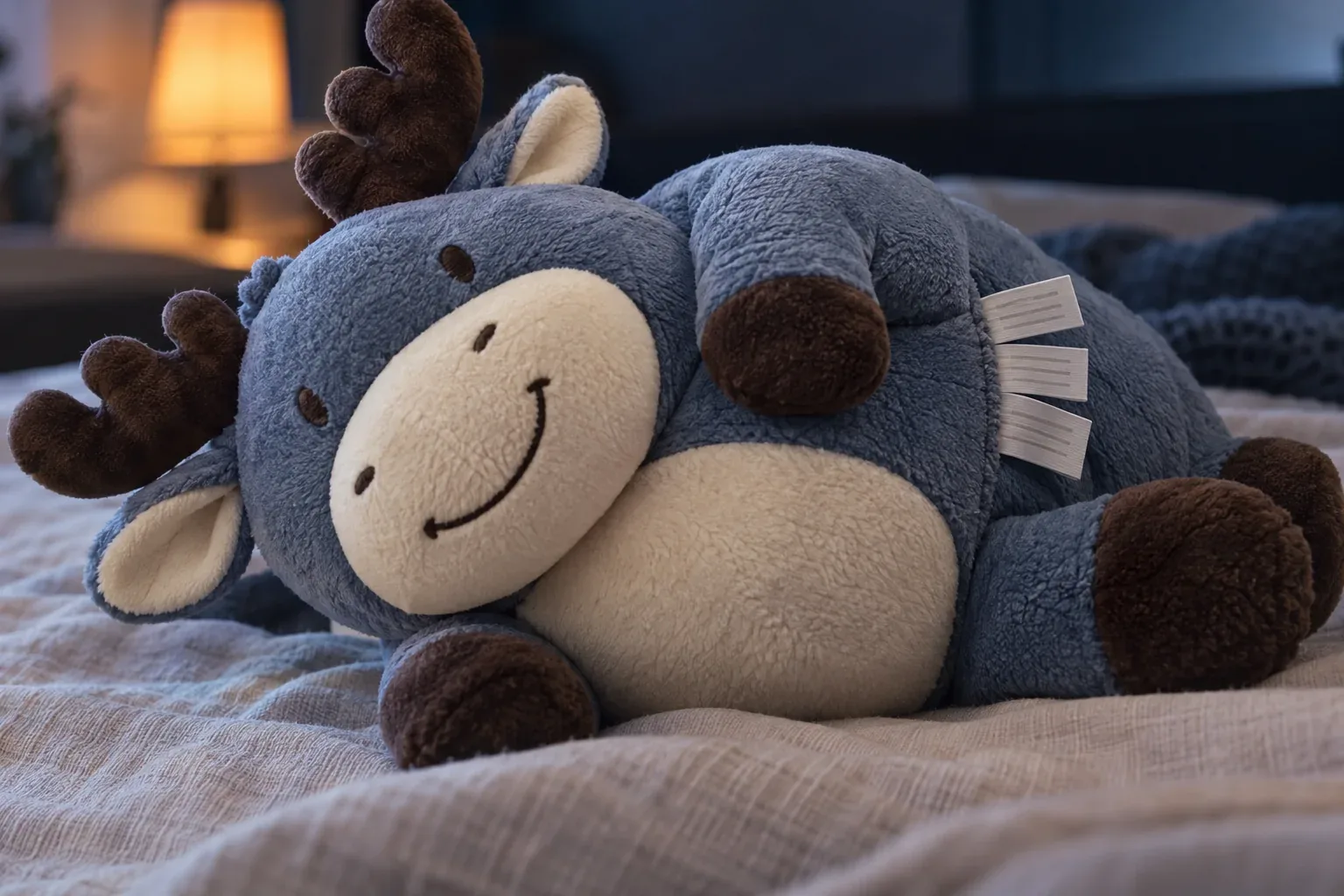
A plush carries three labels sewn into it, and the tracking details go on its packaging as well. Your own brand label can sit beside them.
| Label | What it carries | The rule |
|---|---|---|
| Tracking label | A name, which can be yours as the private labeler; where and when the plush was made; and its batch or run. It can be in code, as long as a buyer can tell whom to ask. It goes on the plush and on its packaging: CPSC's guidance says hangtags and adhesive labels are not permanent for these products | Consumer Product Safety Act, section 14(a)(5), and CPSC's tracking label questions |
| Country of origin | "Made in China", marked legibly, indelibly and permanently | 19 CFR 134.11 |
| Law label | "All New Material", the filling by its generic name, a registration number and the country of origin. Pennsylvania asks for a white law label, and Ohio's guidance names white vellum cloth or a comparable material | State law, in the states that register stuffed toys |
| Your own label or hang tag | Your marks. It sits beside the other three and replaces none of them | Optional. Every mark goes on with your written authorisation |
The label wording goes on the spec sheet with the rest of the plush, so the factory sews what you agreed.
State registration
States that register stuffed toys
The registration number on a law label comes from a state, and the states that register stuffed toys each run their own system.
In Pennsylvania, the Department of Labor & Industry registers stuffed toys and does not accept a registration issued by another state. A shop in Pennsylvania that only sells stuffed toys needs no licence of its own. The registration is held by whoever makes or imports the toy. The application needs a finished sample pulled from production, with an affidavit. Prototypes are not accepted, and no number is issued until the sample has arrived. A toy in a material the department has not approved needs a new application, a registration runs for a year, and once it lapses the toys it covers cannot be sold.
Ohio's Department of Commerce asks for a law label with a registration number on every stuffed toy sold or offered for sale. Its sample toy label reads ALL NEW MATERIAL, then the filling materials, then REG. NO., then MADE IN and the country. Its guidance says filling percentages are not required on a toy label.
In Massachusetts, the label reads "All New Material" with the type of filling, and carries either a name and address or a Massachusetts licence number (105 CMR 620.002(H)).
For other states, Pennsylvania's page sends sellers to the International Association of Bedding and Furniture Law Officials for the other states' contacts.
If you plan to sell in Pennsylvania, or want a registration in your own name as the importer, take it up with your own counsel before the order is placed. Which registrations an order needs is worked out with you, order by order.
Reorders
Reorders: when the plush goes back to the lab
A material change sends the plush back to a third-party lab, and it needs a new certificate (16 CFR 1107.23). That means a change to the design, to how it is made, or to where a part comes from, including a new supplier for a part or a different part from the same supplier. When only one part changes, that part can be tested on its own and read alongside the earlier results.
Periodic testing is the certifier's job too. In this part of the rules, "manufacturer" means whoever is responsible for certifying (16 CFR 1107.2), so for a design you keep reordering, the testing plan under 16 CFR 1107.21 is yours. Each reorder's quote says whether the earlier lab results still cover it or a new production sample goes to the lab.
A new run gets a certificate with the new run's date of manufacture. Keep the records for five years (16 CFR 1110.17), with a description of each material change (16 CFR 1107.26). In Pennsylvania, a toy in new materials needs a new application.
Where this applies
Custom plush toys, quoted landed
Each product page has what to specify, what sets the price and the quote form for that product.
Custom plush toys
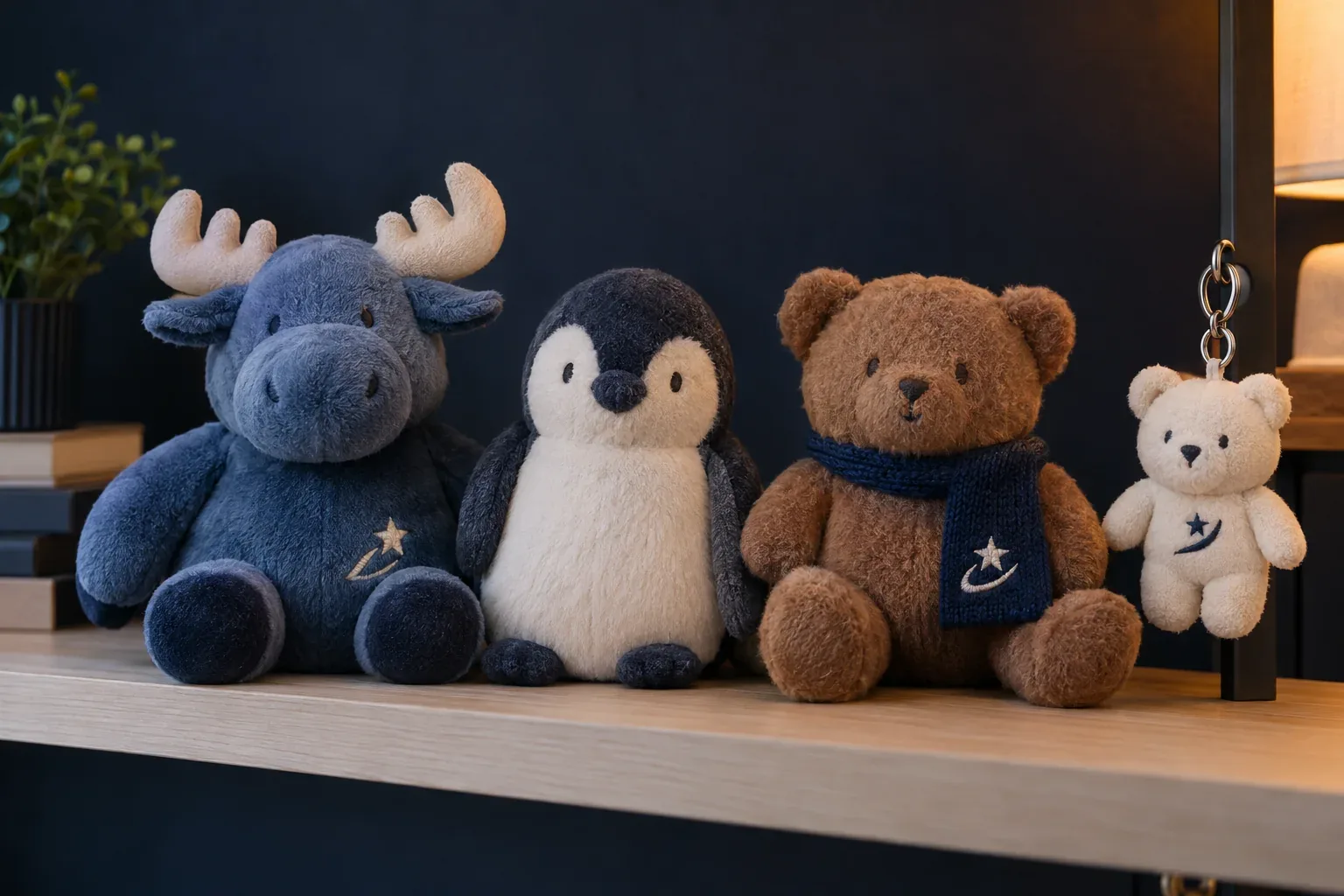
Your mascot or your animal as a plush, made to your design for an attraction's gift shop, or a plush animal wearing your logo on its shirt or scarf. Each piece carries sewn labels, including "Made in China", a sample from the run goes to a lab before the order ships, and the order is planned back from the day the plush has to be on your shelves.
See the custom plushWhere to go next
- How we workSeller of record or buying agent, and how the run is checked against the sample you approved.
- Custom merchandiseBeanies, blankets and cups for the same shop, which can travel in the same container as your plush.
- Landed cost calculatorAdd up the plush, the lab report, the freight and the broker's fees for one shipment.
More guides
More guides: Custom merchandise for attractions and venues
 Guide
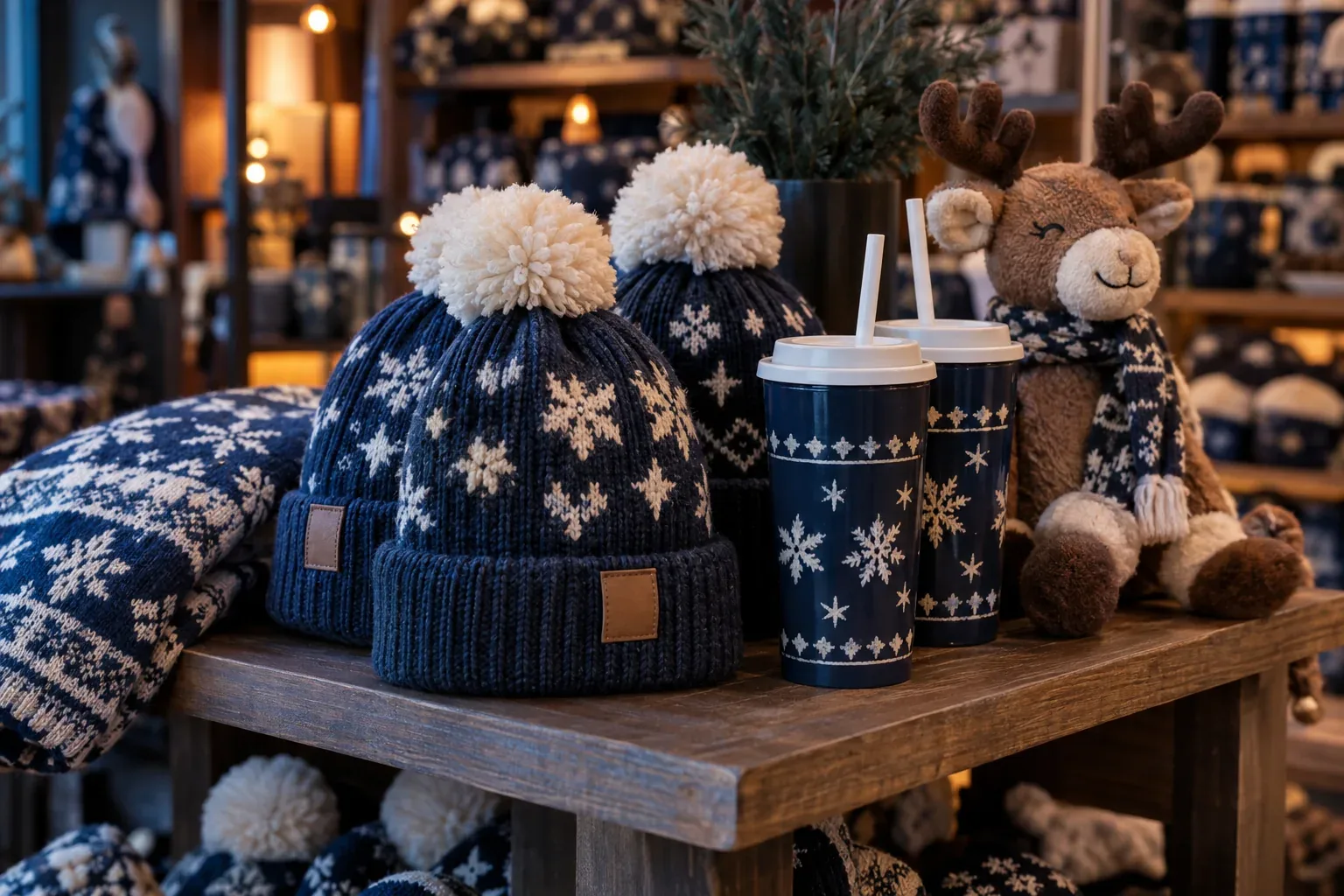
Gift shop merchandise in your own design, and how to order it a season ahead
Which gift shop items are worth making in your own design, what each one needs before it ships, and how to order the range a season ahead of opening.
Read the guide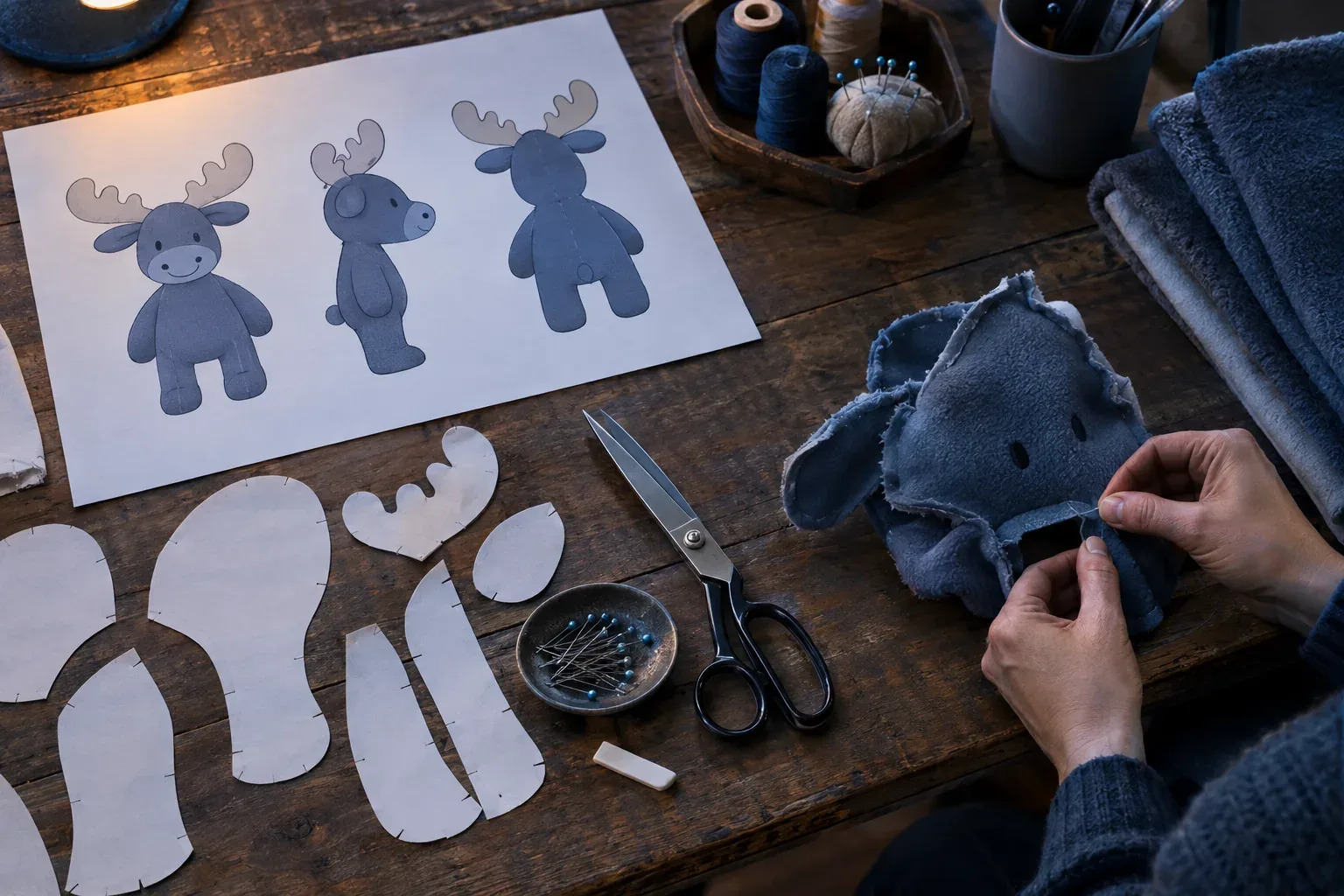 Guide
How a stuffed animal is made, from your mascot drawing to your gift shop shelf
The steps from your mascot drawing to a plush on your shelf: the pattern, the samples, the lab report and the run, and what the factory needs from you at each one.
Read the guide
Questions
Questions buyers ask
What is the difference between ASTM F963-17 and ASTM F963-23?
F963-23 is the edition the federal toy rule makes mandatory (16 CFR 1250.2), and CPSC applies it to toys made after April 20, 2024. A report on a new plush should name F963-23. The clause-by-clause changes are in the standard itself, which ASTM sells.
Who is responsible for CPSC eFiling, and since when?
The certifier, which for a plush made abroad is the importer. The customs broker files the data with the entry, either from the certificate's data elements or from the three IDs in CPSC's Product Registry. Filing has been mandatory since July 8, 2026, and goods entered from a Foreign Trade Zone follow on January 8, 2027.
What does "CPSIA certified" mean?
There is no federal approval behind the phrase. A Children's Product Certificate is a statement the importer makes and stands behind (16 CFR 1110.7 and 1110.11), resting on a CPSC-accepted lab's report on a production sample. A seller's badge, or a certificate drawn up by a factory, does not take the place of the importer's own.
Is a plush tested by a lab in China accepted in the US?
It can be, when the lab is on CPSC's list of accepted labs with toy safety (16 CFR Part 1250) in its scope. The list can be filtered by country. The rest is the importer's: the certificate, the data filed at entry, the sewn labels and any state registration.
Do we need a Pennsylvania registration to sell plush in our shop?
Not to sell it. A shop in Pennsylvania that only sells stuffed toys needs no licence of its own. The toys themselves need a Pennsylvania registration number on the law label, held by whoever makes or imports them, and Pennsylvania accepts no other state's number. Ask before you sell there.
Does every plush design need its own certificate?
Yes. A certificate describes one product (16 CFR 1110.13(a)), so each design gets its own, and its own test report, unless the lab has tested shared materials as component parts. Ask the lab whether that applies to your designs.
Request a quote
A landed quote for a plush in your design
Send the design, how many of each, and the day it has to be on your shelves. We talk through who imports it and what paperwork your shop needs, then come back with the date and the landed quote.
- Reply within 1 business day
- Landed cost, itemised
We take on the orders we can do well, and we will say so if yours isn't one of them.