Guide
Guide
Types of crowd control barriers, and which one each venue needs
Catalogs sell five different products as crowd control barriers, and each one does a different job: holding back a crowd that leans, marking a path, keeping cars out of a lane, keeping an indoor queue tidy, or taking the push at a stage. Here they are venue by venue, with what the fire code official and the road agency look at, and where steel fits.
Types
Five products sold as crowd control barriers
These are the types of crowd control barriers you will find under that one heading, and what each one is built to do.
Steel bike rack barricades
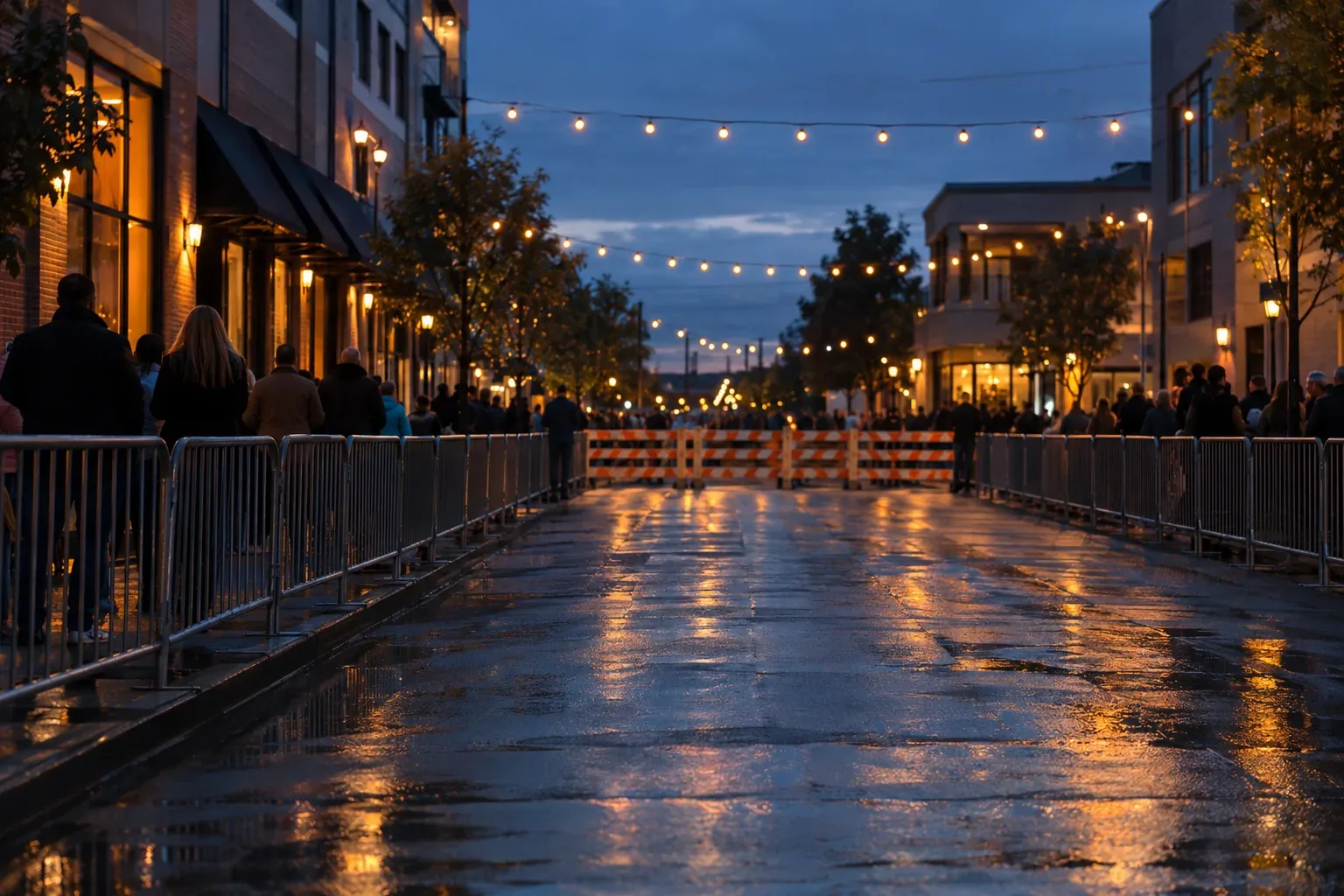
Rigid steel frames with upright bars, standing on removable feet and hooked end to end. You will also hear them called police barricades or French barriers. They make the outdoor line a crowd leans on: the curb of a parade route, a festival gate, the approach to a stadium. Bike rack barricades has what goes into specifying them.
Plastic barricades
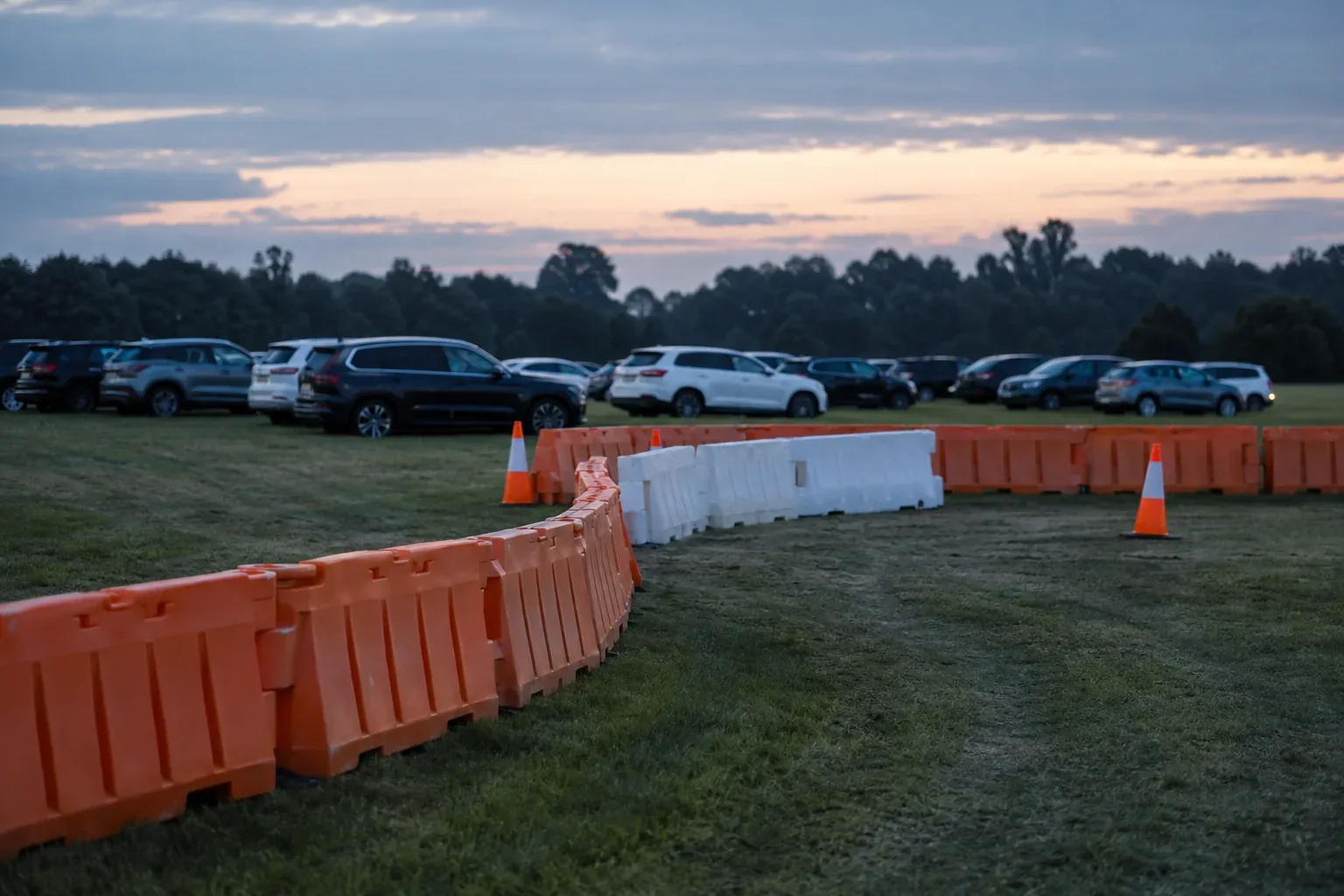
Molded plastic panels that lock together. They are light, and some are hollow so you can fill them with water or sand to keep them in place. They mark a path or separate two areas where nobody leans on the line, and many have a flat panel for a sign.
Water-filled barriers
Hollow plastic units shaped like a concrete highway barrier and filled with water on site. They come from road and work-zone supply, and events borrow them to close a road or keep cars in their own lane.
Retractable belt stanchions
A post on a weighted base, with a belt that pulls out and clips to the next post. They keep an indoor queue tidy at a box office, a registration desk or a bar. They are not built to hold back a crowd that pushes.
Front-of-stage barriers
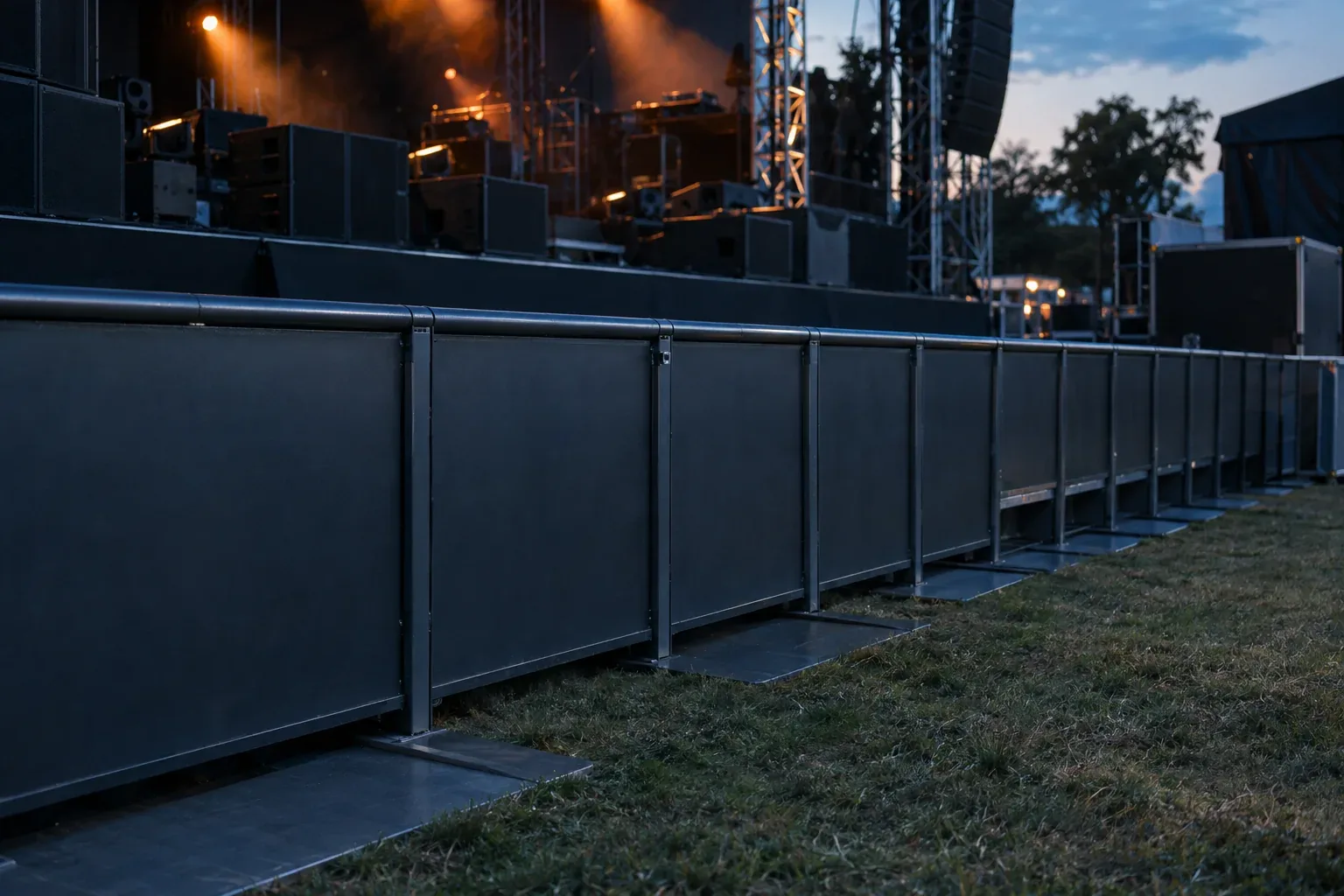
Steel or aluminum sections with a footplate on the audience side, which the crowd stands on, and a raised step behind for security staff. They belong at the front of a stage, where a packed crowd pushes forward.
Two things are not on this list. Type 1, 2 and 3 barricades are road devices that close or mark a road or a work zone, and the fencing around a festival site is a different product again.
Barricade or barrier? People use the two words for the same things, and so do the catalogs, so go by the product rather than the word.
By venue
Which barrier each venue needs
Find your event in the first column. Most events use more than one type.
| Venue or job | The barrier for it | Also used | Where steel barricades fit |
|---|---|---|---|
| Fairground or festival site | Fencing around the perimeter, which is not a barricade. Steel barricades inside the site | Plastic barricades to mark paths | Gate queues, ride and stage-area lines, and keeping people away from cables and generators |
| Parade route or street festival | Steel barricades along the curb | Type 3 barricades and signs at closed cross streets, set out under the road agency's traffic plan | The curb line, with gate frames at the crossings |
| Concert, front of stage | A front-of-stage barrier | Steel barricades further back | The mix position, the side lines and the lines into the entry. Not the front of a packed stage |
| Queue line | Belt stanchions for a short, calm line indoors. Steel barricades outdoors, for a long line, or for one that pushes | Rope and posts at a VIP entry | Switchback queues at gates and box offices |
| Parking lot and vehicle routes | Water-filled barriers, and plastic barricades with cones | Type 1 or 2 barricades to carry signs | Walkways from the parking lot to the gate |
| Stadium gate or fan zone | Steel barricades | Belt stanchions inside the concourse | The approach lines and the edges of each zone |
A starting point for the event plan. The venue, the fire code official and, where a street is involved, the road agency sign off on the real one.
Street events
A street event needs two kinds of barrier
When an event closes a street, two separate lines go up, and different people decide where each one goes.
The first is the closure, which faces moving traffic. The federal traffic manual, the MUTCD, says a planned special event that affects traffic on a street should have a temporary traffic control plan, worked out with and approved by the agency that runs the road (Part 6, section 6B.01). The barricades, cones and signs at the closure come from that manual, and the plan says where they go.
The second is the crowd line behind the closure. Steel barricades along the curb hold people back, with gate frames wherever the plan needs a crossing or a way through for an ambulance or a fire truck.
If the plan moves people off a sidewalk, ask the road agency what it wants along the new route. The MUTCD requires devices that guide pedestrians to be detectable by people who use a long cane. Whether a line of barricades will do there, or whether the agency wants pedestrian channelizing devices made for the job, is the agency's call.
Permits
What the fire code official and the permit office look at
Each city works from the fire code it has adopted, often with its own changes. Expect these questions, and get the answers from your city.
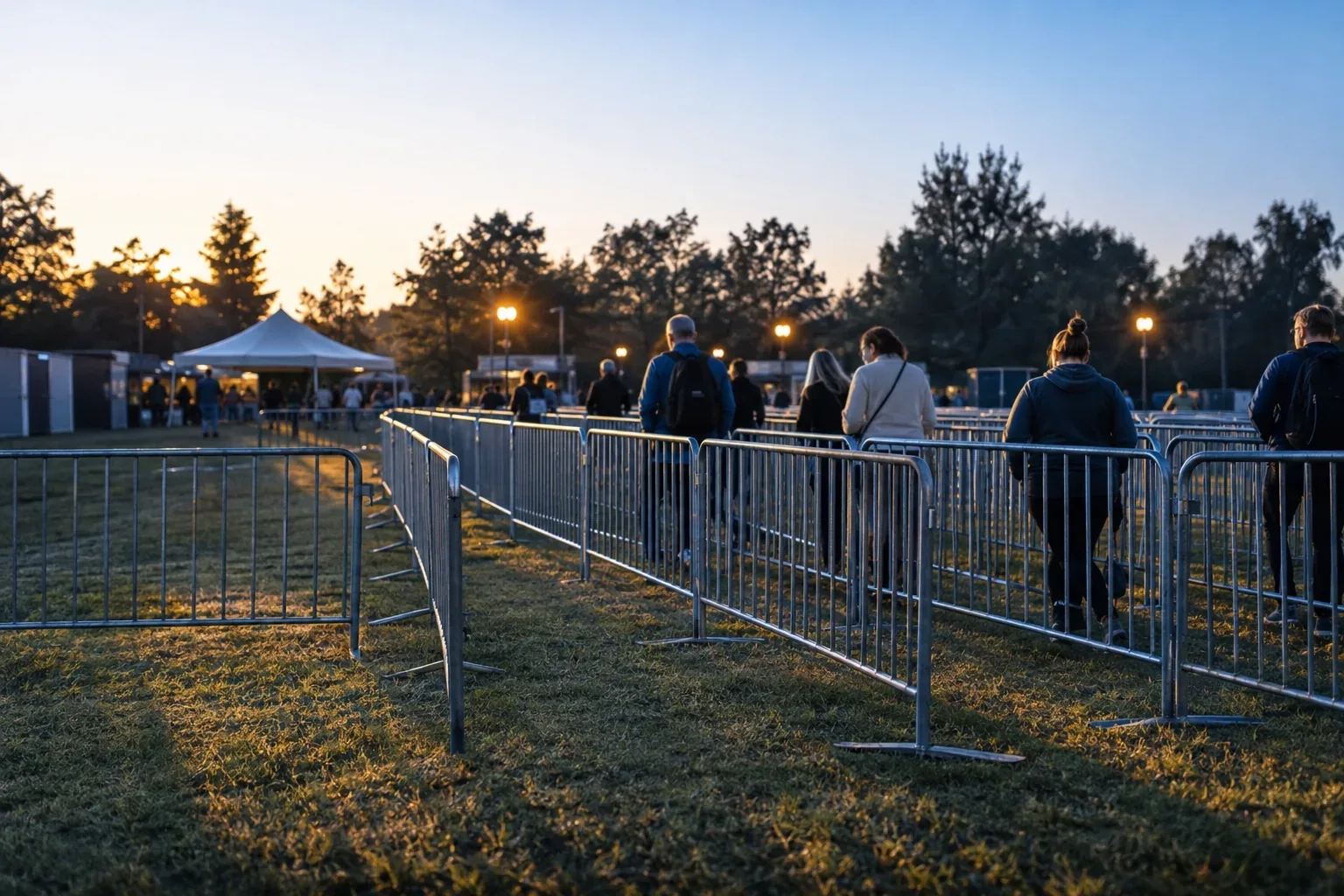
Draw every line on the site plan
Show each barricade line, gate and emergency access lane on the site plan you file. One city's checklist gives the idea: Las Vegas Fire & Rescue's planning sheet for events on Fremont Street (revised in 2011) asks for the locations of any barriers, fencing or barricades, and for any removable sections meant for emergency access.
Keep exits and access lanes clear
A barricade line must not block an exit or an emergency access lane. In a building, the International Fire Code keeps every exit path free of obstructions (2024 edition, section 1032.2). For an outdoor gathering, the fire code official can ask for a public safety plan that covers emergency vehicle access and escape routes (section 403.11). Put the gates where responders will need them.
Name who opens the gates
Above a crowd size that the adopted fire code sets, an event needs trained crowd managers, and one of the jobs the International Fire Code gives them is to identify and address any egress barriers. Decide who opens each gate and who walks the lines, and write it into the plan.
Leave an accessible route
Keep an accessible route past every line, and through every queue that serves a counter such as a ticket window or a bar. The 2010 ADA Standards for Accessible Design are the reference (sections 201.3, 227.5 and 403). The venue or the permit office says how they apply to your event.
Set the lines before people arrive
OSHA's crowd management guidance for retailers, a 2012 fact sheet written for big sale days, says to set up barricades or rope lines well before customers arrive, to keep the line from starting right at the entrance, to build in breaks and turns so people at the back cannot push the whole line forward, and never to restrict exits. It is guidance, not a rule, and it fits an event gate just as well.
Steel
When steel barricades are the ones to own
Look back at the table: steel barricades turn up in nearly every row. Rental fleets, cities and venues that run outdoor events use them at the curb, the gate and the queue, and add to the same fleet each season.
That is the type we have made in China to your specification and shipped by the container. Steel crowd control barricades built to your spec covers the frame, the feet, the finish and what to send for a quote. Any paperwork your venue, fire marshal or importer needs is worked out with you for each order.
If you rent barricades out, the party rental business guide covers buying them alongside tents and chairs.
If most of your work is indoor queues or the front of a stage, buy stanchions or stage barriers from the companies that make them, or rent them. We do not quote those.
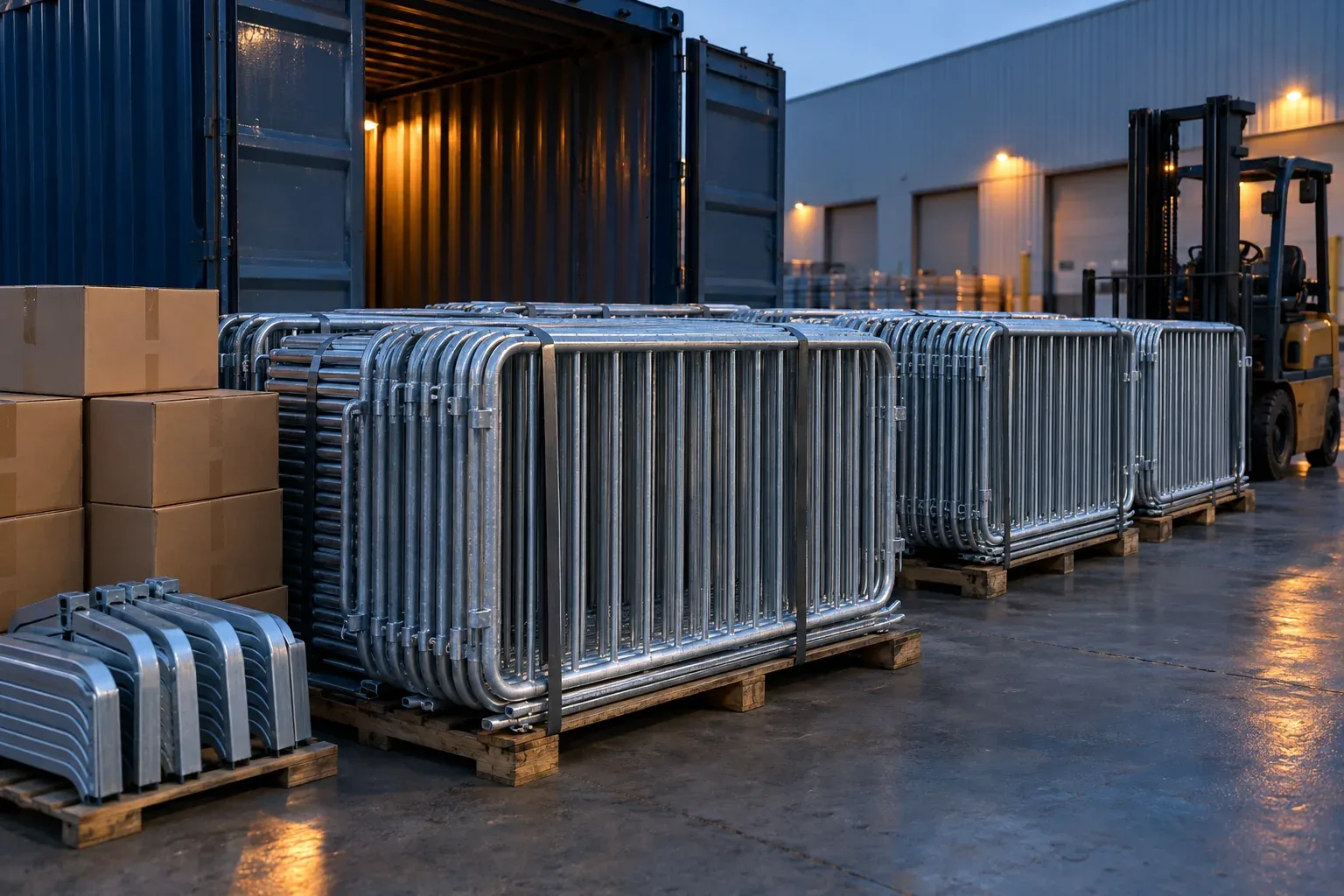
Where this applies
Steel crowd control barricades, quoted landed
Each product page has what to specify, what sets the price, how the date is set and the quote form for that product.
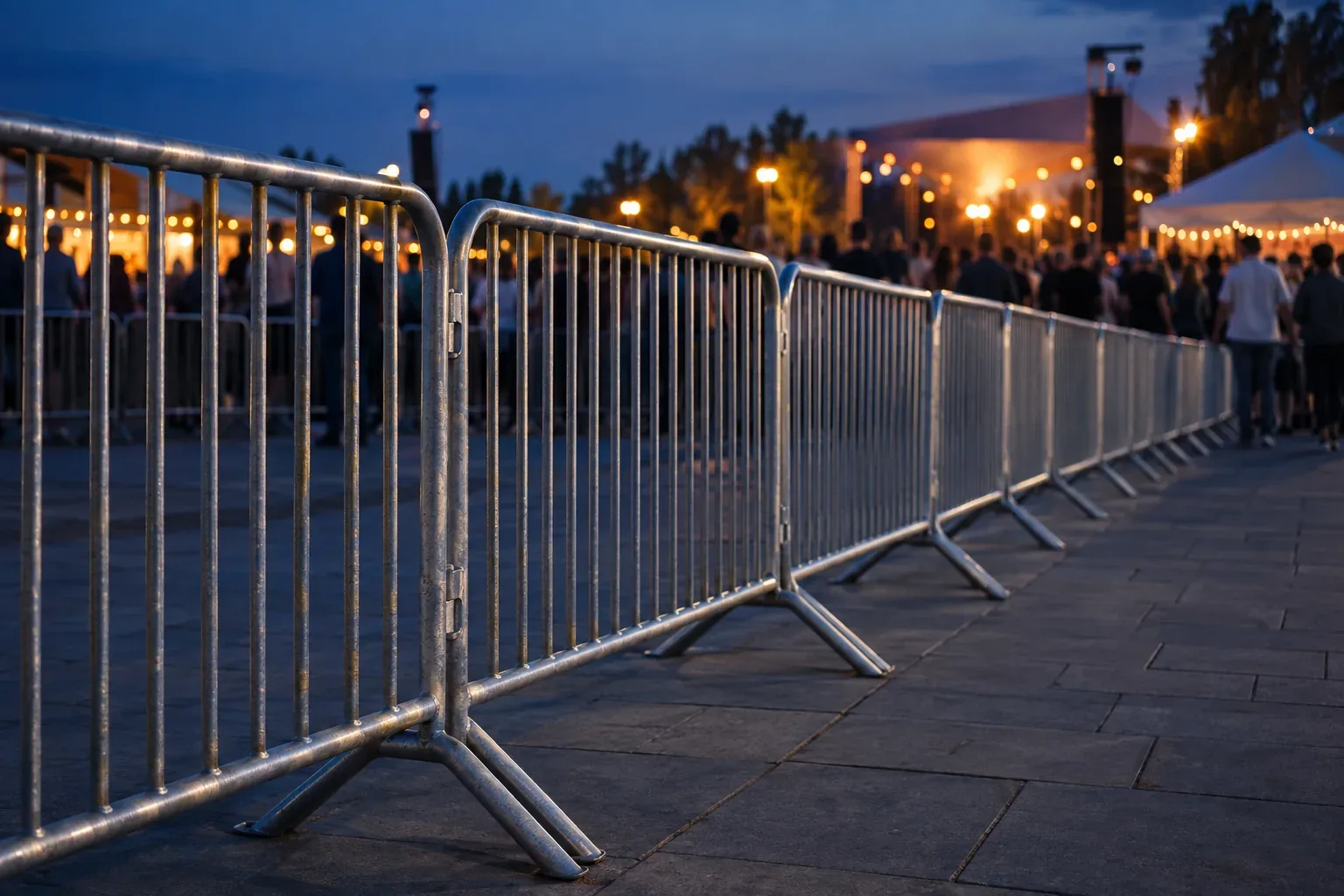
Steel crowd control barricades
Bike rack barricades, also called police barricades or French barriers: a welded steel frame with upright bars that hooks into the next one. We have them made to your specification and shipped by the container, for event companies, rental fleets and cities. A Type III road barricade, with its reflective boards, is a different product. Send the frame, the feet, the finish and how many, and we come back with the date and the landed quote.
See the barricadesWhere to go next
- Event suppliesBarricades beside the chairs, tents and other stock a rental fleet carries.
- How we workHow a specification becomes a factory order, a check at the factory and a container.
- Landed cost calculatorSet a landed price against a US stockist's.
- Request a quoteSend the frame, the feet, the finish and how many.
More guides
More guides: Wholesale event supplies
 Guide
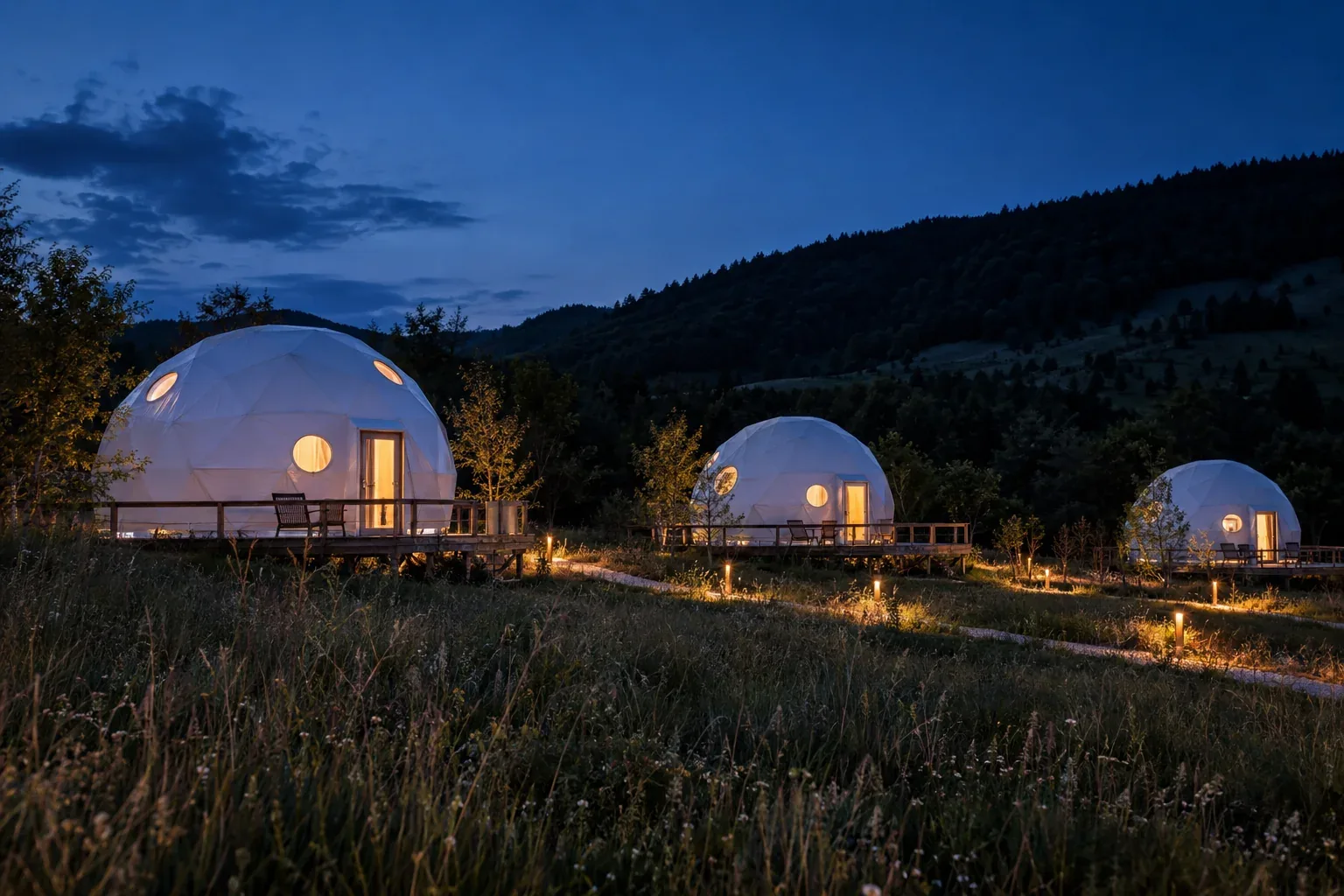
How to start a glamping business with domes: permits first, then the order
For a landowner or campground putting in several domes: what the county, the state and the fire marshal settle first, and how that shapes the order.
Read the guide Guide
NFPA 701 paperwork for tent fabric made in China
What a fire marshal can ask to see for a tent top or sidewall, who signs each paper, what goes on the label, and why California asks for something else.
Read the guide Guide
How to start a party rental business: what to buy first and where to buy it
What a new rental business buys first, when a US wholesaler is the better route, and how tents, chairs and barricades share one container.
Read the guide
Questions
Questions buyers ask
What are the different types of crowd control barriers?
Five products are sold under the name: steel bike rack barricades for outdoor lines that people lean on, plastic barricades for marking paths, water-filled barriers for vehicle lanes and closed roads, retractable belt stanchions for indoor queues, and front-of-stage barriers for the push at a concert.
What are the barriers called at concerts?
At the front of the stage they are front-of-stage barriers, also called stage barriers, pit barriers or crash barriers. They have a footplate on the crowd's side and a step behind for security staff. Further back, at the mix position and along the lines into the venue, you will usually see steel bike rack barricades.
What are street barricades called?
A street event has two kinds. Where the street is closed to traffic, the striped road barricades are Type 3 barricades, set out under the traffic plan. Along the curb, holding the crowd, are steel barricades, which go by several names. The bike rack barricade page lists them.
What are Type 3 barricades?
A Type 3 barricade is a road barricade with three striped, reflective rails. The MUTCD counts it as a traffic control device, used to close or restrict a road. At an event it goes where the traffic plan puts it, usually at a closed cross street, and it marks the closure for drivers. It is not built to hold back a crowd.
What does OSHA say about barricades?
OSHA's barricade rule sits in its construction standards, and for work zones it points to Part 6 of the MUTCD (29 CFR 1926.200(g)(2)). For crowds, OSHA has published guidance for retailers: set the lines up early, build in breaks and turns, and never block an exit. It is guidance, not a rule. The fire code your city has adopted, and your event permit, set the actual requirements.
Stanchions or barricades: which do I need for a queue?
For a short, calm queue indoors, belt stanchions do the job and move easily. For a long line outdoors, or a crowd that may push, use steel barricades, and build in breaks and turns so the back of the line can't press on the front.
What are water-filled barriers used for at an event?
They are plastic road barriers, shaped like a concrete highway barrier and filled with water on site. Events use them to close a road, line a vehicle lane or edge a parking lot. Some are sold with a crash test for road work zones. That test belongs to the maker, so ask the seller for the report rather than assuming one unit will stop a vehicle.
Request a quote
A landed quote for steel barricades
Send the frame, the feet, the finish and how many, and we come back with the date and the landed quote.
- Reply within 1 business day
- Landed cost, itemised
We take on the orders we can do well, and we will say so if yours isn't one of them.