Guide
Guide
NFPA 701 paperwork for tent fabric made in China
Before a tent goes up, a fire marshal can ask to see three things: a certificate that its fabric passed the NFPA 701 flame test, a label on the tent, and an affidavit about the fabric. Who signs each one, and what it has to say, depends on the edition of the fire code your area has adopted. California asks for a registration instead of an NFPA 701 report.
The test
What NFPA 701 certification means, and who issues it
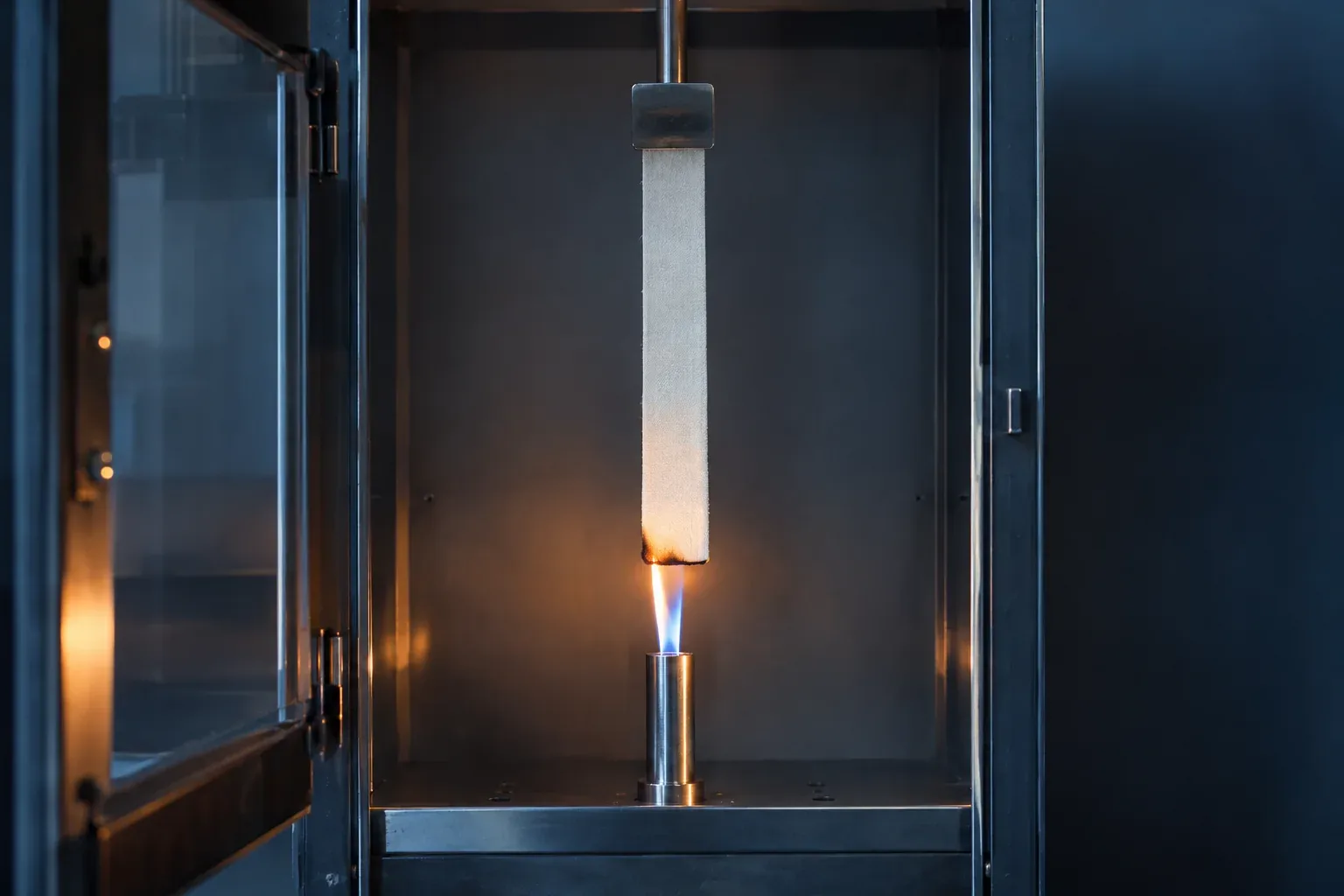
NFPA 701 is a fire test for fabrics and films. The National Fire Protection Association writes it and sells it, and the current edition dates from 2023. NFPA does not test fabric or hand out certificates. A testing lab runs the test on a named fabric and writes up the result. So when a seller describes a fabric as "NFPA 701 certified", the thing to ask for is that lab report, on that fabric.
The standard has two test methods. Tent tops, sidewalls, drops, tarpaulins and floor coverings go to Test Method 2. The standard's own scope says so, and so does the tent section of the International Fire Code (section 3104.2 of the 2018, 2021 and 2024 editions).
The code calls the paper a certificate, and the editions disagree about who signs it. Under the 2018 text, an approved testing laboratory executes it. Under 2021 and 2024, the product's manufacturer provides it, to verify that an approved lab tested the materials. "Approved" has a narrow meaning in the code: acceptable to the fire code official. Whether a particular lab's report is accepted is up to your fire marshal, and that includes a lab in China.
A pass has limits, and the standard says so itself: its tests do not show how a fabric will behave in a larger fire. A rating to another country's flame standard comes from a different test. If your fire marshal wants NFPA 701, ask for NFPA 701 by name.
The papers
Three papers the fire code asks for, and who signs each
Section 3104 of the International Fire Code names three papers for a tent's fabric. What each one carries depends on the edition.
| Paper | Who provides it | When it is used | What it shows |
|---|---|---|---|
| Certificate | 2018: an approved testing laboratory. 2021 and 2024: the product's manufacturer, to verify an approved lab's test | Filed with the fire code official before the permit is granted | The materials tested and the NFPA 701 test method used |
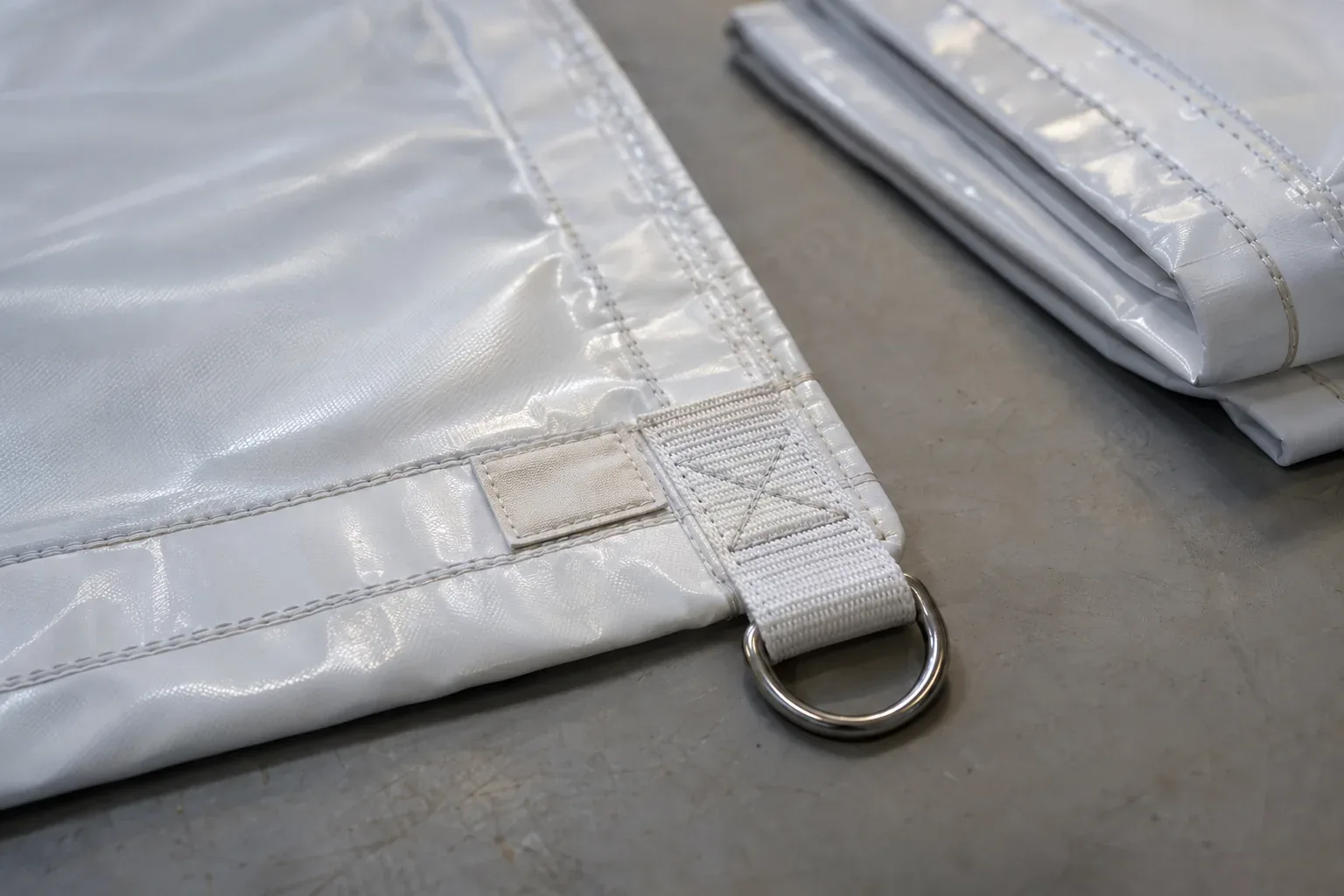
| Label | Whoever makes the tent, fixed on permanently | Read by the inspector on site and compared with the certificate | 2018: the size and the fabric or material type. 2021 and 2024: more than that, including a statement about the fabric's flame test and either the treatment details or a statement that no treatment was applied |
| Affidavit | The tent's owner | Filed with the fire code official. Under the 2018 text, a copy stays where the tent stands | 2018: the owner's details, when the fabric was last treated and with what, who applied the treatment, and the testing agency and standard. 2021 and 2024: everything the label carries |
Which edition applies is up to the city or state that adopted it, and some run an edition or two behind: Peoria, Illinois, cited the 2012 code on its tent permit page in 2022. Ask your fire marshal which edition they enforce and which papers they want to see.
Each product page keeps a short version: the fire marshal's questions for party tents, for geodesic dome tents and for outdoor igloos.
Fabric and lot
Is the paper for the fabric, the batch or the tent?
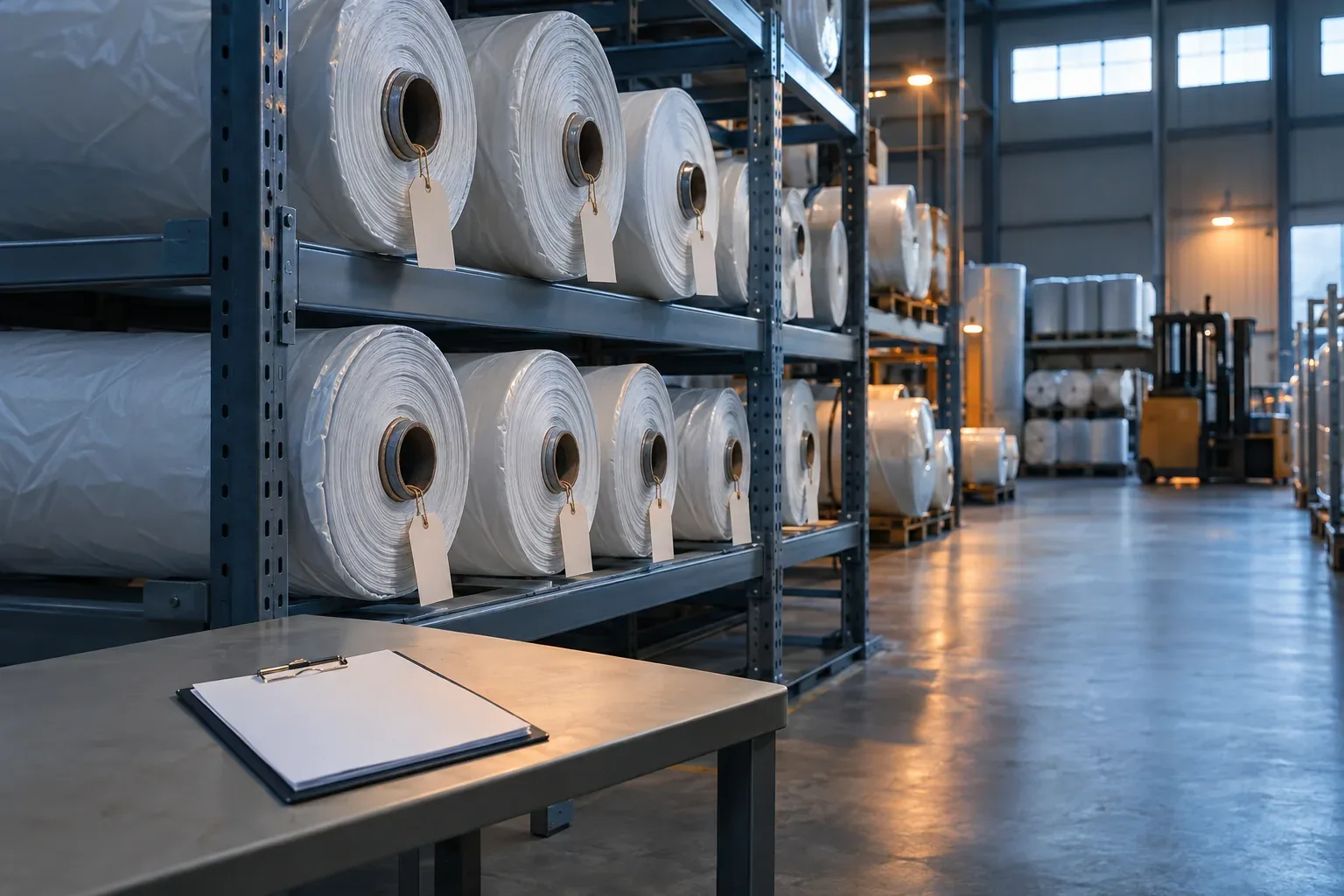
The lab report covers a fabric as the mill makes it, named by the mill's fabric code. The label goes on each tent, on every top and sidewall. In between sits the production lot, and California's rules deal with it directly.
California ties each Certificate of Flame Resistance to the fabric's production or lot control number (Title 19, section 1321.1). When a company registers a fabric it did not make under its own name, every lot has to be numbered and recorded (section 1275). The CPAI-84 label that small tents may carry instead has a code number that traces back to the suppliers' lot numbers, and those records are kept for four years (section 335).
Elsewhere, the fabric code is what links a tent to its report. Fix the code in the order, record it with the lot number for every top, and ask your fire marshal whether a report on that fabric covers later lots made the same way.
Replacement tops follow the same logic. A new top in the same fabric code can be shown against that fabric's report, and it gets a label of its own. A top in a different fabric, or the same style from another mill, needs a report on its own fabric. Whether a new top will fit the frames you already own is a separate question, answered on the party tents page.
Treatments also wear. Treated fabric carries the date of its last treatment on the label and the affidavit, and for some treatments California's roll tag has to say the fabric must be treated again after washing (Title 19, section 1324). The fire code's flame rule holds for the period the permit specifies, so a fabric washed many times since its report is worth raising with the fire marshal before the event.
The details
What the papers have to show when the tent was made in China
Fabric made abroad is asked about the same way as fabric made at home. These are the details that have to line up.
A report on the exact fabric
It names the lab, the date, the test method and the fabric by its code. A report on a similar fabric is not a report on yours, and a different weight or color of the same fabric is worth asking about.
A lab your fire marshal accepts
The code leaves that to the fire code official. If the report comes from a lab in China, ask whether it will be accepted before the order is placed, not after the tents land.
Treated or untreated
For treated fabric, the papers give the date, the chemical, who applied it, and the testing agency and standard. For untreated fabric, the 2021 and 2024 label says that no treatment was applied.
A label on every top and sidewall
Each one carries the fields your edition asks for. A sidewall is its own piece of fabric, so it carries its own label.
One fabric code from report to roll
The code on the report should match the rolls the tops were cut from and the label sewn into them, because the label is what the inspector holds up against the certificate.
For California, a registration number
The fabric's registration with the State Fire Marshal, which works differently from everywhere else (next section).
Which of these papers come with an order, and in what form, is worked out with each buyer, order by order, against what your fire marshal, venue or importer has asked for. Two things hold every time: with no lab report on the fabric there is no order, and fabric for tents that will stand in California is checked against the State Fire Marshal's list. How we check goods at the factory is on its own page.
California
California: a registration, not an NFPA 701 report
California's fire code (the 2025 edition, section 3104.2) asks for a registration from the product manufacturer, showing that the materials were tested by a lab the State Fire Marshal has approved, to Title 19, section 1237.1. That is a different test and a different paper from the NFPA 701 report used in other states.
Tops and sidewalls are either treated by an approved application concern with an approved exterior chemical, or made from an inherently flame-resistant fabric approved and listed by the State Fire Marshal (Title 19, section 315). Large tents carry a durable label on each section of top and sidewall with the Seal of Registration and the registration numbers (section 335).
The company the fabric is registered to issues a Certificate of Flame Resistance for each sale, with copies to the buyer, the State Fire Marshal and the local fire authority, within ten days of shipping (section 1321.1). A company that sells a fabric it did not make can register it under its own name, with the mill's written consent and a notarized statement that the fabric stays identical (section 1275).
The testing has to be done by a lab on the State Fire Marshal's list. As revised in April 2026, the list names labs in the United States and one in Canada, and none in China. A report from a lab in China does not, on its own, register a fabric in California.
California also sorts tents by how many people they are designed for. One designed for fewer than ten is a small tent (section 310), and small tents may carry the CPAI-84 label instead (section 335). If your tents will stand in California, ask the fire marshal there which route applies, and ask for the registration number so you can confirm it with the State Fire Marshal's flame retardant program.
On site
From the permit to the inspection: when each paper is used
Before you order
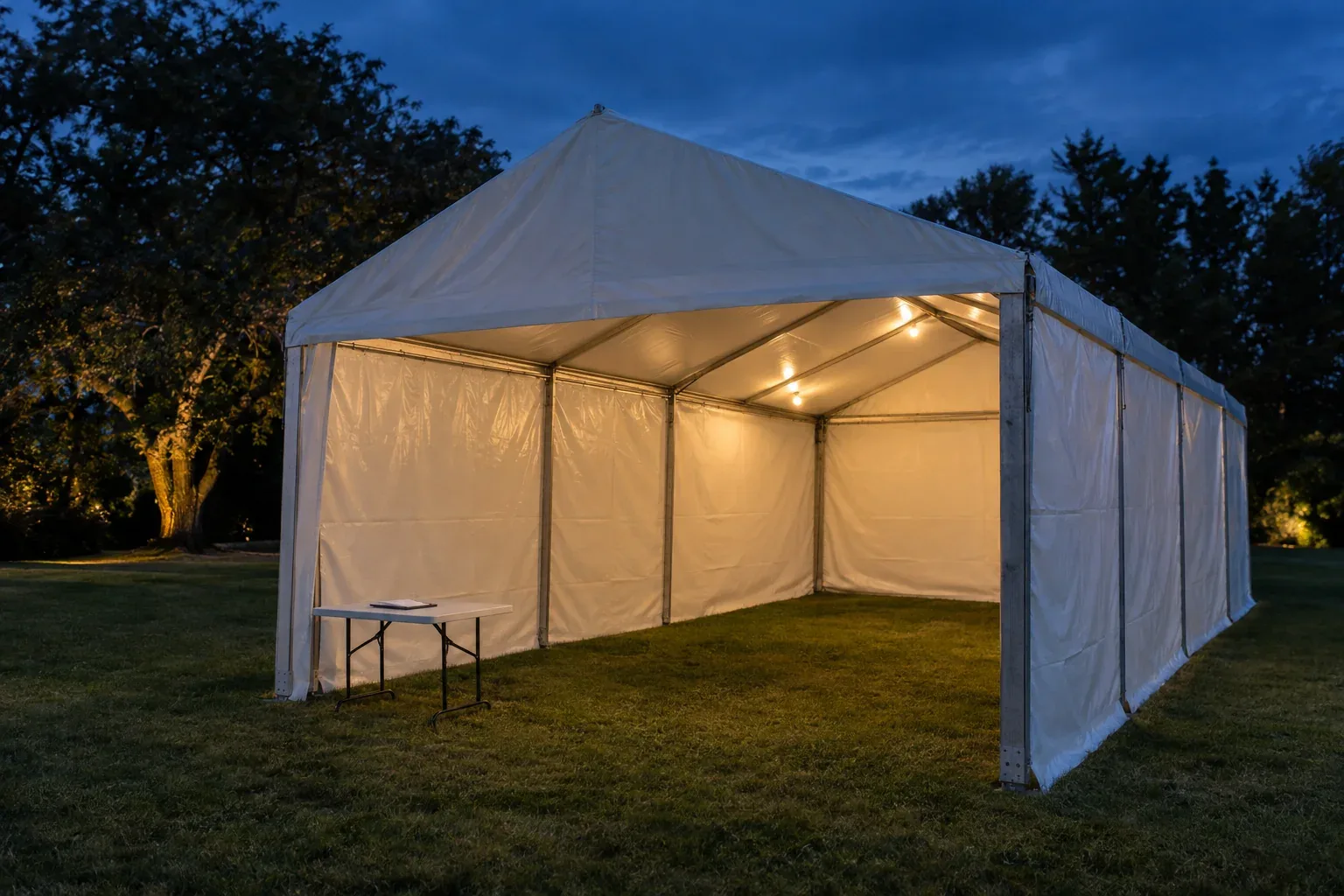
Ask the fire marshal which edition of the code they enforce and which papers they want. Cities publish their own size limits for tent permits, and they differ from place to place and from the model code's size lines, so read the rules for the place the tent will stand.
Before the permit is granted
The certificate, or in California the registration, is filed with the fire code official (section 3104.2).
With the permit
The affidavit is filed as well. Under the 2018 text, a copy is kept where the tent stands (section 3104.4).
At the inspection
The inspector reads the label and compares it with the certificate. Peoria, Illinois, spells out what happens next: a tent with no label, or with a label that does not match the flame certificate, is ineligible for use, and using it brings a citation.
While the permit runs
The owner inspects the tent, and an inspection report that the fire code official asks for covers the fabric along with the maintenance and the anchors (2024 edition, sections 3103.6 and 3103.6.1).
Where this applies
The products this guide covers
Each product page has what to specify, what sets the price, how the date is set and the quote form for that product.
Party and event tents
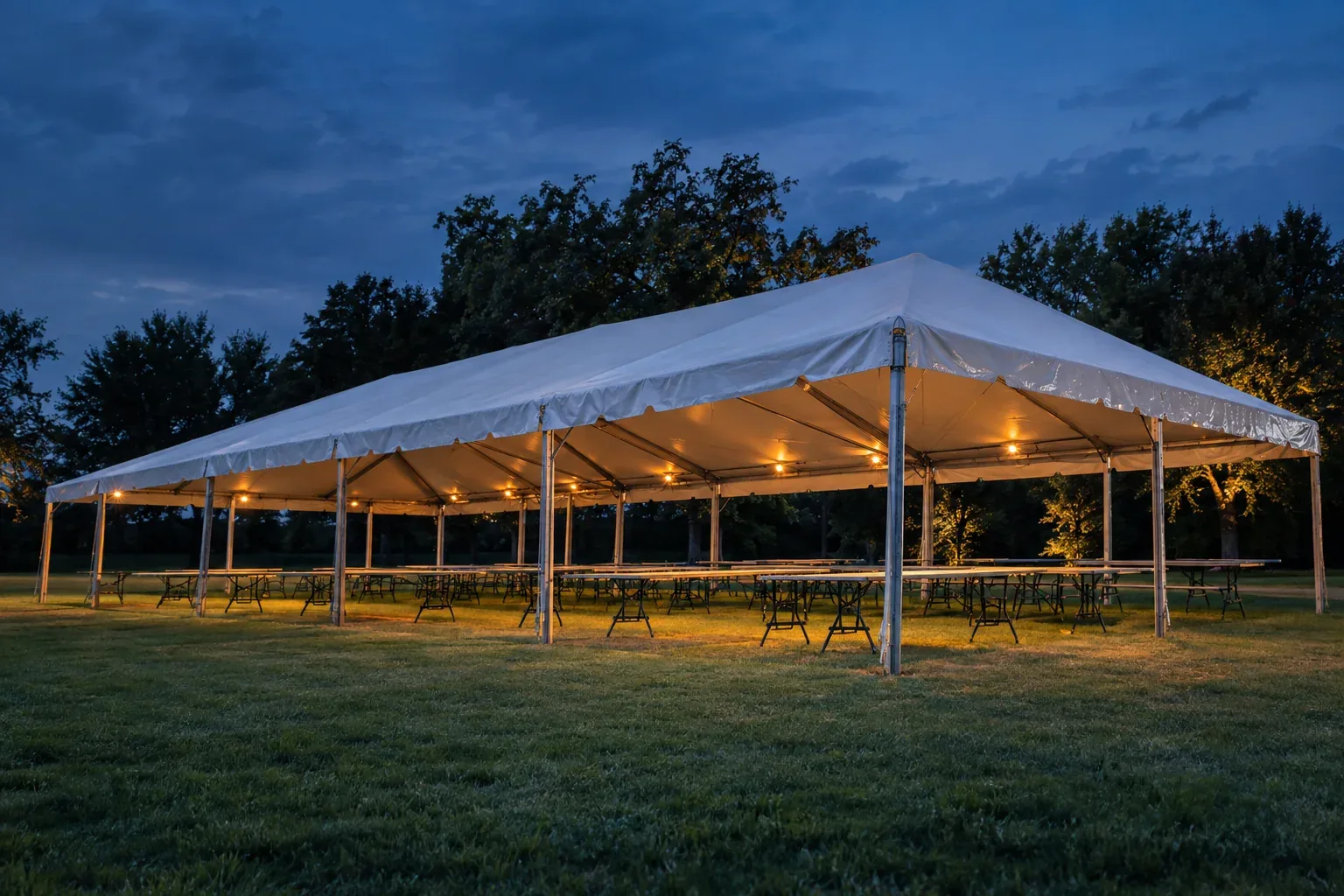
Frame tents for rental companies, venues and event firms: a galvanized steel frame with no centre poles, under a white PVC top, with sidewalls to order. We have several made to one spec sheet and shipped by the container, and the test paperwork for the exact fabric is agreed with you before you commit. Send the footprints, the style and how many, and we come back with the date and the landed quote.
See the party tents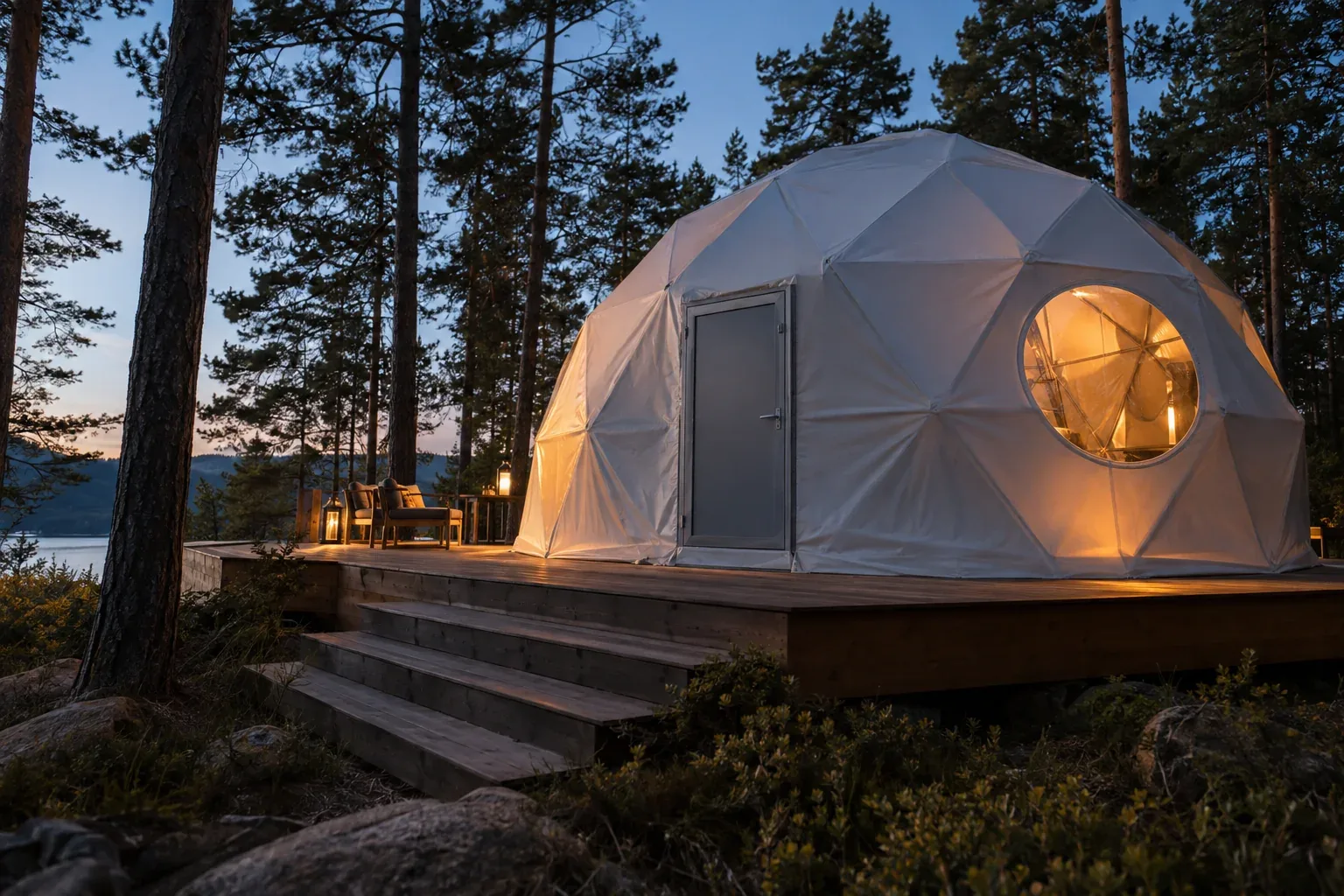
Geodesic dome tents
Geodesic dome tents for glamping sites and event fleets: a frame of galvanized steel struts and hubs under a white PVC cover, with the door and windows where you want them. We have them made to your specification, several to an order, and shipped by the container. Send the size, the cover and how many, and we come back with the date and the landed quote.
See the dome tents
Outdoor igloos
Outdoor igloos, also sold as garden igloos, igloo domes or dining domes: a small geodesic frame of galvanized steel under a clear PVC cover, sized to hold one table. We have them made as a matching set for restaurants, rooftop bars, hotels and winter markets, and shipped by the container. Tell us the table, how many domes and the date, and we come back with the date and the landed quote.
See the igloosWhere to go next
- How we workHow an order runs, and the check at the factory before packing.
- What we handleEach stage of an order, from the specification to delivery.
- Landed cost calculatorAdd up the landed cost of a tent order, line by line.
- Shipping from ChinaWhat each line of a landed quote covers.
More guides
More guides: Wholesale event supplies
 Guide
Types of crowd control barriers, and which one each venue needs
Five different products are sold as crowd control barriers. Here is which one a parade route, a stage front, a queue or a parking lot needs, and where steel fits.
Read the guide Guide
How to start a glamping business with domes: permits first, then the order
For a landowner or campground putting in several domes: what the county, the state and the fire marshal settle first, and how that shapes the order.
Read the guide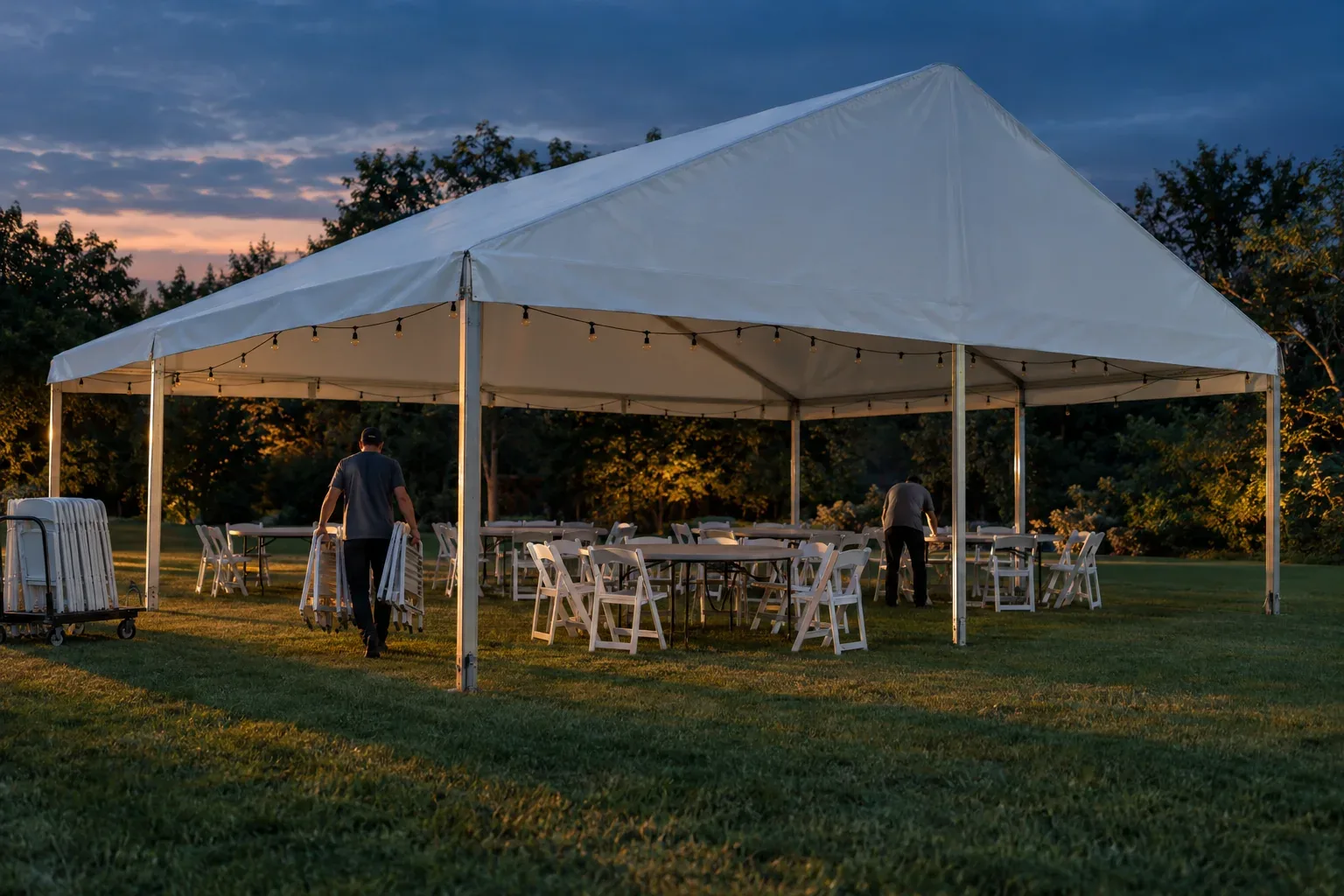 Guide
How to start a party rental business: what to buy first and where to buy it
What a new rental business buys first, when a US wholesaler is the better route, and how tents, chairs and barricades share one container.
Read the guide
Questions
Questions buyers ask
What does "NFPA 701 certified" mean?
Used properly, it means a lab has tested that fabric to NFPA 701 and reported a result. NFPA itself does not test or certify fabric: it writes and sells the standard. Under the 2021 and 2024 fire code, the product's manufacturer provides the certificate that rests on the lab's test, and under the 2018 code the lab executes it. Ask for the report on the exact fabric rather than taking the phrase on trust.
Is CPAI-84 the same as NFPA 701?
No. CPAI-84 is the flame specification for camping tents, published by the Advanced Textiles Association and updated in 2021 for the first time since 1995. The fire code's tent sections name NFPA 701, and recreational camping tents are one of the exceptions in the code's permit section. California accepts CPAI-84 as one route for tent fabric and as a label route for small tents. Some markets ask for it on pop-up canopies, so ask the market which paper it wants.
Where do I get a flame certificate for my tent?
Under the 2021 and 2024 fire code, from the tent's manufacturer, backed by an approved lab's test of the fabric. Under the 2018 code, from the lab. In California, from the company the fabric is registered to. For tents made abroad, settle which papers you need before the order is placed, not after the tents land. On an order through us, that is worked out with you at the start.
What is the difference between NFPA 701 Test Method 1 and Test Method 2?
Method 1 is for lighter, single-layer fabrics such as curtains and drapes. Method 2 is for heavier fabrics, coated and multilayer fabrics, and films, and both the standard and the fire code send tent tops, sidewalls, drops, tarpaulins and floor coverings to it. The clear PVC film of an igloo cover is one of the materials it covers.
Does tent fabric that passes NFPA 701 still burn?
Yes. The test methods measure how flame spreads on a sample under set conditions, and the standard says they do not show how the fabric will behave in a larger fire. California's warning label for small tents makes the same point in plain words: the fabric can burn if it is left in contact with a flame.
Does a flame certificate expire?
The fire code's flame rule holds for the period the permit specifies. Treated fabric carries the date of its last treatment, and some treatments come out in the wash, which is why California's roll tags have to say so. Ask the fire marshal how old a report or certificate they will accept.
Do replacement tops need their own paperwork?
Each new top carries its own label. A top in the same fabric code can be shown against that fabric's report, with its lot on record, while a top in a different fabric needs a report on that fabric. In California, the company the fabric is registered to issues a certificate for each sale.
When does an event tent need a permit?
The code your area adopts sets a size above which a tent needs one, with exceptions, and many cities publish their own limits, which differ from place to place. Ask the fire marshal where the tent will stand. Where a permit applies, the flame paper is filed before it is granted.
Request a quote
A landed quote for tents, domes or igloos
Send the tents, how many, where they will stand and the date of the event. We talk through what your fire marshal has asked for, then come back with the date and the landed quote.
- Reply within 1 business day
- Landed cost, itemised
We take on the orders we can do well, and we will say so if yours isn't one of them.