Guide
Guide
Starting a Christmas light installation business: what to buy, where and when
Guides to starting a Christmas light installation business tend to stop at "find a good supplier". This one starts there. It covers the kit you buy, whether to buy it from US stock or have it shipped by the container from China, when to order for the season, and what a commercial client will ask you for.
The kit
What an installation business buys
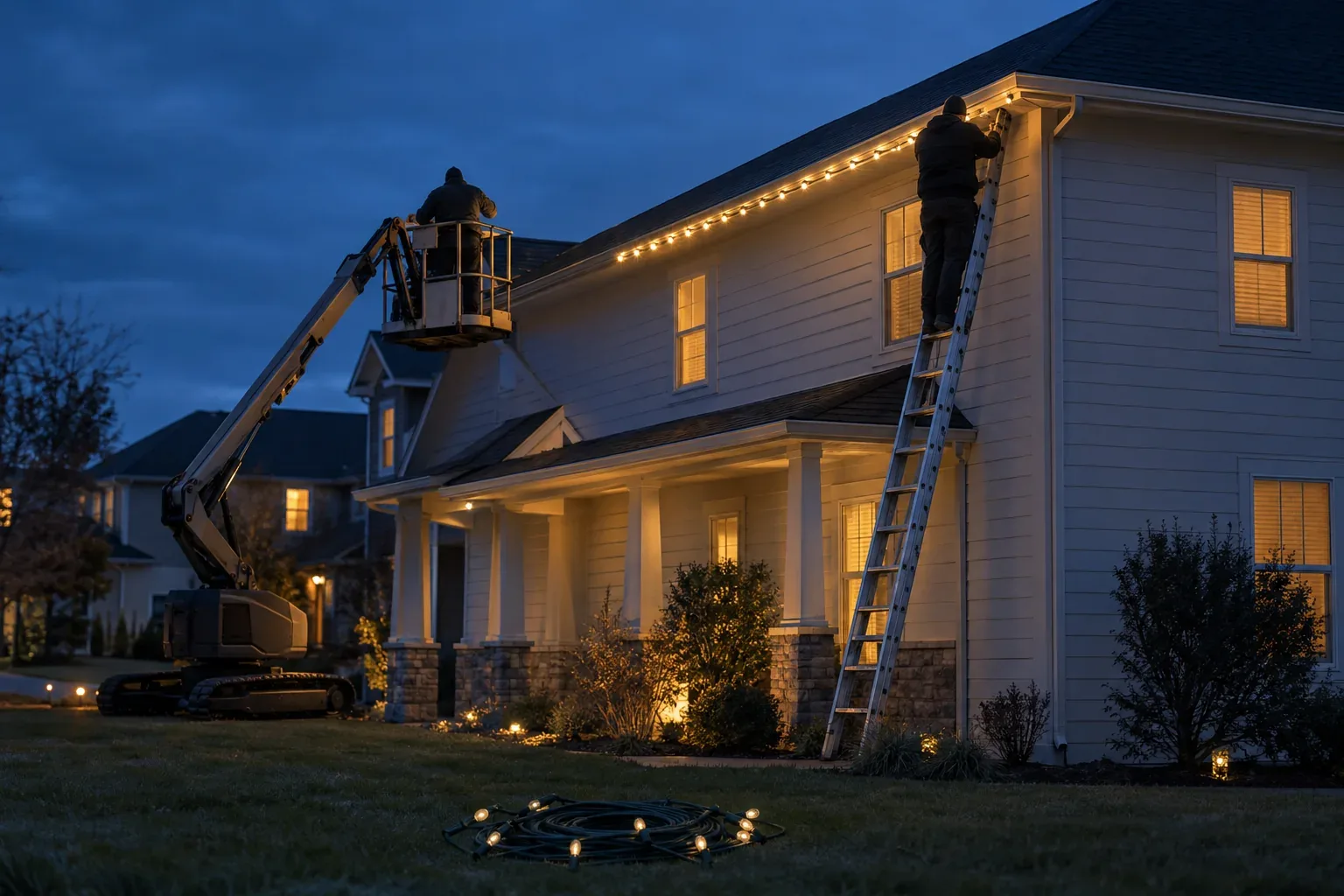
Most of the kit is the same on every house. Pick a system early and stay with it, because every spare and every reorder has to fit what is already on the roofs.
The light runs
C9 bulbs screwed into socket wire that is cut to each roofline, with a plug on the end. Use one bulb and one white on every job, so a spare from the van fits any house you have lit. See C9 bulbs and socket wire.
Wraps for trees and shrubs
Mini light strings for trunks, branches and hedges. Buy them in the same white as your C9s, or the roof and the garden will look like two different jobs. See LED mini lights.
Clips and fixings
Clips for gutters, shingles and ridge lines, bought by the bucket. Order more of each type than your job list says, because a crew on a roof without the right clip has to stop.
Cords and timers
Extension cords to reach the outlet, and timers so the lights come on at dusk without a visit from you.
Display pieces for commercial jobs
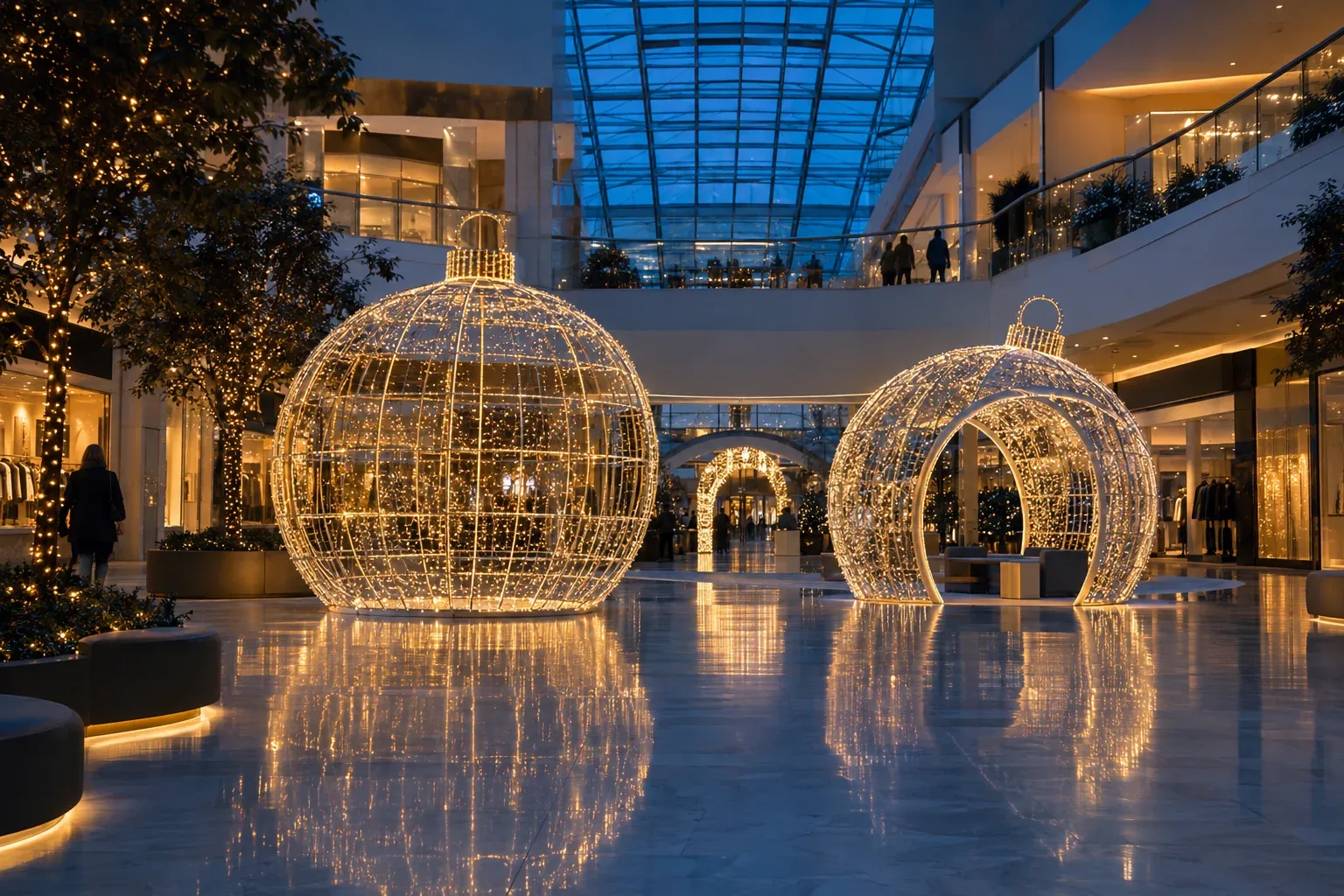
Arches, lit figures, pole motifs and giant ornaments for shopping centres, downtowns and hotels. Each one is made to a drawing, so these need more notice than anything else you buy. See custom LED motif displays.
Ladders, a lift and a van
Buy or rent these near home. You can rent a lift for the install weeks and return it once the last job is up.
Ownership
Your lights or the customer's: what it does to your stock
Installers argue about this every autumn. You can hang the customer's own lights. You can cut runs to fit each house, sell them to the customer and come back every year to put them up. Or you can own the lights and lease them, which means taking them down in January and keeping them until the next season.
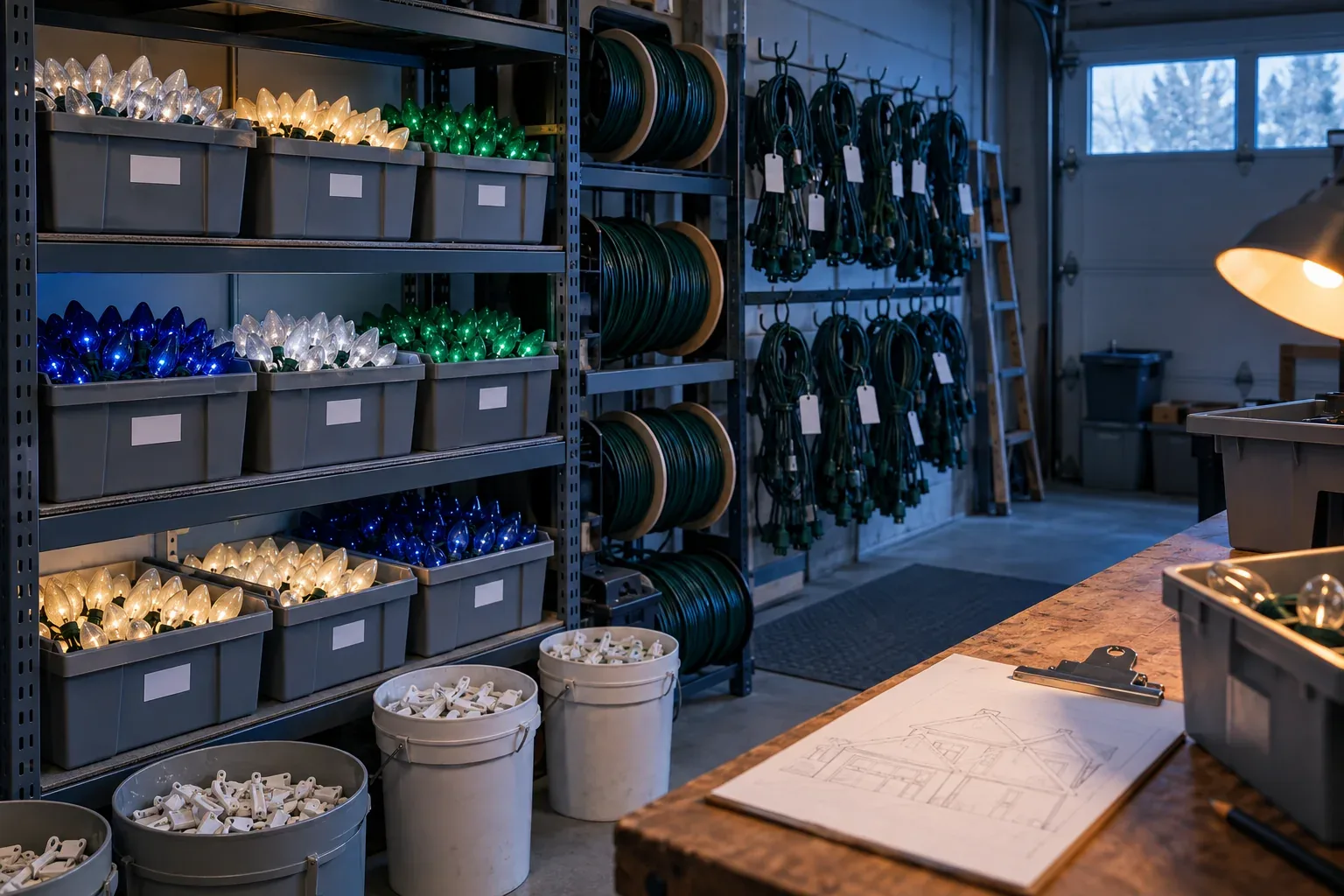
Each choice changes what you buy. Hanging the customer's lights means you buy little beyond clips, and you work with whatever bulbs they already have. Selling cut runs means you buy each year for the houses you sign. Leasing means you hold inventory: shelf space, runs labelled by house with a diagram of where each one goes, and spares from the same batch as the lights already up.
If you own the lights, write down the bulb you standardise on: the base, the lens and the exact white. Next year's order is then a quantity and a date, and the new bulbs match the ones on the roof. Whichever way you work, say in the customer's contract who owns the lights.
Where to buy
Where installers buy: US stock or a container from China
There are two ways to stock a season, and they suit different parts of the year.
| Compare | US distributor stock | A container from China |
|---|---|---|
| Suits | Short notice, and top-ups during the season | The season's base stock, planned months ahead |
| What you order | Cases and spools, as jobs come in | A container, or a part load to try a supplier first |
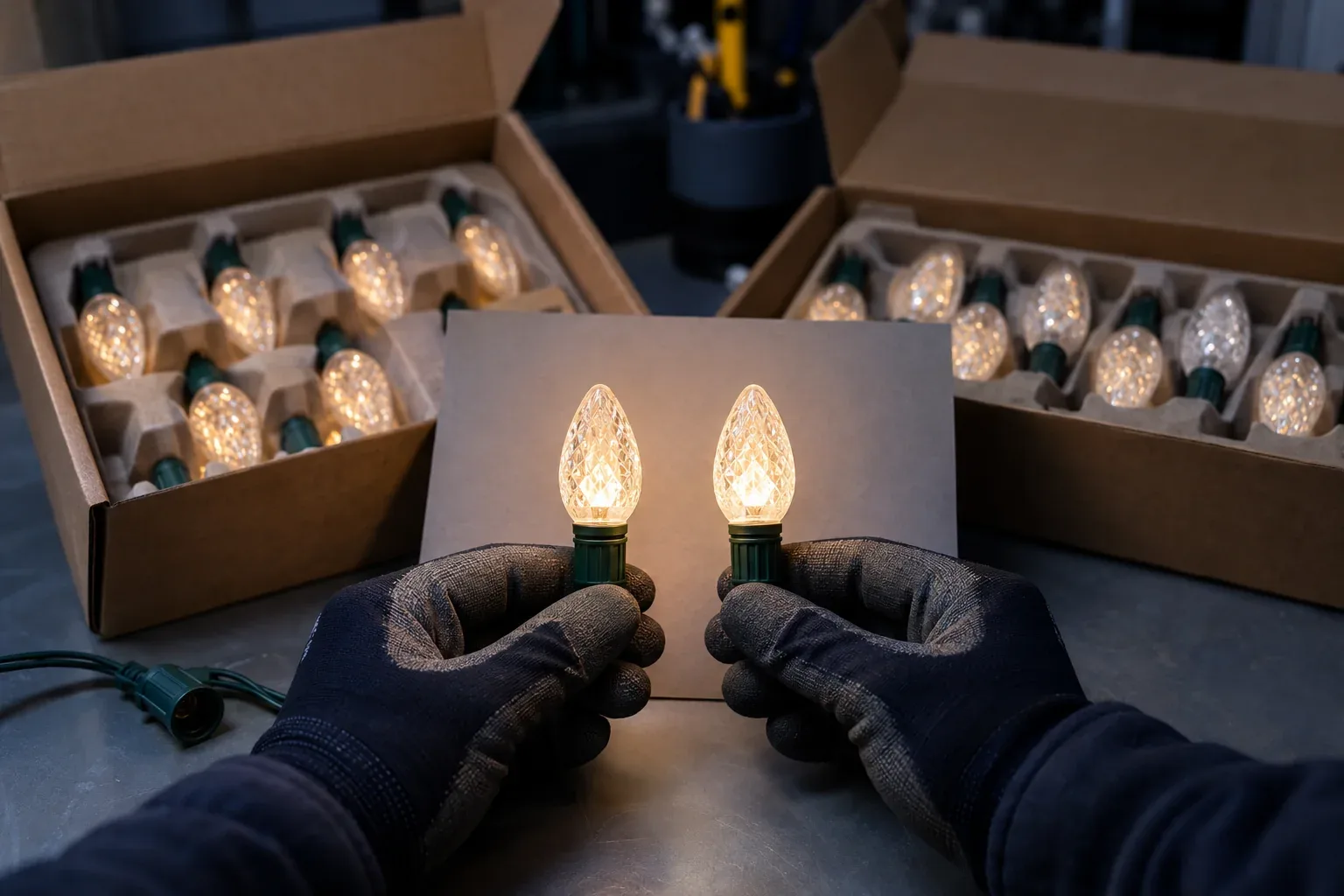
| What you can change | Your choice within the catalogue | The colour matched to a sample, the lens, the packing, your own label on inner packs |
| What the price covers | The catalogue or programme price, and delivery | A landed quote, with the goods, freight, the entry and duty on their own lines |
| What you carry | Stock can sell out in a busy autumn | Ordering months ahead, and approving a sample before production |
You can do both: the base stock by container, and top-ups from US stock in December. If you need lights within a month, buy from a US distributor. The import guide covers importing it yourself or buying it landed.
Timing
When to order for the season
Enter your first install date and the calendar counts back through each stage to the day a C9 order has to be placed.
Next season's buying starts in January, when the lights come down. Count what came back, note what failed, and you have the first draft of the order.
Commercial clients plan early, often before summer, so spring is the time to sign them and order their display pieces. Custom pieces need more time than bulbs, because each one is drawn and approved first.
Order the season's bulbs and wire in late spring or early summer, so the container lands before your first install. In autumn, top up from US stock for the houses you sign late.
For other dates, see order-by dates for any install date on the buying calendar.
Commercial work
What a commercial client will ask you for
Shopping centres, hotels, office parks and cities buy differently from homeowners. Expect most of these in the request or the contract.

A design and a written proposal
A drawing, or a mock-up on a photo of the site, with each piece on its own line, so the client approves it before anything is ordered. A piece like an arch over the entrance is drawn first and quoted from the drawing.
Install and removal dates in the contract
The client wants the lights on by one date and gone by another. Set your order date by counting back from the install date.
Who owns and stores the decor
Some city decorating contracts make the contractor own, maintain and store the decorations. Win one of those and you are the buyer of the goods, on the factory's calendar. The municipal guide sets out what a city puts in a decorating tender.
Proof of insurance, and any licence
The client decides what it wants to see. Ask your insurer and your state's licensing office what applies to your work before the first job.
Where the goods come from, and the duty
A public client may ask where each item is made. For the goods we supply the answer is China, and our quote names the tariff line, the rate and who carries a change before the goods land.
Drawings for display pieces
Dimensioned drawings, signed by the client before production starts, for a lit figure or for pole motifs for a downtown. The displays guide covers what the factory needs to quote a display.
Papers on the products
Bring whatever papers the contract names. Ask the supplier for them in writing, for the exact product, before you order.
Where we fit
Where we fit, and where we do not
We are a trading company. We have lighting made in China and deliver it landed, and we pick the orders we take on.
The season's C9 stock
Bulbs, socket wire and plugs by the pallet or the container, in bulk cartons or in inner packs under your own label.
Display pieces to drawing
Arches, figures and pole motifs for your commercial jobs, built to a drawing your client has signed.
A landed quote
The goods, freight, the entry and duty on their own lines, with the tariff line, the rate and who carries a change.
Reorders from the specification on file
We keep the specification from your last order, so a reorder is a quantity and a date.
A trial first
A part load before a full container. The C9 page sets out what to check on a sample.
What we do not do
We do not install or store decorations, we hold no stock in the US, and we cannot deliver within a month. When you need lights sooner than that, buy from a US distributor.
Two of our records, described without names: a reseller on white-label price lists and a light show supplied for six seasons.
Everything we quote for installers is under commercial Christmas lights and displays.
Where this applies
The products this guide covers
Each product page has the price drivers, the order-by calendar and the quote form for that product.
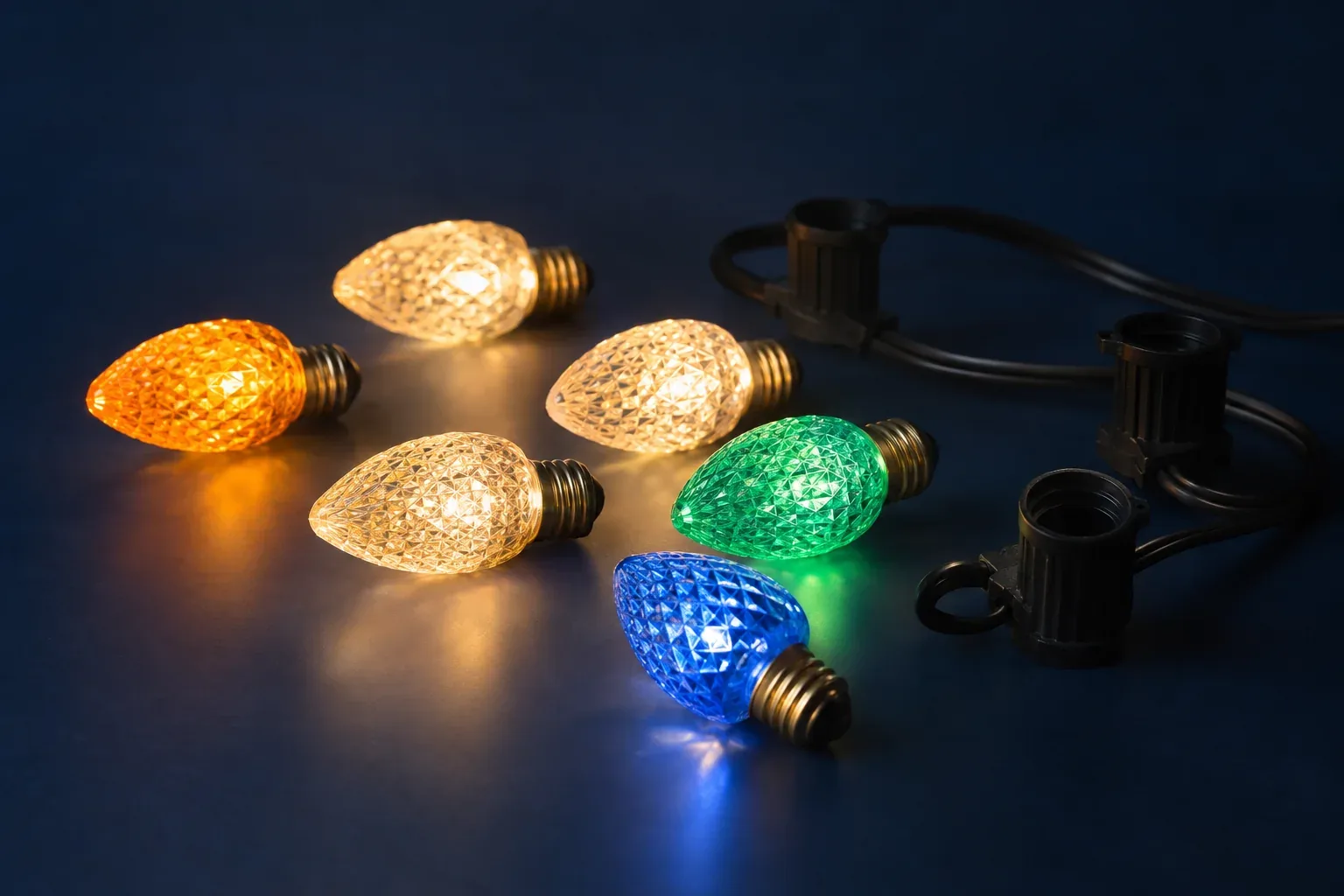
C9 LED Christmas bulbs
Replacement and new-install C9 LED bulbs for professional displays. We have shipped them to the same customers season after season, usually with the socket wire and plugs that go with them.
See the C9 bulbs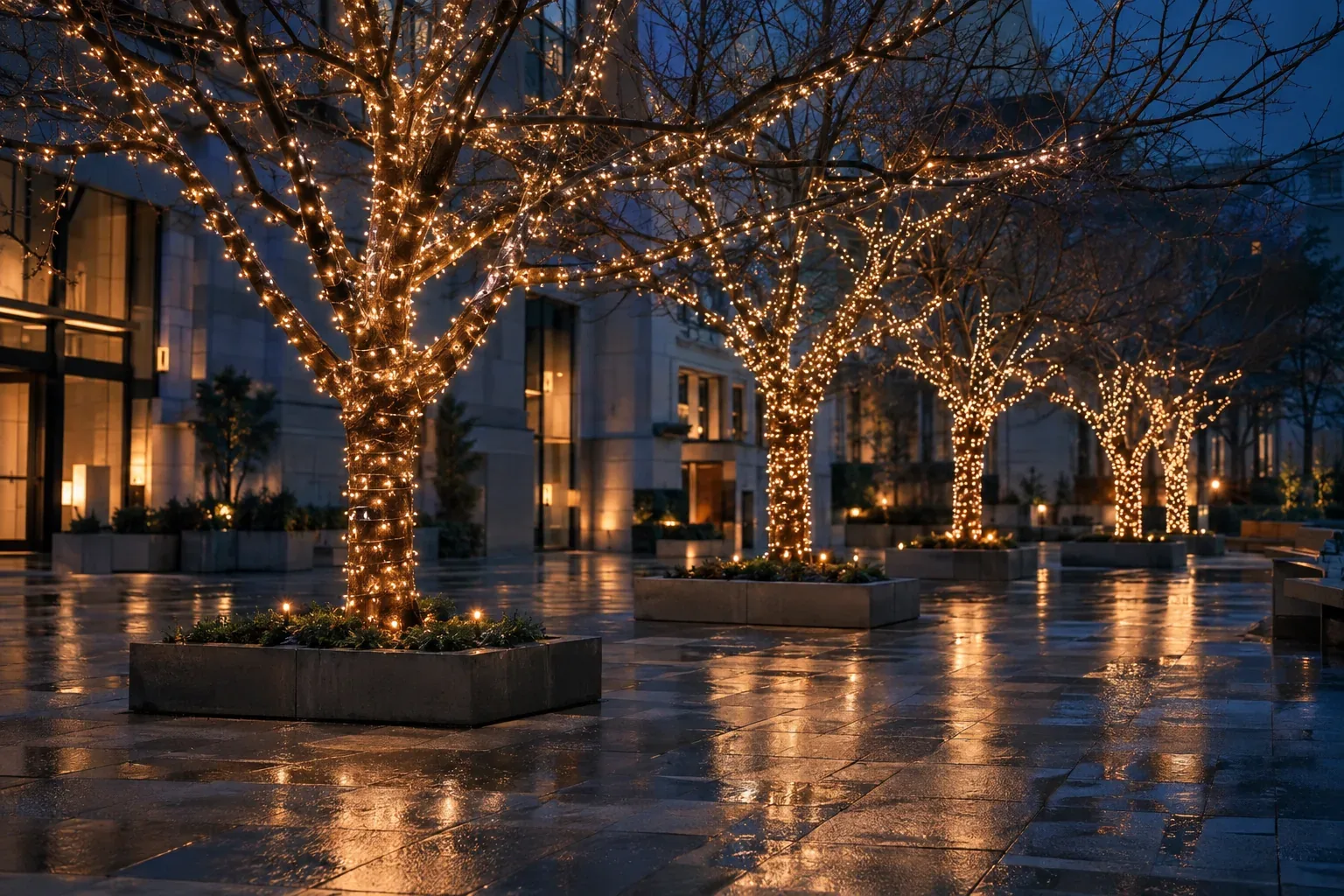
Commercial LED mini lights
Wide-angle and smooth LED mini lights for wrapping trunks, branches and hedges, made in China to the colour, bulb count and spacing you set. A reorder is matched to the sample kept from your last one, and every order is quoted landed and planned back from your first install date.
See the mini lightsWhere to go next
- The buying calendarThe order date for any first install, stage by stage.
- Landed cost calculatorPut a landed quote next to a US price, line by line.
- How we workWhich of our companies invoices you, and who carries a tariff change.
- Case studiesA reseller on white-label price lists, and a light show supplied for six seasons.
More guides
More guides: Commercial Christmas lights and displays
 Guide
Mall Christmas decorations: the plan, the approvals and the order date
What a shopping center has made to fit its spaces, who approves each piece before it goes up, and when to order so it lands before install.
Read the guide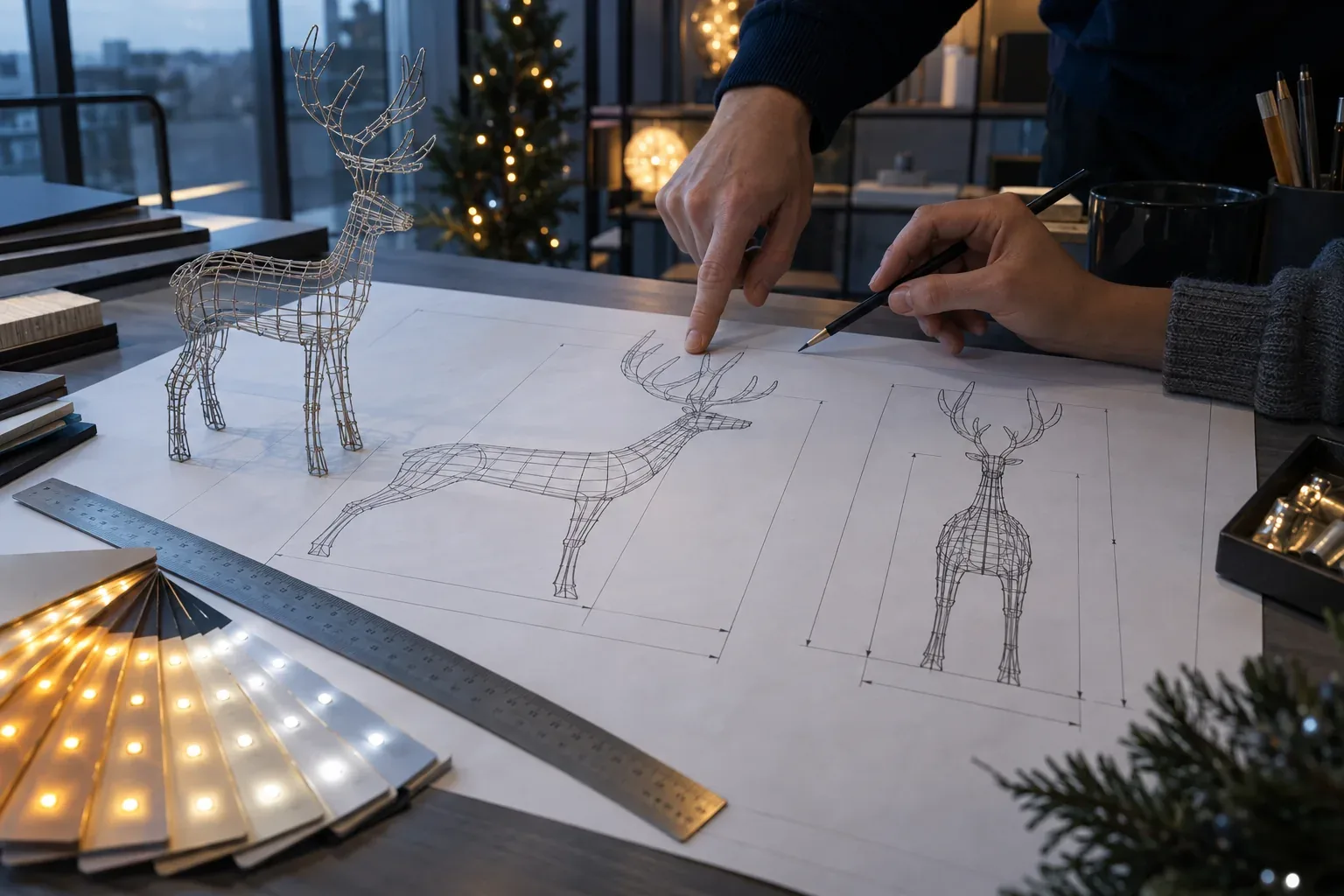 Guide
How a custom Christmas light display is made, from sketch to container
The steps from a sketch to a crated, lit steel display, and what the factory needs from you at each one.
Read the guide Guide
How to import Christmas lights from China: the tariff line, the duty and the landed cost
The tariff line, the layers of duty, the freight and the paperwork, with the import-tax line from our own price lists.
Read the guide
Questions
Questions buyers ask
Where do Christmas light installers buy their lights?
From US distributors that sell to the trade, some of them through an installer programme. That suits buying as the jobs come in. An installer who plans a season ahead can also have bulbs and wire made in China and shipped by the container, and either import them or buy them landed. The guide to importing Christmas lights from China covers both routes.
What does "commercial grade" mean for Christmas lights?
No rating or published standard sits behind the words. Sellers use them for different things: one means sturdier bulbs, another means colour that holds. Installers usually mean lights built to go up and come down for several seasons, often bulbs on socket wire cut to fit. Ask the seller to write on the quote what the term means for that product, and judge it from a sample.
What Christmas lights do professional installers use?
On rooflines, C9 LED bulbs on socket wire cut to each run. On trees and shrubs, mini light strings. Whatever you choose, use one bulb type and one white on every job, so spares and reorders fit. The page on commercial C9 LED Christmas lights covers the bulbs and the wire.
What do you need to start a Christmas light business?
On the supply side: a bulb and wire system, clips, extension cords and timers, ladders or a lift, a van, and somewhere to keep it all between seasons. Registration, licences and insurance are set by your state, your city and your insurer, and a commercial client may add its own requirements. Ask them before the first job.
What is in a Christmas light business starter kit?
The kits sold to new installers bundle C9 bulbs, socket wire, plugs and clips. A kit lets you try one supplier's system on a few houses. A full season's stock is bought by the case or by the container.
Is it too late to order lights for this season?
From China, the answer depends on your first install date, and the order usually has to go in months ahead. The buying calendar works out the date. Once the season has started, buy this year's lights from US stock and plan next year's order in spring.
Request a quote
Quote your season's C9 stock, landed
Send the bulb, the colours, the quantity and your first install date. We reply within 1 business day, and the quote names the tariff line, the rate and who carries a change, with the freight and the entry on their own lines.
- Reply within 1 business day
- Landed cost, itemised
We take on the orders we can do well, and we will say so if yours isn't one of them.