Guide
Guide
How a custom Christmas light display is made, from sketch to container
A lit display starts as a picture and ends as a steel frame in a crate. Here is what happens in between, what the factory needs from you at each step, and what sets the price and the date.
The product
What a motif display is
In the trade, a lit display built on a steel frame is called a motif. Sellers also call them light sculptures or wireframe displays. The build is the same under every name: a welded frame bent to the outline of the design, a skin over it or none, and LED lighting laid along the frame.
The shapes vary more than the build does. A 2D silhouette is a flat frame seen from the front, like a snowflake on a lamp post. A 3D figure is a full frame you can walk around: a reindeer, a sleigh, an ornament ball taller than a person. Walk-through arches and light tunnels are frames joined in sections, and photo-op structures are built so a family can stand inside the picture. We build custom Christmas light displays of all of these kinds, to the customer's drawing.
The buyers are light attractions that sell tickets, cities and parks departments, shopping centres and the decor contractors who dress them. Almost every order starts the same way, with a picture of something the buyer wants to see lit.
Before the quote
What the factory needs from you before it can quote
A quote on a custom display is only as good as the brief behind it. These are the answers a factory needs, and the ones buyers most often leave out.
A picture or a sketch
A reference photo, a drawing, or a sketch on paper. If the photo shows someone else's display, say what you want changed.
Size and footprint
Height, width and depth, and the ground it has to fit on. Say whether people walk through it, walk around it or only see it from the road.
Which sides the public sees
A display seen from one side can be a flat frame. One seen from every side needs a full 3D build, which changes the steel, the lighting and the price.
Static or animated
Steady light, chasing effects, or pixel animation that runs a sequence. If it has to follow a music show, say so now, not after the drawing is approved.
How it stands
Staked into the ground, weighted down, bolted to a pole or free-standing on a hard surface. The frame's base is designed around the answer.
Power where it stands
What power is available at the spot and how far away it is. You tell us what is there; the quote then specifies the controllers and power supplies for each structure.
Quantity and the date
How many of each piece, and the date it has to be lit on site. The date decides whether the order is still possible this season.
Design
From sketch to a dimensioned drawing
The drawing is what the factory builds to and what you approve. Everything later in the order is checked against it.
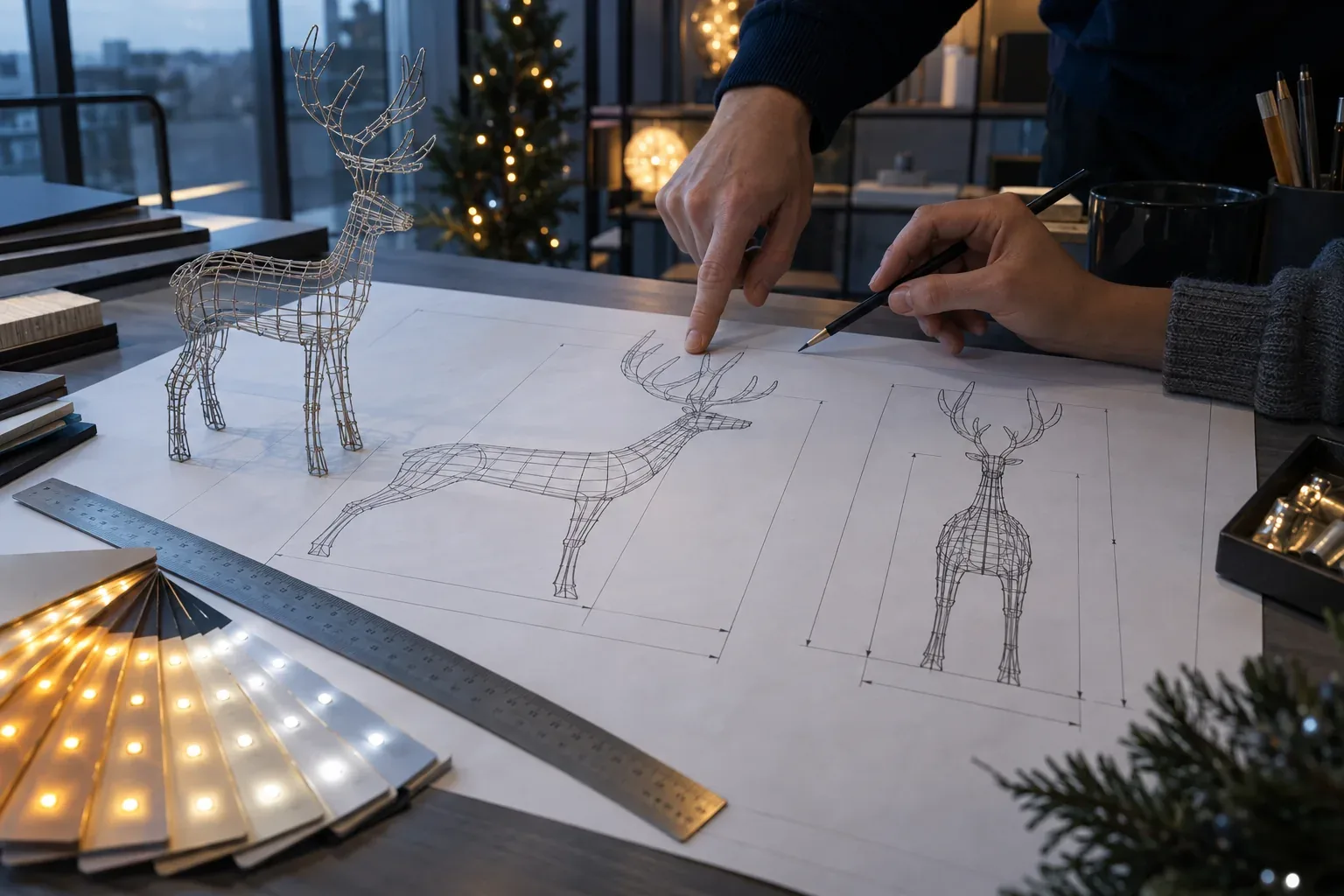
Your sketch becomes a drawing
We turn a sketch or a reference photo into a dimensioned drawing. If you already have a finished drawing, we quote against yours.
Front, side and back
A rendering shows the front. The factory builds every side, so the drawing also shows the back and the base, where the frame joints, the cables and the anchors go.
Power and control on the paper
The drawing marks where the controller sits, where the cables run and where power comes in. A drawing approved without them leaves the gap to be found at install.
The install crew reads it
The people who will stand the display up check the drawing before production: the fixing points, the lifting points, and the sections that have to come apart to fit through a gate.
Approval before steel
Nothing is cut until you approve the dimensioned drawing. A rendering is a picture, and approving one leaves too much for the factory to guess.
Fabrication
How the frame is built and skinned
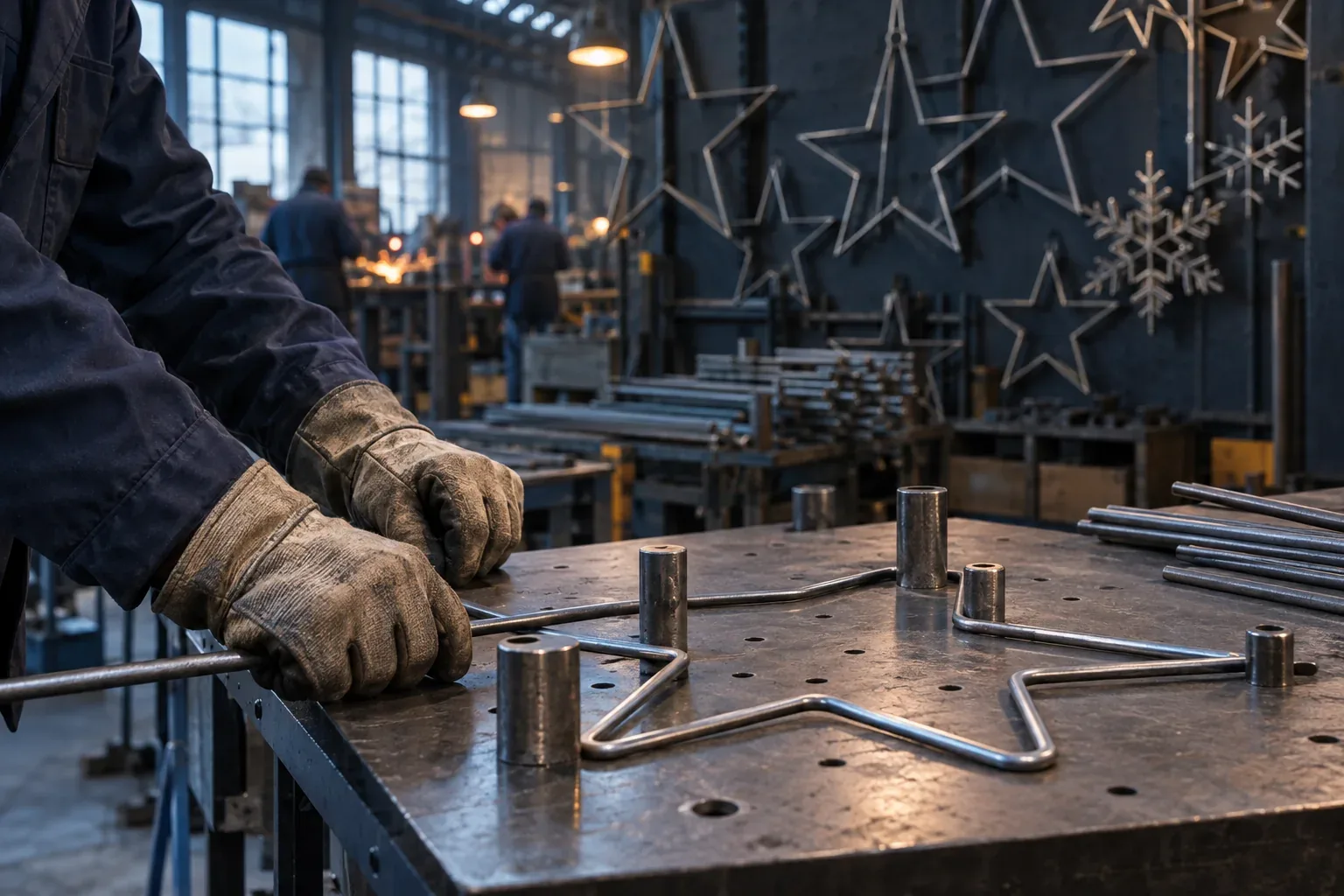
The frame is welded iron. Rod and tube are bent on a jig to the drawing's outline, welded, then powder coated or galvanised against the weather. Large pieces are designed to come apart in sections, so they crate flat and store between seasons.
What goes over the frame is a choice you make on the quote, and buyers make it differently for the same shape:
No skin
The lighting runs along the bare frame. It is the lightest build to make and to ship, and at night it reads as line work.
Plastic mesh
Hard or soft mesh stretched over the frame gives the figure a solid shape by day and a glowing surface at night.
Acrylic panels
Cut panels where the drawing calls for flat lit faces. Our own invoices describe many of these builds as iron frame, acrylic and LED.
Tinsel or garland
Wrapped over the frame for a fuller look in daylight. Some buyers ask for none, to keep the line clean.
Tunnels bring one more choice: walk-in, or enclosed so people see it without entering. It is a line on the quote like any other.
Lighting
How it is lit, and checked before it leaves
The lighting is laid out to the drawing. LED string follows the outline for line work, and pixel lighting goes where the structure has to animate. Steady light and simple chasing need little control. A pixel-mapped sequence needs its own controller and a lot more cable, and the price follows the control.
Every animated structure runs from its own controller. The quote lists the controllers and power supplies for each structure once the drawing has been reviewed. This guide gives no electrical specifications; the ones that matter for your site go on your quote.
Before anything is crated, every structure is lit, tested and photographed. It is the last point in the order where a fault is cheap to fix. After that, the same fault costs a repair on site or a replacement on the next container.
Packing
Packing a display into a container
A display is mostly air. How it is packed decides how many structures fit in one container, and so what each one costs to land.
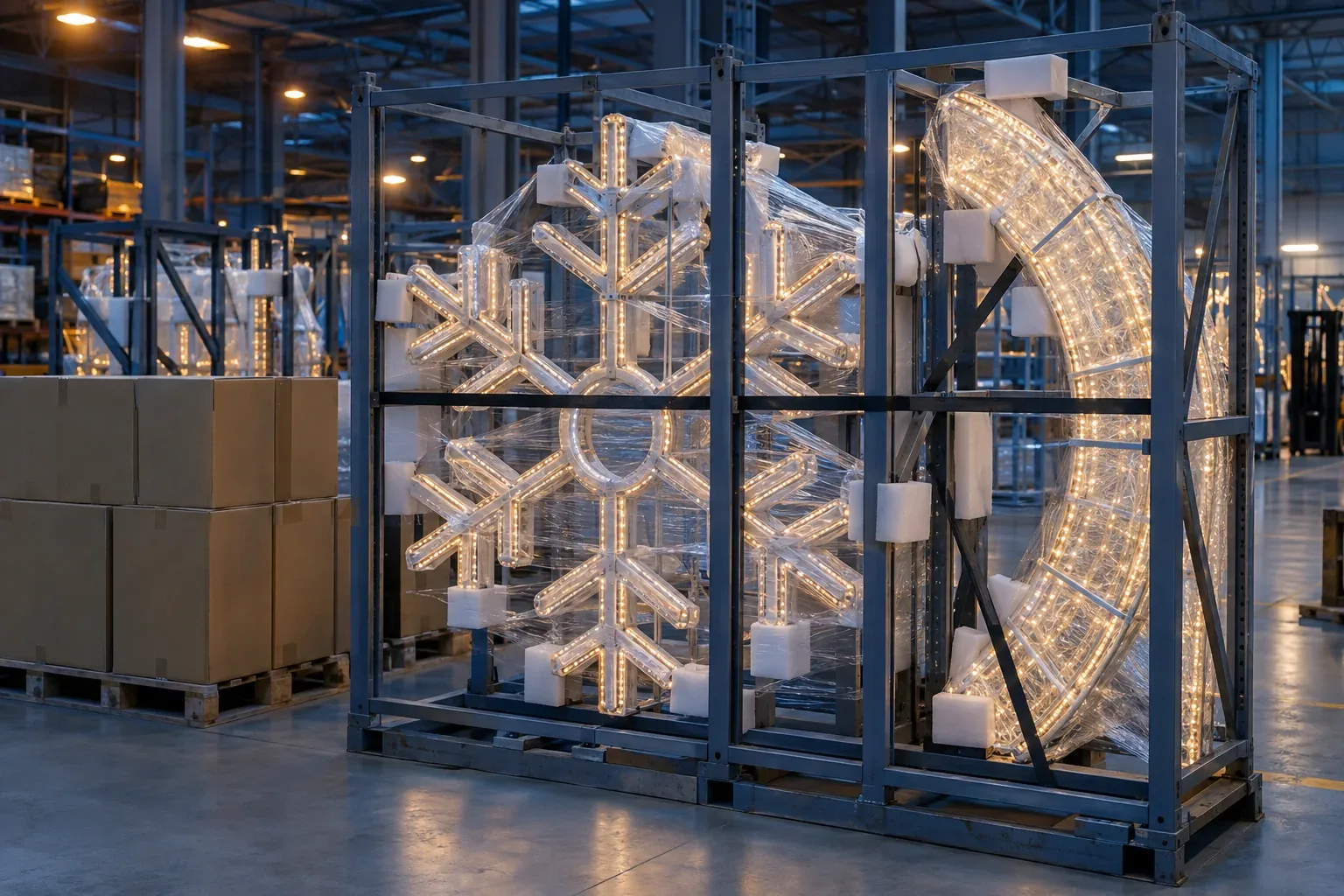
Knock-down frames
Frames that come apart crate flat and ship more structures per container than frames welded whole. They also store in less space between seasons.
Frames that compress
Round shapes such as ornament balls can be built so the frame compresses for packing and opens again on site.
The assembly drawing in every crate
Each crate carries the assembly drawing for the structure inside, so the crew on site is not working from memory or a phone photo.
The container plan comes first
We plan the container before the factory books production, so the structure count fits the box. Booking the container before the crate plan exists is a common and expensive mistake.
Timing
How long it takes, worked back from opening night
The calendar works back from the night the display has to be lit, through production, export, the ocean and rail legs, the customs entry and an install buffer.
For custom steel and lighting work we plan on 8 to 12 weeks of production once the drawing is approved. That is a planning allowance, not a promise: the quote confirms the window for your drawing. The freight and the entry come after it, and the calendar uses the slowest times we track.
Three suppliers in this trade publish three deadlines: order in June, get in touch by August, and production is full by about the middle of October. They describe the same chain from different ends. Some city tenders ask for installation within November, which puts the order date well before the summer.
For another opening date, work back from your opening night on the buying calendar.
Price
What drives the price
We quote after the drawing, landed at your door, with each of these on its own line.
Frame size and steel weight
Steel is the largest material line. It also sets the crate size, and the crate size sets the freight.
LED density and type
Pixel-mapped animation costs several times what steady string lighting does.
Control and power
An animated structure needs its own controller, cabling and power supplies, specified for each unit.
Finish
Powder coat matched to a brand colour costs more than standard black or white.
Crating and container fit
A knock-down design ships more structures in one container than a frame welded whole.
The duty line
A lit steel structure enters under a different tariff line from a bulb. The quote names the line we file under, the rate we quoted against and who carries a change.
A shape the factory has never built can also carry a one-off cost for the model. Ask how it is charged before you approve the drawing.
To see how the lines add up for a whole shipment, work out the landed cost of a container.
Where this applies
The products this guide covers
Each product page has the price drivers, the order-by calendar and the quote form for that product.
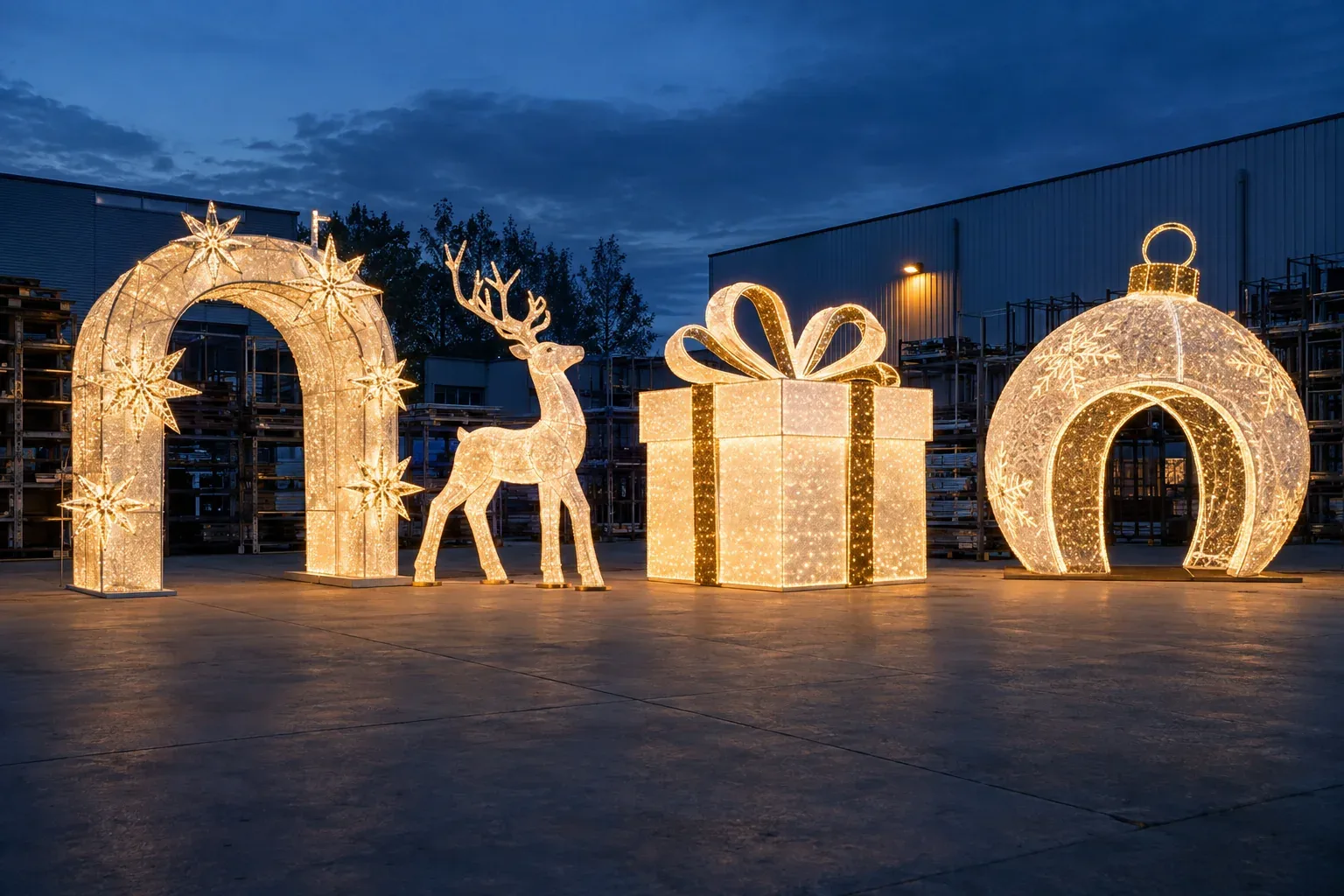
Custom LED motif displays
Walk-through arches, animated figures, tunnels and photo-op structures for light attractions, downtowns and parks. We build from your drawing or make one from your sketch, crate the structures to fit the container, and clear them through customs at the other end.
See the displays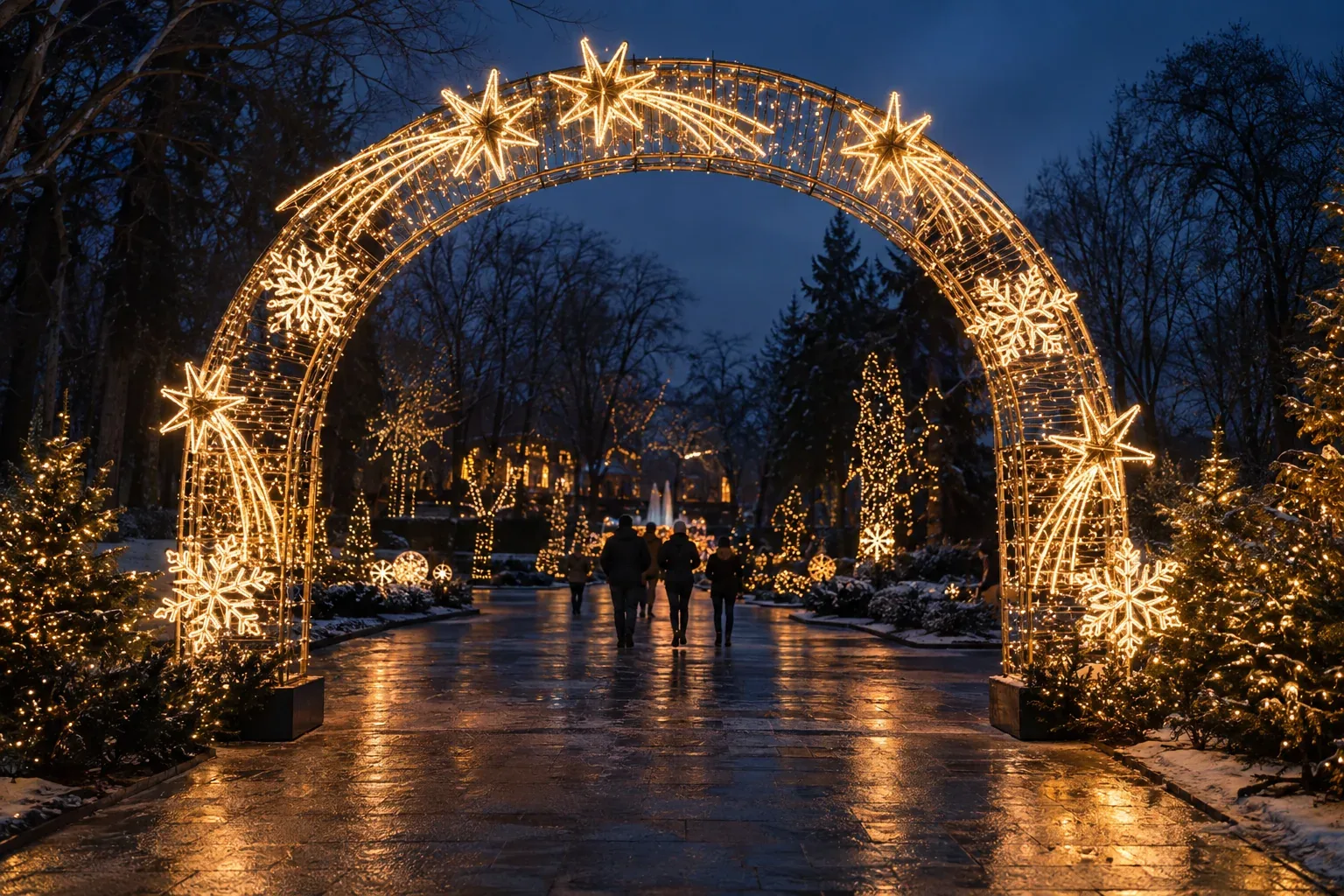
Christmas arches
Lit walk-through arches for park entrances, paths, plazas and light shows, in stars, snowflakes, hearts, gingerbread or a shape of your own. Tell us the opening to cover and what has to pass under it. The arch is built in sections that bolt together on site, and the quote covers it delivered to you.
See the arches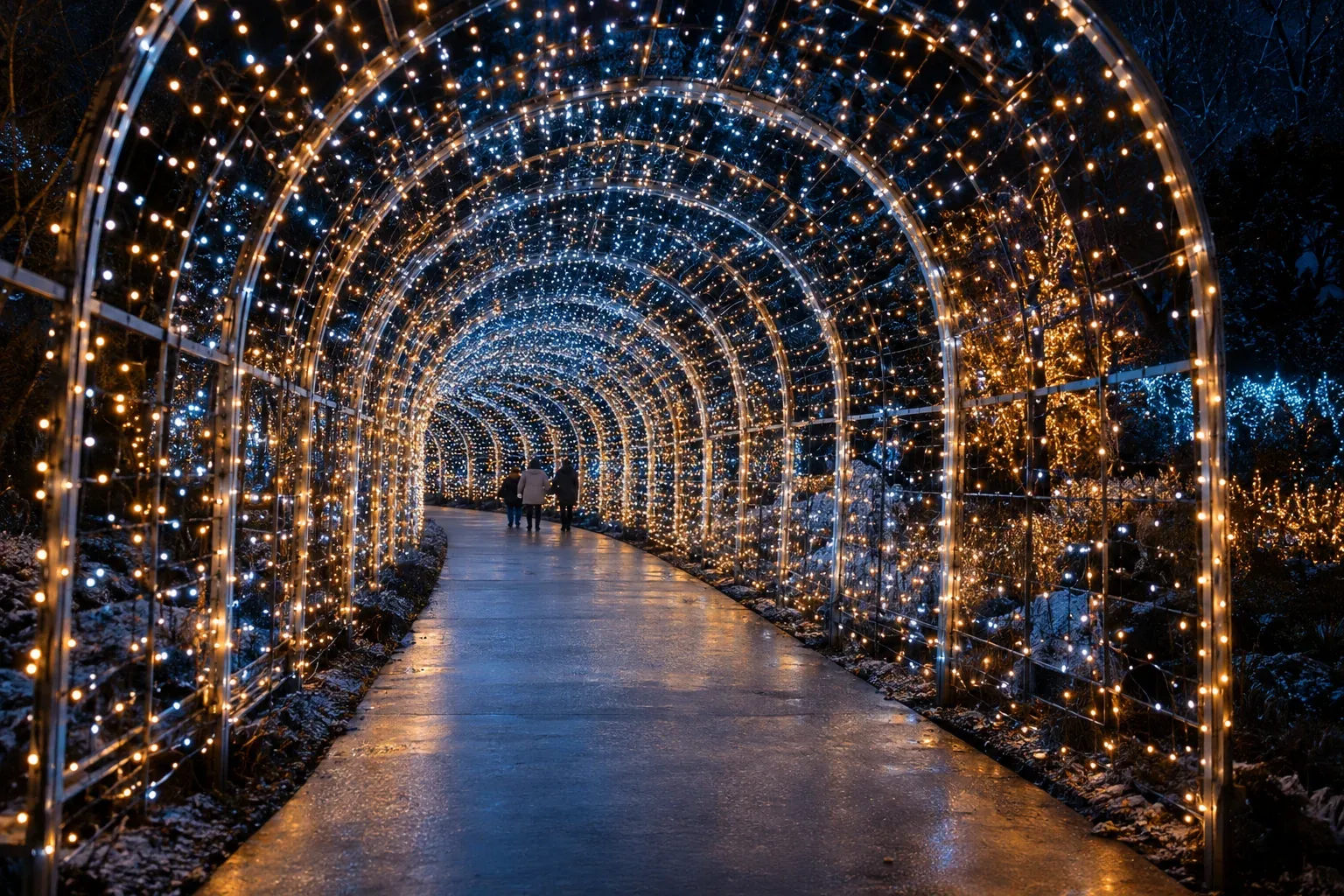
Christmas light tunnels
Walk-through and drive-through light tunnels for light shows, parks and zoos, made as a run of lit arches or panels that bolt together on site. Send the route, the length and what has to fit inside. We plan the sections and the crates, and quote the tunnel landed at your gate.
See the tunnelsWhere to go next
- The buying calendarOrder-by dates worked back from any opening night.
- Buying for a cityThe RFP, the specification and the order date for municipal decorations.
- Landed cost calculatorAdd up the goods, freight, duty and fees for one shipment.
- Case studiesA light-show attraction supplied for six seasons, among others, described without names.
More guides
More guides: Commercial Christmas lights and displays
 Guide
Starting a Christmas light installation business: what to buy, where and when
The kit an installer buys, when to order it, whether to buy from US stock or by the container from China, and what commercial clients ask for.
Read the guide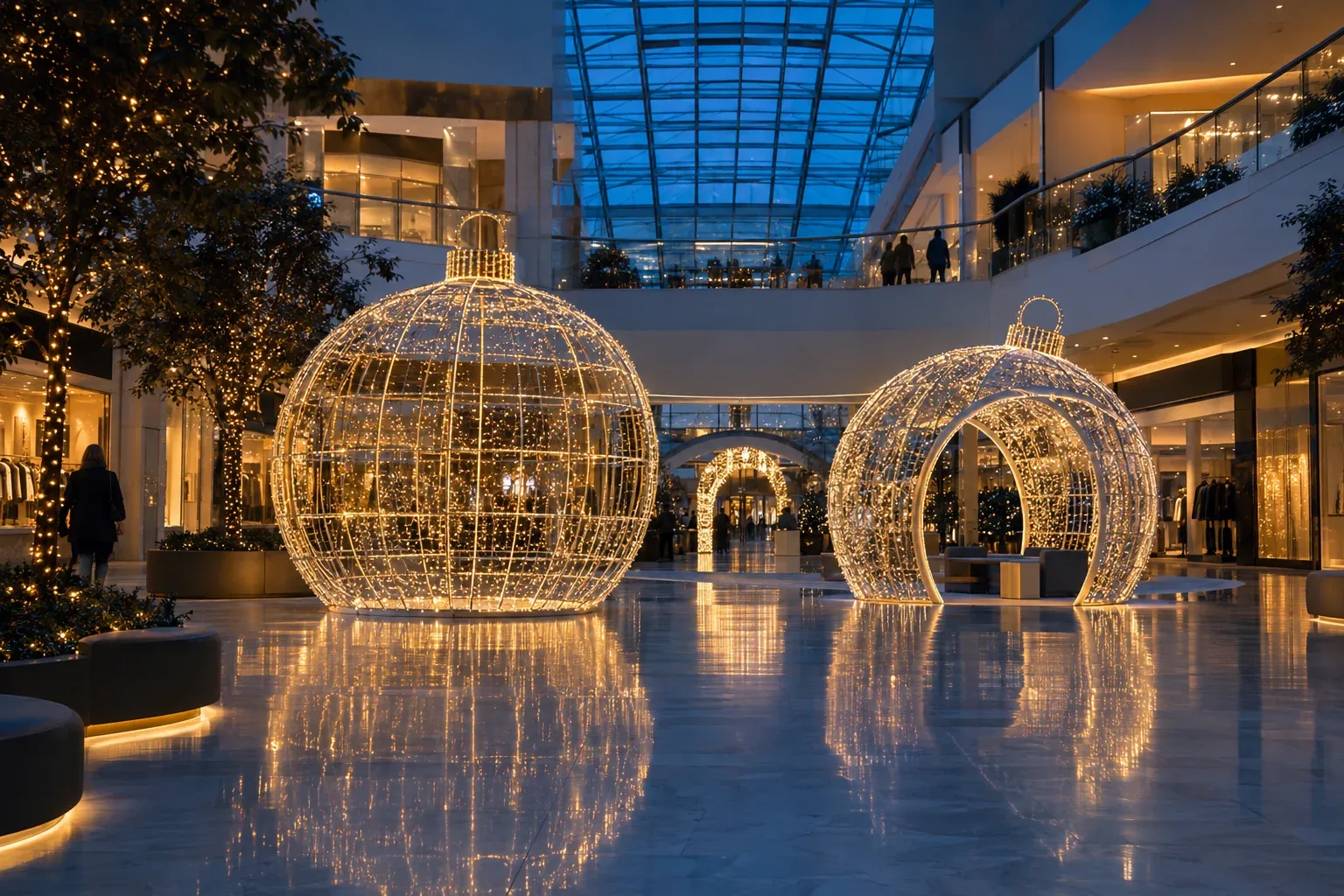 Guide
Mall Christmas decorations: the plan, the approvals and the order date
What a shopping center has made to fit its spaces, who approves each piece before it goes up, and when to order so it lands before install.
Read the guide Guide
How to import Christmas lights from China: the tariff line, the duty and the landed cost
The tariff line, the layers of duty, the freight and the paperwork, with the import-tax line from our own price lists.
Read the guide
Questions
Questions buyers ask
What are the different types of Christmas light displays?
Flat 2D silhouettes, full 3D figures, walk-through arches and tunnels, photo-op structures and pole-mount motifs for lamp posts. Any of them can be steady, chasing or animated. The displays page shows the types we build.
Who makes commercial Christmas light displays?
Workshops that weld steel frames and fit LED lighting build them. We are a trading company: we have displays made to your drawing by the factories we work with in China, run the order and ship it to you. We do not name the factories.
How do light displays sync with music?
An animated structure runs from its own controller. If a display has to follow a music show, say so in the brief, so the lighting and the controller are chosen for it and the drawing shows where the show system connects.
Can we build our own display instead?
For one display in a front yard, many people do. At commercial scale the work is steel fabrication: frames bent on jigs, welded, coated, lit and tested, then crated to survive a container and several seasons. That is why commercial displays are made in workshops.
How much does a custom display cost?
It depends on the size and the steel, the lighting and control, the finish, the packing and the duty line. We quote after the drawing, landed at your door, with each of those itemised. Send a sketch and the date it has to be lit from the displays page.
Request a quote
A landed quote for your display
Send a sketch or a photo, the size, and the date it has to be lit. We reply within 1 business day, and the quote itemises the build, the crating, the freight and the duty line.
- Reply within 1 business day
- Landed cost, itemised
We take on the orders we can do well, and we will say so if yours isn't one of them.