Wholesale event supplies
Portable steel stages
for rental fleets
Stage platforms on welded steel frames for rental companies, venues and event producers whose stages are booked weekend after weekend: decks at the heights you set, with legs, stairs, guardrails and skirting, made to one spec sheet and shipped by the container. Send the deck sizes, the heights and how many, and we come back with the date and the landed quote.
- Reply within 1 business day
- Landed cost, itemised
- Trading since 2020
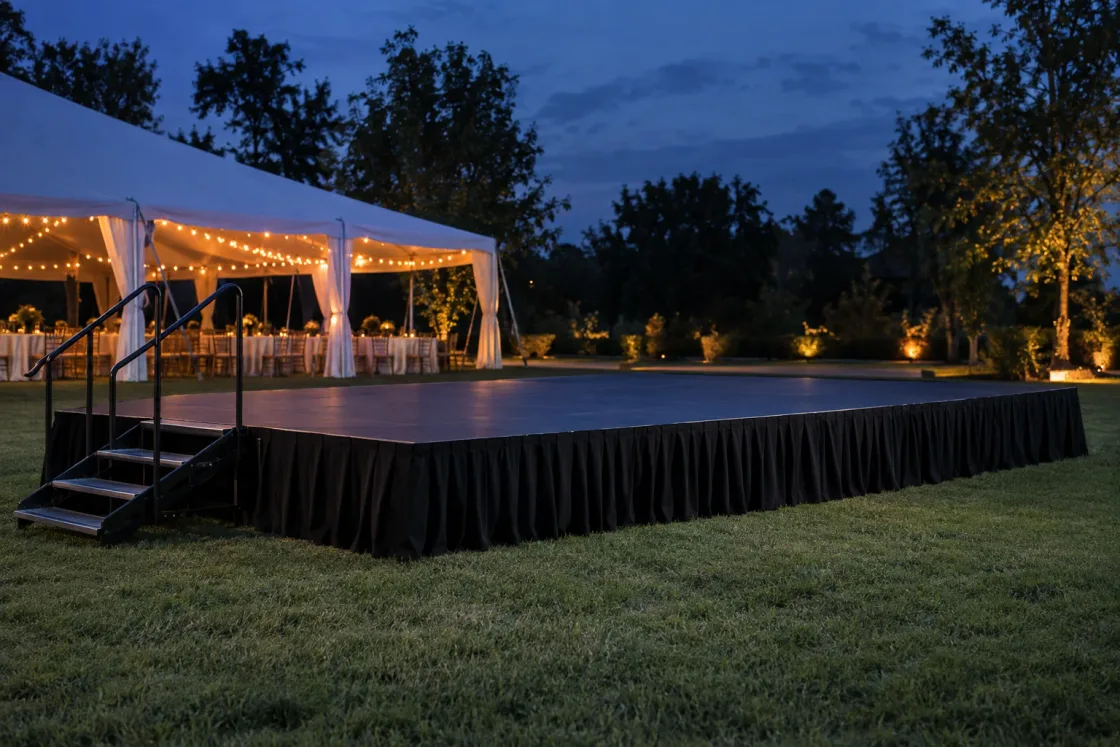
- Welded steel frames
- Galvanized or powder coated
- Stairs, rails and skirting
- Packed stage by stage
From the frame to the container
How a steel stage deck is made and packed
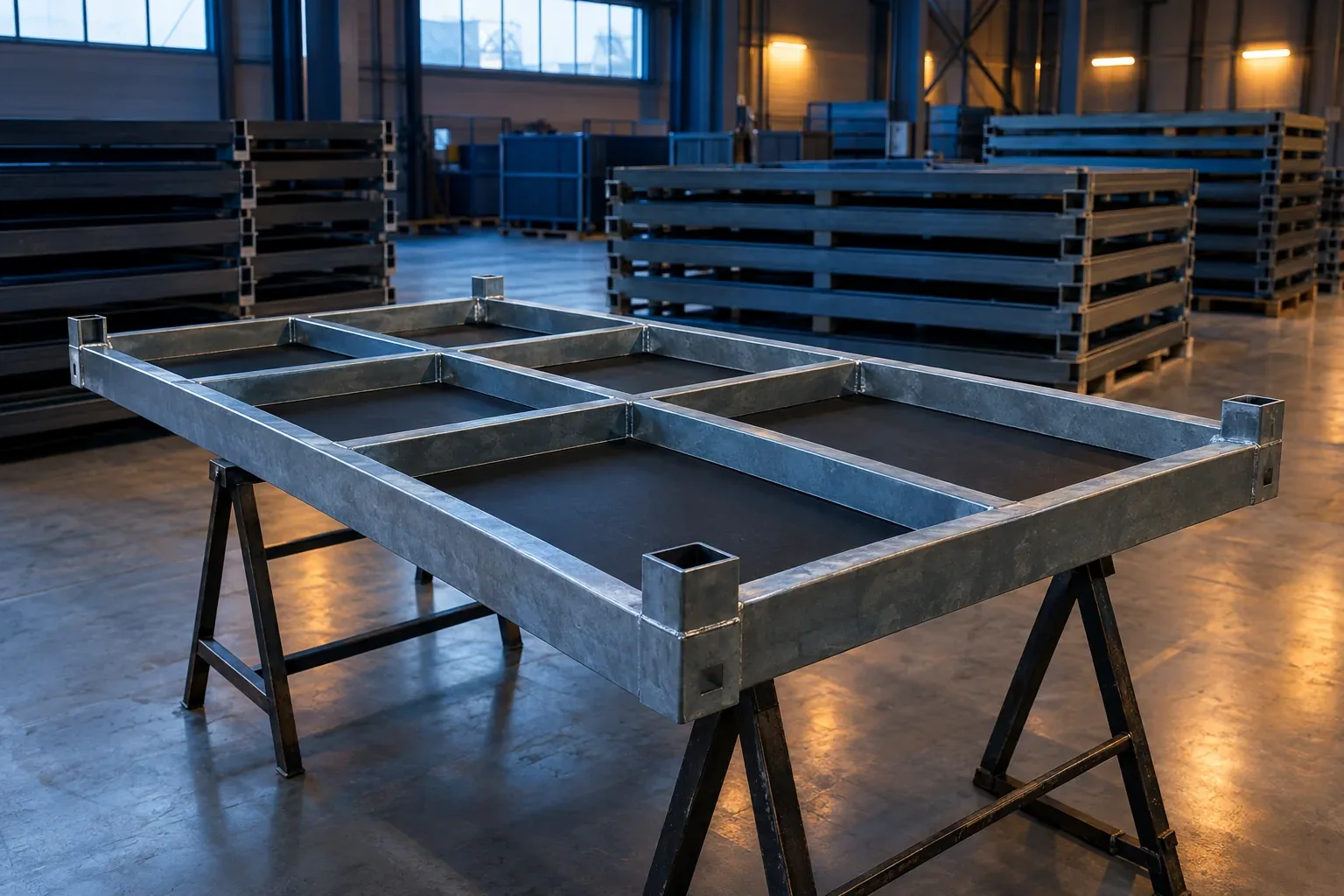
A welded, galvanized deck frame 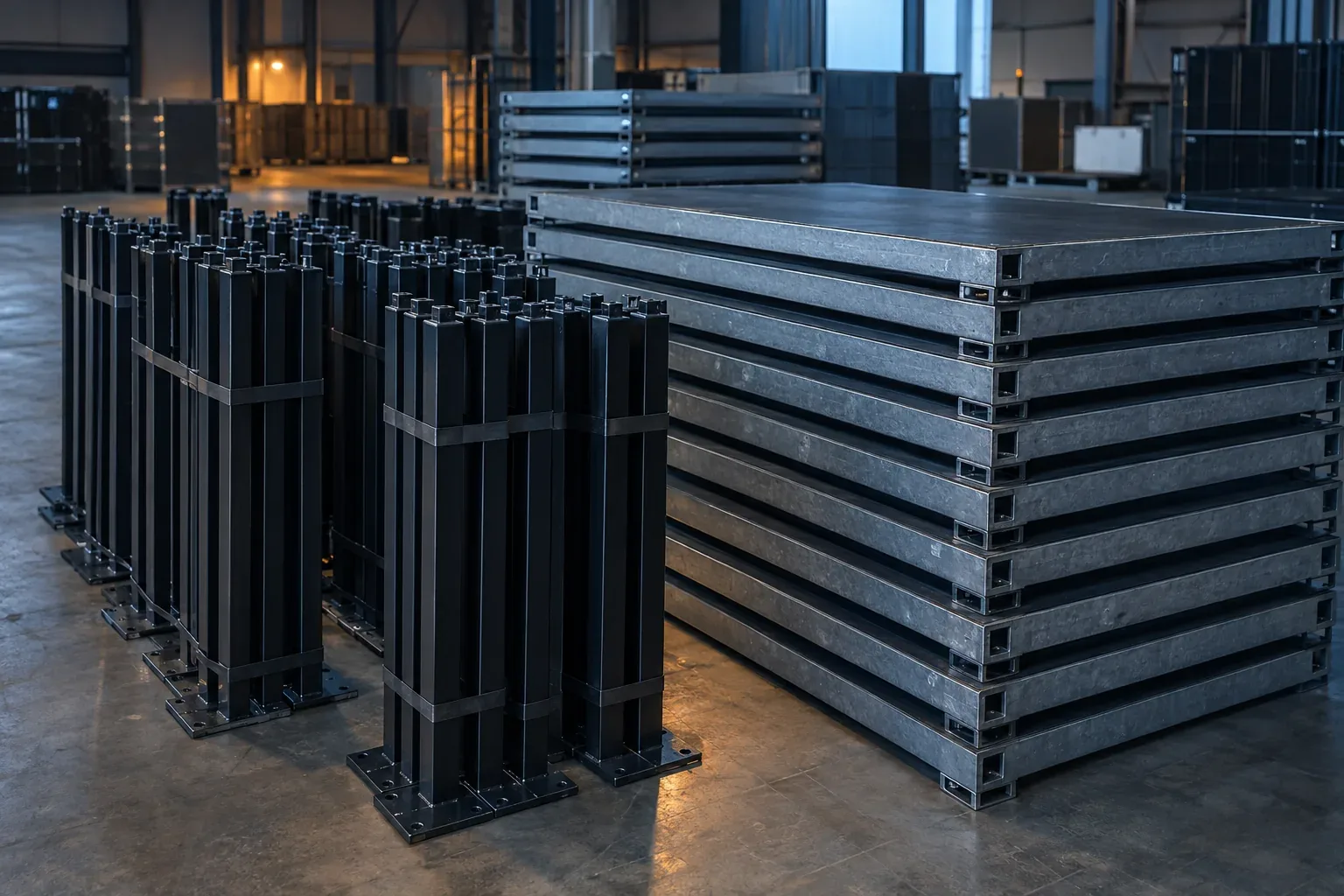
Legs welded to their foot plates 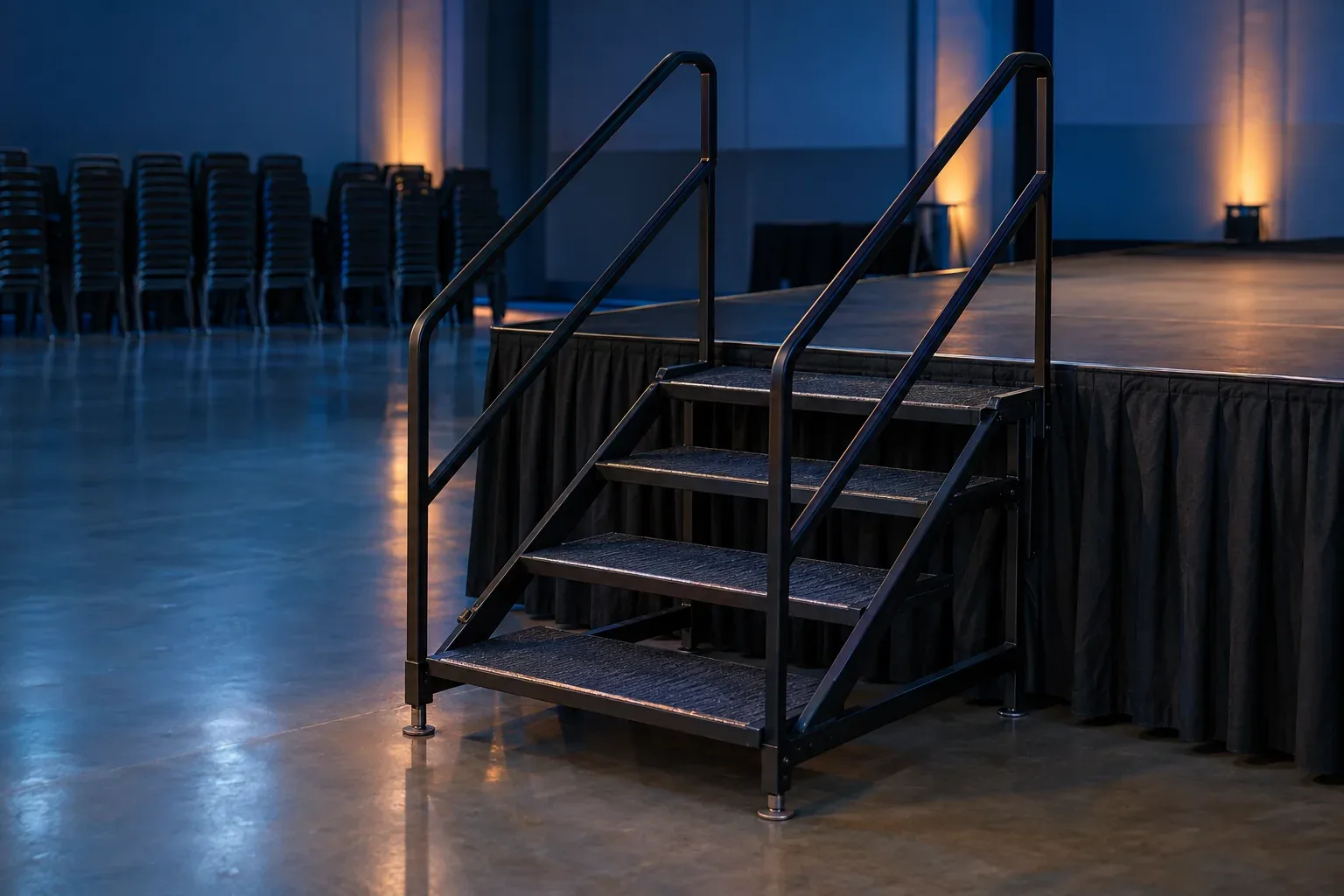
Stairs and handrails to the stage 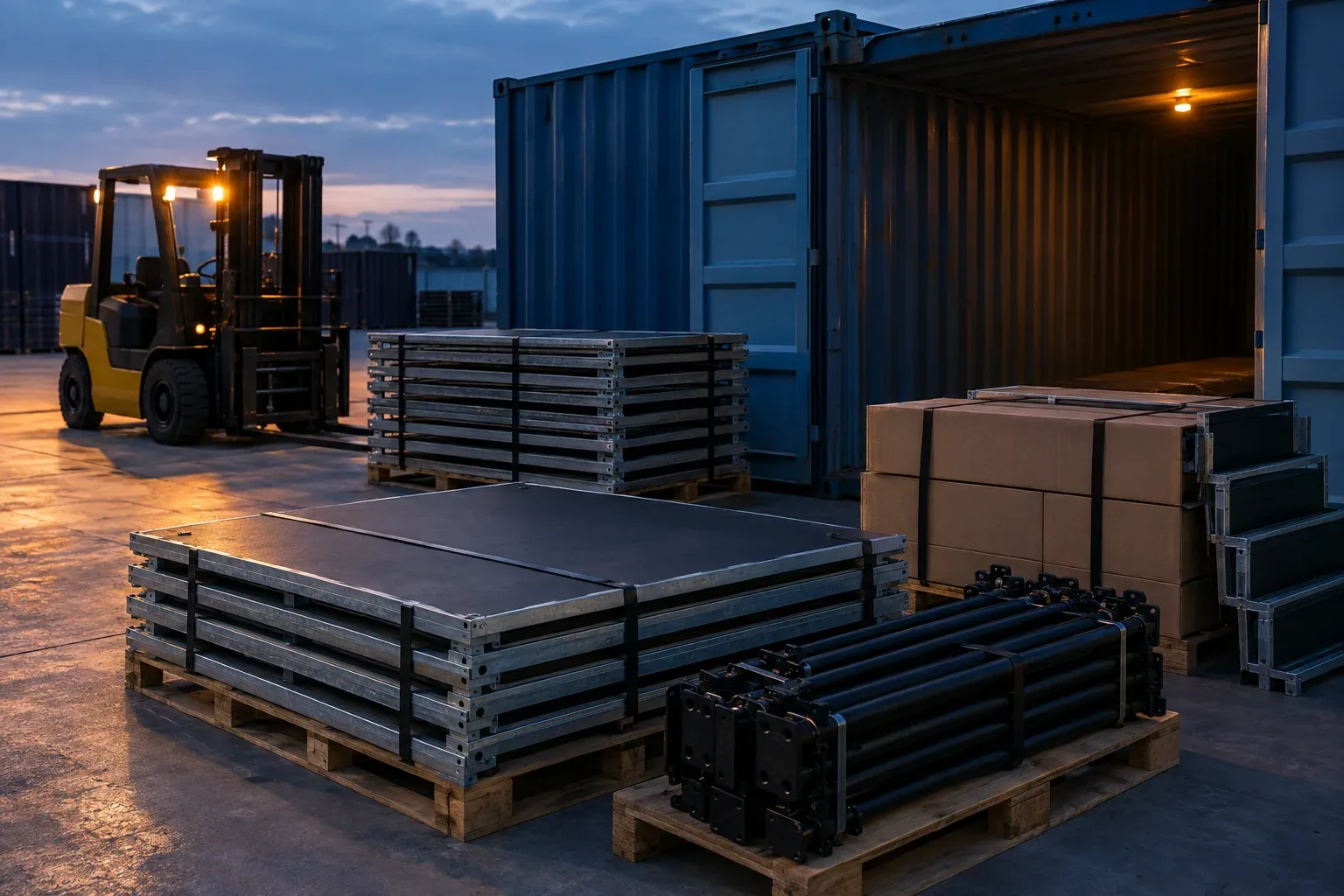
Decks flat on pallets 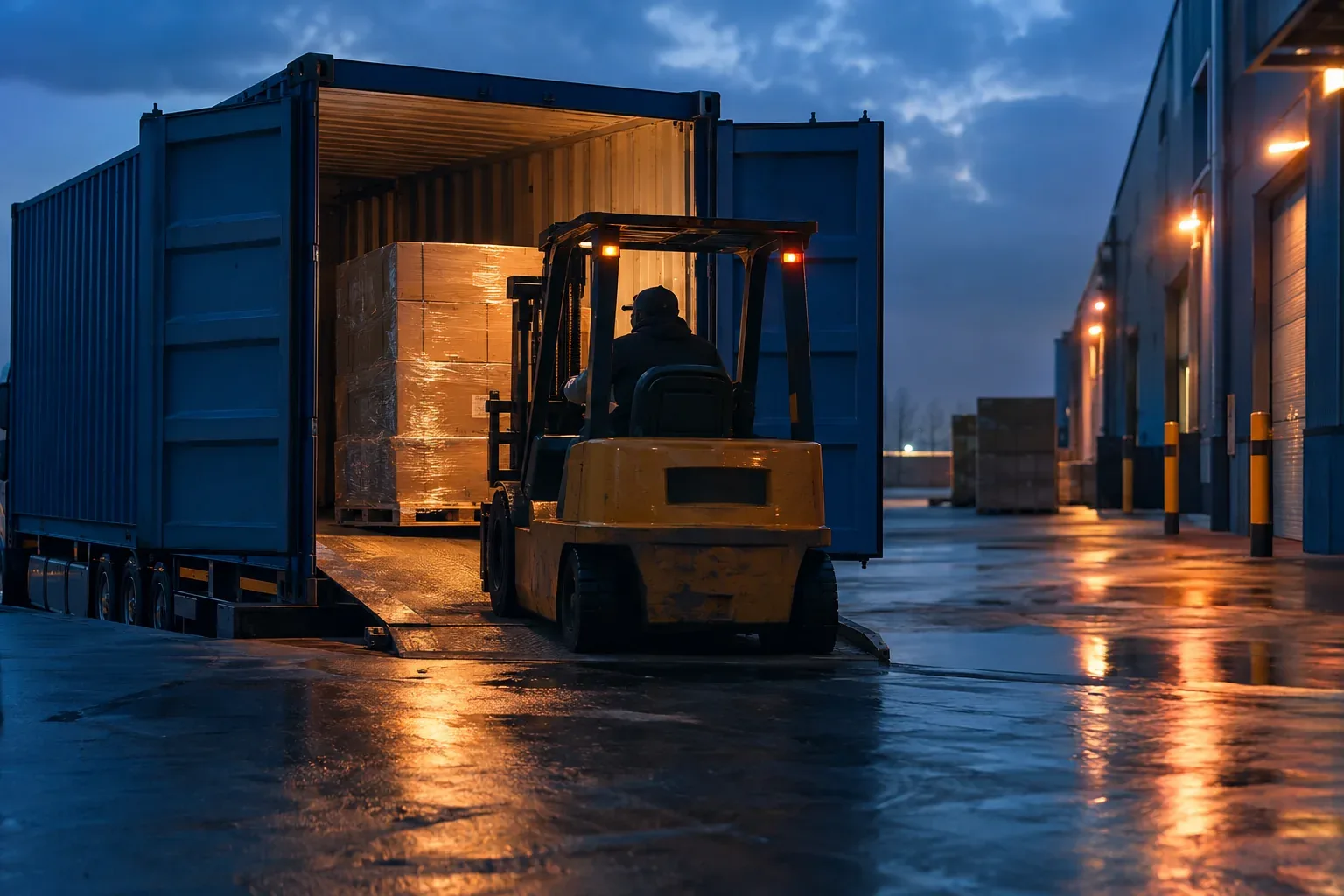
Loaded by the container
At a glance
Heavy-duty steel stages and stage platforms, deck by deck
Used for
- A band or speaker stage for festivals, fairs and corporate events
- A venue's own stage, put up for a season
- Risers and catwalks for fashion shows and award nights
- A stage under a party tent
Bought by
- Event and staging rental companies
- Venues, hotels and fairgrounds
- Event producers who keep their own stages
Materials
- Welded steel deck frames, hot-dip galvanized or powder coated
- A deck board with a non-slip, carpeted or painted top, named on the spec sheet
- Steel legs welded to their foot plates or fittings
Options
- Fixed or adjustable heights
- Stairs and guardrails, drawn for the heights you set
- Skirting in your colour
- Connectors that join decks into one stage
- Carts to move and store the decks
Packaging
- Decks stacked flat on pallets
- Legs bundled and packed with the platforms they belong to
- Stairs, rails and connectors boxed stage by stage, with a packing list for each
A stage under a tent
A stage set up under a party tent takes part of the tent's floor area, and the fire code official decides how that part is counted. The tent sizes guide works through it.
Skirting fabric indoors
Fire codes usually treat stage skirting as a decorative material, so a fire code official can ask about its fabric the way they ask about a tent top. The guide covers the paperwork they look for.
Before you ask
The spec sheet for a fleet of portable stages
Every deck in an order is built to one sheet, so every deck in the fleet matches. These are the choices on it, and the quote form asks for the same things.
Decks and quantity
The deck sizes and how many, so a fleet is counted per stage you book.
Heights and legs
Fixed or adjustable legs, and the heights your stages are booked at most.
Frame finish
Hot-dip galvanized or powder coated, for outdoor bookings, indoor ones or both.
The deck top
Non-slip, carpeted or painted, on the board named in the spec sheet. Or frames made to take boards you buy in the US.
Stairs, guardrails and skirting
Drawn for the heights you set. The loads and rails are settled with your engineer and code official, and the skirting fabric's paperwork is agreed first.
Joining your fleet
The connector and leg sockets of decks you own, if new and old decks have to mix.
Stages in a rental fleet
Stages usually join a rental fleet after tents, tables and chairs. The guide sets out what a new rental business buys first and how a container order works.
Price
What sets the price of a portable stage
We do not publish a price per deck. A fleet order turns on the decks, the heights, the finish, the board and the extras, and on where the stages land, so you get a landed cost, line by line.
Decks and how many
The deck sizes and the count. A fleet is counted per stage you book, so the decks, legs and connectors for each stage are priced together.
Heights and legs
Adjustable legs carry more parts than fixed ones, and each fixed height you want to book means another set of legs per deck.
Frame finish
Hot-dip galvanized, or powder coated in your colour, or both. The finish depends on whether the stages work outdoors, indoors or both.
The deck board and its top
The board is settled before the quote, and the top on it can be non-slip, carpeted or painted. Frames can also be made to take boards you buy in the US.
Stairs, guardrails and skirting
Each is drawn for the heights you set and quoted on its own line, so you can leave out what your fleet already has.
Landing at your yard
Inland freight to the port in China, ocean freight, the customs entry, the broker and trucking from the port are priced on your exact stages, each on its own line.
Itemised on the quote, hidden in a unit price
- Trucking from the factory to the port in China
- The customs entry and the broker's charges
- Drayage from the port, and a forklift or a dock to unload the pallets
- Deck boards bought in the US, if the frames are made to take them
Timing
The date is set on your order
We do not publish a production window in this category. It depends on the configuration you ask for, so the date comes with the first reply, and the calendar for your order is built from that date and the ocean transit on your lane.
How the date is set
We build these to the specification you send, so the first reply confirms the specification and the date.
- Tell us the specification, the quantity and the date you need them.
- We confirm the specification and the production date with the factory.
- The landed quote follows, itemised line by line.
What goes wrong
What goes wrong with event staging, and what we check
The loads, guardrails, stairs and access are settled by your engineer and the code official from the factory's drawings. We send the drawings before anything is built, and check the frames against them.
Common failures
- New decks that will not clamp to the decks the fleet already owns
- Legs a crew cannot match to their deck on site
- Skirting with no fabric paperwork when a fire official asks for it
- Guardrails and stairs ordered before the engineer has seen the drawings
Buyer mistakes
- Ordering the heights you might book instead of the heights you do book
- Leaving the deck board to the factory instead of naming it on the spec sheet
- Counting decks and forgetting the connectors, stairs and rails each stage needs
- Mixing new decks into an old fleet without checking the connector and the leg socket first
Inspection checklist
- Frames checked at the factory against the signed-off spec sheet: the welds, the finish, the heights and the count
- Legs checked against the deck sockets they go into, and packed with their platforms
- A stage put together at the factory where the order calls for it, with its stairs and rails
- Connectors, stairs, rails and skirting counted stage by stage against the packing list
How it gets to you
- Shipped by sea from China, the decks stacked flat on pallets and each stage's legs, stairs, rails and connectors packed with it
- A licensed broker files the customs entry when the container lands, and who is importer of record is worked out with each customer
- Trucked to your yard or venue; the pallets need a forklift or a dock
Each step of the landing is priced on your stages and set out on the quote. How that works Add up a landed cost
What we do on an order like this
- We confirm the stages you describe with the factory, and the date, before you commit.
- We ship welded, hot-dip galvanized steel frames every season, and a stage deck is built the same way: steel tube cut and welded into a frame with a socket for each leg, then galvanized or powder coated.
- The deck board and its top are written into the spec sheet and settled before the quote. If you would rather buy the boards in the US, the frames are made to take them.
- The test paperwork for the skirting fabric is discussed and agreed with you before you commit, as it is for a tent top.
- We check the frames at the factory against the spec sheet you signed off, then import the stages and deliver them to you.
Questions
Asked about portable stages and stage platforms
How much does a portable stage cost?
It depends on the deck sizes and how many, the heights and the legs, the frame finish, the deck board and its top, the stairs, rails and skirting, the ocean freight and the customs entry. We do not publish a price per deck. The quote gives each of those its own line, so you can see what each choice adds.
What is the difference between a stage and a platform?
A stage platform is one deck on its legs. A stage is several platforms joined into one surface, usually with stairs, guardrails where the edge is high, and skirting round the front and sides. Sellers use both words for the same decks, and the spec sheet counts both: how many decks, and how many stages they make.
Why steel for a rental fleet?
Steel suits decks that are booked hard, stacked on trucks every week and left up for a season. A welded steel frame takes knocks in the yard, and hot-dip galvanizing suits stages that work outdoors. If your crew needs decks it can lift and carry quickly for short indoor jobs, a US staging maker's range will suit that better, and we will say so.
Do we need a permit for a temporary stage?
That is for the code official where the stage goes up. Many areas treat a stage as a temporary structure once it passes a certain size, and some ask for drawings, a site plan and an engineer's review before it goes up. We send the factory's drawings to you, your engineer and the code official, and they settle the rest.
Can new decks join the stages we already own?
They can be made to. Send photos and measurements of the connector and the leg socket on one of your decks, and the factory draws the new frames to match. Nothing is cut until you approve the drawing.
Who decides the guardrails and stairs?
Your engineer and the code official, working from the factory's drawings. They settle the loads the stage must carry, where guardrails go, and the stairs and access. The factory then builds the rails and stairs to that drawing, and we quote them on their own lines.
Where can I buy portable staging for sale in bulk?
Portable staging for sale online is mostly sold a deck or a kit at a time from a US warehouse, which suits a venue that needs one stage soon. A factory order suits a rental company or a venue group buying a fleet to one spec sheet. That is the order we run: you send the deck sizes, the heights and how many, and we come back with the date and the landed quote.
In the same category
Related products
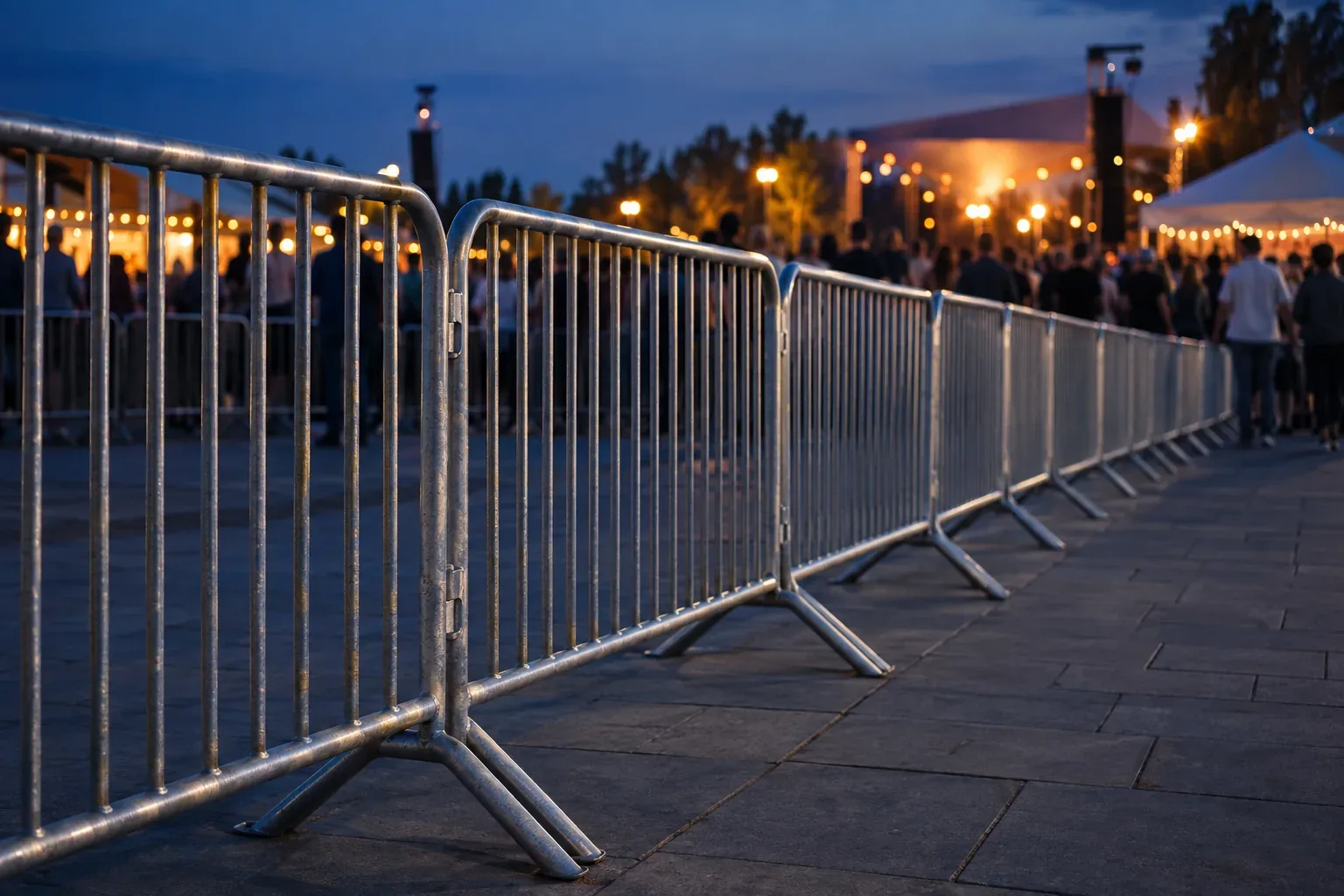
Steel crowd control barricades
Bike rack barricades, also called police barricades or French barriers: a welded steel frame with upright bars that hooks into the next one. We have them made to your specification and shipped by the container, for event companies, rental fleets and cities. A Type III road barricade, with its reflective boards, is a different product. Send the frame, the feet, the finish and how many, and we come back with the date and the landed quote.
See the barricades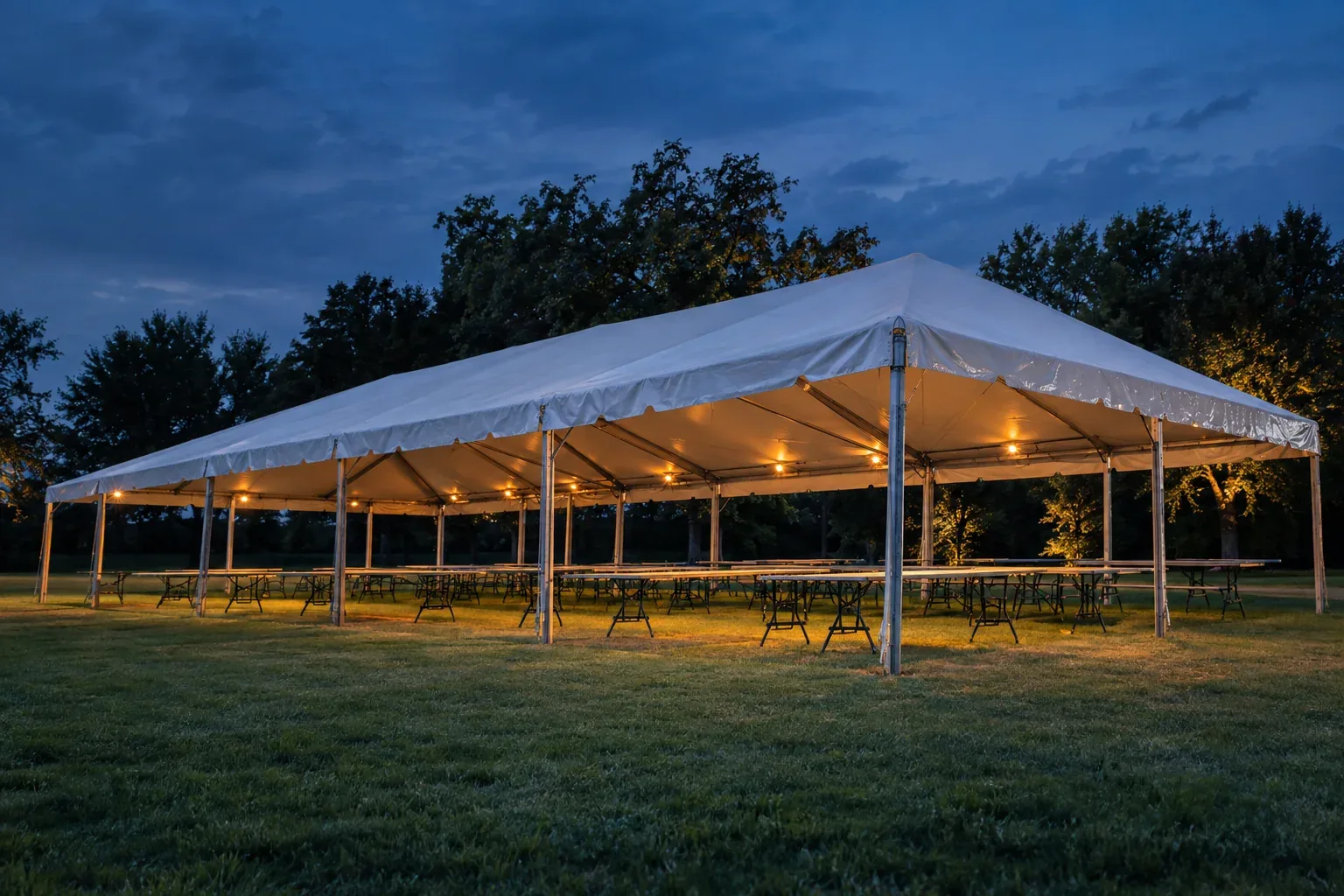
Party and event tents
Frame tents for rental companies, venues and event firms: a galvanized steel frame with no centre poles, under a white PVC top, with sidewalls to order. We have several made to one spec sheet and shipped by the container, and the test paperwork for the exact fabric is agreed with you before you commit. Send the footprints, the style and how many, and we come back with the date and the landed quote.
See the party tents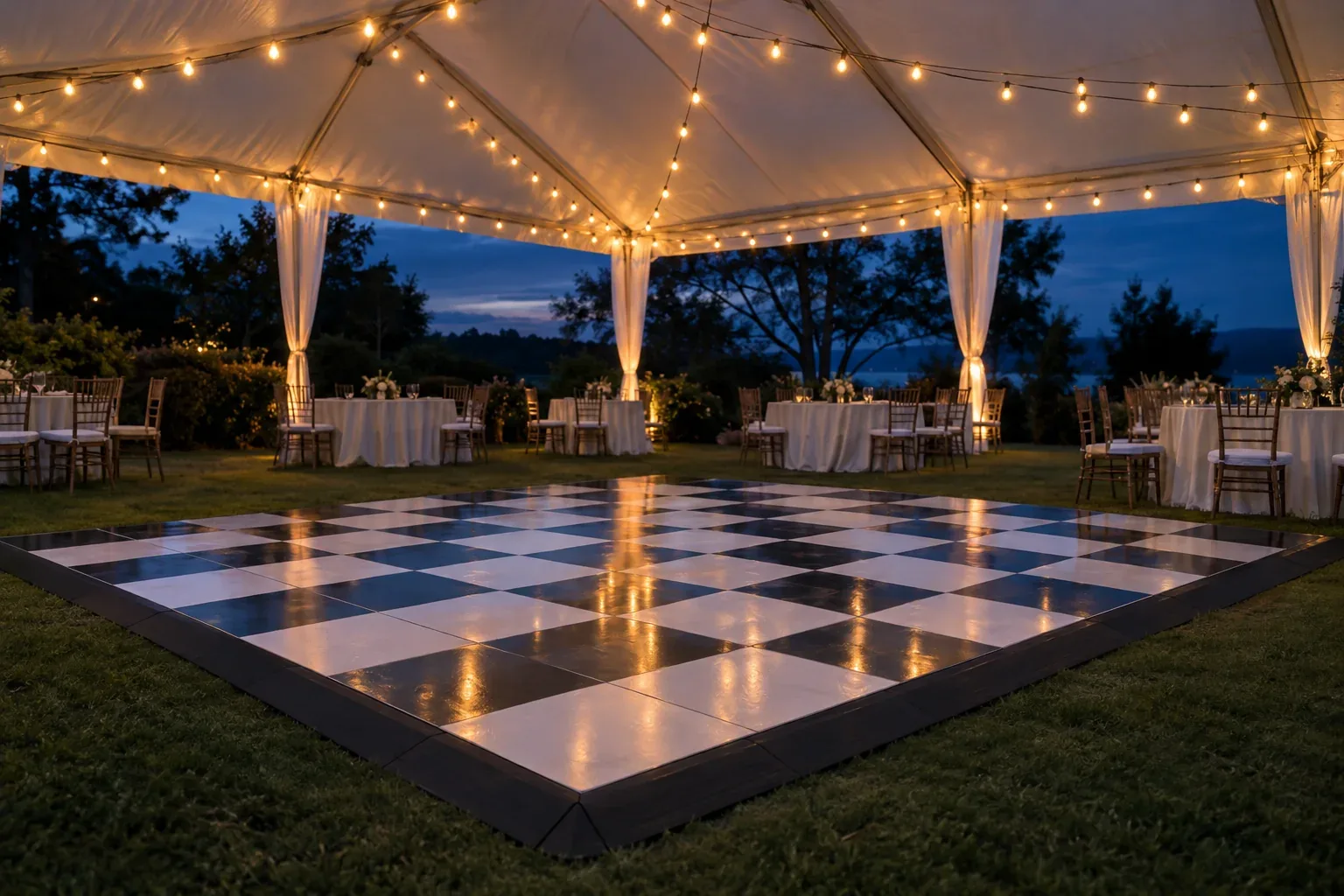
Portable and LED dance floors
Dance floors for rental companies and venues: interlocking panels with a printed top in a wood look, marble, black, white or a checkerboard, and LED panels that light under the dancers. Edge ramps for every open side, and carts or cases to store them. Send the floor sizes you book, the tops and how many, and we come back with the date and the landed quote.
See the dance floorsSomething else?
Send it as a sourcing request. Tell us what it is, the quantity and the date, and we will say whether we can get it made, and by when.
Send a requestRequest a quote
Quote portable stages, landed
Tell us the specification, the quantity and the date. The first reply confirms the specification and the date, and the landed quote follows, itemised line by line.
- Reply within 1 business day
- Landed cost, itemised
We take on the orders we can do well, and we will say so if yours isn't one of them.